
Effective Risk Management Steps
Manage risks smartly: learn how to identify, assess, and prioritize threats. Get clear strategies to safeguard your organization and track progress over time 🛡️📊
Edited By
David Mitchell
Managing risk is a daily reality for anyone running a business or making investment decisions. It means spotting potential problems early, assessing how likely they are to happen, and having a plan to handle them. For traders, investors, analysts, and brokers, risk management isn’t just about avoiding losses; it’s about making smarter choices under uncertainty.
The bottom line is this: Risk management helps you stay one step ahead by preparing for the unexpected before it hits your bottom line.

Successful risk management starts with identifying threats. These can be anything from market volatility and regulatory changes to supply chain disruptions or cybersecurity breaches. For instance, an investment firm might track shifts in federal policy closely because even small regulatory tweaks can affect portfolio values.
Once risks are identified, evaluating their potential impact and likelihood is key. This often involves quantitative tools like statistical models or scenario analysis. An example here: analysts use value at risk (VaR) metrics to estimate potential losses in their portfolios over a set period, helping them decide when to hedge positions.
The next step is controlling those risks. Controls come in many forms — diversifying investments, securing insurance, or putting internal policies in place to monitor compliance. Traders might use stop-loss orders to limit potential losses on volatile assets, while businesses might adopt strict cybersecurity protocols to fend off hacking attempts.
Clear communication and regular monitoring are vital throughout this process. Risks evolve, and the controls that work today might not be enough tomorrow. That's why ongoing review cycles, supported by real-time data, ensure companies and investment firms adjust their strategies promptly.
Ultimately, effective risk management allows professionals to safeguard capital, maintain operational stability, and capitalize on opportunities without being blindsided. It’s not about eliminating risk — that’s impossible — but managing it wisely to protect what matters most.
Knowing what risks your business might face is more than just a good idea—it's the backbone of smart risk management. Identifying potential risks early allows you to tackle problems before they snowball, saving money, time, and headaches. This process isn’t just about spotting obvious threats but digging deeper to uncover hidden issues that could impact everything from operations to reputation.
These risks arise from internal processes, systems, or people. Think about a manufacturing line that breaks down unexpectedly or a software glitch that disrupts daily workflows. For traders and analysts, operational risks could mean a failure in trading platforms or errors in data feeds. Identifying these early helps you tighten internal controls and prevent costly downtime.
Financial risks cover anything that threatens your company’s bottom line—fluctuations in interest rates, currency swings, credit risks, or liquidity issues. Imagine an investor exposed to a sudden drop in market value or a broker facing defaults from counterparties. Understanding financial risks lets you prepare hedging strategies or maintain sufficient reserves to weather market volatility.
These risks relate to the big picture: your company's goals and positioning in the market. For example, failing to anticipate a competitor's move or misreading regulatory changes can cost a business significant ground. Investors and educators alike benefit from recognizing strategic risks because they influence long-term decisions and resource allocation.
Failing to adhere to industry laws can lead to fines or legal trouble. For instance, missing new SEC requirements or mishandling client data under GDPR could derail a firm’s operations. Staying on top of compliance reduces these risks and builds trust with clients and partners.
A company’s public image can be damaged overnight due to scandals, poor customer service, or negative press. In trading, for example, a broker involved in unethical practices might lose clients fast. Identifying reputational risks helps craft communication and crisis plans to protect your brand.
Regular audits can reveal weak spots in processes or accounting before they spiral out of control. For instance, an internal audit might uncover inconsistent transaction records or lapses in compliance checks, giving your team a chance to fix things early.
Employees on the front lines often spot risks management might miss. Encouraging open dialogue through brainstorming sessions can surface concerns like system vulnerabilities or workflow bottlenecks, adding valuable perspectives for risk identification.
Keeping an eye on market trends, regulatory shifts, and competitor moves helps anticipate risks beyond your walls. For example, monitoring news about a sudden regulatory crackdown could alert your company to adjust strategies promptly.
Using checklists ensures no common risks slip under your radar. Meanwhile, analyzing past incidents or industry data reveals patterns that predict future risks—like seasonal drops in market liquidity or recurring operational failures.
Spotting risks early isn’t just preventive—it’s about shaping your business resilience. The more informed you are, the smarter your moves will be.
Evaluating and prioritizing risks lets you focus on the threats that can really impact your business. Not every risk carries the same weight, so it’s crucial to understand which ones need your immediate attention. This process helps allocate resources wisely and guides your team to address issues that could cause serious financial loss or operational disruption.
Risk assessment often starts with two main approaches: quantitative and qualitative. Quantitative methods assign numbers to risks, like estimating a 30% chance of a supplier failing to deliver on time, which might cost $50,000. This kind of assessment gives you clear figures to work with and is great for risks tied to measurable outcomes.
Qualitative assessment, on the other hand, involves judgment and descriptive categories—like labeling a risk as "high," "medium," or "low" based on expert opinions or past experience. This works especially well for risks that are hard to measure, such as changes in customer sentiment or brand reputation. Many businesses blend both to get a more complete picture.
A risk matrix is a simple yet powerful visual tool to plot risks by their likelihood and impact. Imagine a grid where one axis shows how likely a risk is to occur and the other shows how severe its consequences could be. This lets you quickly spot which risks fall into the “high likelihood, high impact” zone—those deserve the most attention.
For example, a trader might use a matrix to decide which market risks need hedging strategies and which ones can be monitored over time. It’s a fast way to organize information and create a shared understanding among team members.
Scenario analysis involves running through “what if” situations to explore potential outcomes. For instance, an investor might analyze how a sudden spike in interest rates could affect their portfolio. This approach helps businesses prepare for various possibilities rather than relying on a single forecast.
By considering different angles—best case, worst case, and most likely case—you can see how different risks could unfold and plan responses accordingly. It adds depth to risk evaluation beyond simple numbers, especially when dealing with complex or uncertain conditions.
A risk threshold sets the level at which a risk becomes unacceptable and triggers action. For example, a company might decide it won’t tolerate risks that could lead to losses exceeding $100,000 or disruptions lasting more than a week.
Establishing these thresholds helps avoid wasting time on negligible risks, so you can focus on those that pose real threats. It’s like setting a guardrail—keep risks below that line and carry on, cross it and it’s time to act.
Mitigating risk isn’t free, so it’s key to weigh the cost against the potential benefit. Spending $20,000 to prevent a $1,000 risk makes little sense, right? But investing $100,000 to avoid a $1 million loss typically does.
Businesses need to evaluate if the mitigation steps—like additional security software, insurance, or backup suppliers—are worth the price. This balance keeps risk management practical and financially sustainable.
Once you know what risks are out there and have set thresholds, rank them by how urgent and severe they are. Urgency deals with timing—some risks like a pending regulatory change require immediate action, while others, like market fluctuations, might allow more breathing room.
Severity is about the damage that risk could cause. Combine these to decide which risks jump to the top of your to-do list. For example, a breach threat that’s both likely soon and could shut down operations has to come before a low-impact supplier delay.
Effective risk prioritization is not just about what could happen but also when and how bad it would be. Taking this into account lets you protect your business smarter, not harder.
Developing effective risk response strategies is a key step in protecting your business from potential threats. Once risks are identified and evaluated, deciding how to handle them determines whether you can minimize losses or even seize opportunities. This phase translates analysis into action plans that fit your company's situation, resources, and goals, preventing problems instead of just reacting to them.
Risk avoidance means steering clear of activities or conditions that carry high potential for negative outcomes. For example, a trading firm might avoid entering markets known for intense regulatory scrutiny or extreme price volatility. While avoidance can keep your business out of harm’s way, it isn’t always feasible if it means missing out on key revenue streams or growth prospects.
Reducing risk involves taking steps to decrease the likelihood or impact of a threat without completely dodging the activity. A broker could implement strict compliance checks and invest in cybersecurity protocols to reduce the chance of financial fraud. This approach offers a balanced way to control risks by making them manageable through safeguards, rather than shutting down operations.
Transferring risk passes the potential burden to another party, often through insurance or contracts. Many businesses buy insurance policies to handle property damage or liability issues. Similarly, outsourcing certain functions to a specialized firm can shift specific operational risks. While this does not eliminate risk, it can protect a company from heavy financial losses if problems arise.
Sometimes, businesses choose to accept certain risks, usually when the cost to avoid or reduce them outweighs the potential impact. A small investment firm might accept fluctuations in currency values rather than hedging every position, considering the costs involved. Risk acceptance requires confident assessment and readiness to deal with consequences if they come up.
Your budget plays a huge role in deciding how to manage risks. For instance, risk transfer through comprehensive insurance can be expensive but may save millions in the long term. Alternatively, startups with limited cash might opt for risk acceptance on minor issues while focusing resources on critical ones. Aligning your risk strategy with financial reality ensures sustainability.
The availability of skilled personnel, technology, and time affects how a company can respond to risks. For example, a firm with an in-house compliance team might prefer risk reduction through monitoring and controls. In contrast, a smaller business might lack these resources and rely more on external partners or risk transfer.
Compliance with industry standards and government regulations can dictate certain risk responses. For example, investment firms must follow SEC rules that limit risk acceptance for certain operational risks. In such cases, risk avoidance or reduction isn’t just good practice but a legal necessity, impacting how strategies are chosen.
Investors, clients, and board members often expect businesses to manage risks proactively. Ignoring reputational risks could damage trust and investment. Understanding these expectations helps tailor your approach—more conservative strategies might secure stakeholder confidence, while showing you have a firm grip on potential issues.
The bottom line is your risk response must fit your unique business landscape. There’s no one-size-fits-all answer, but making decisions based on finance, resources, regulations, and stakeholder input sets you on the right path.
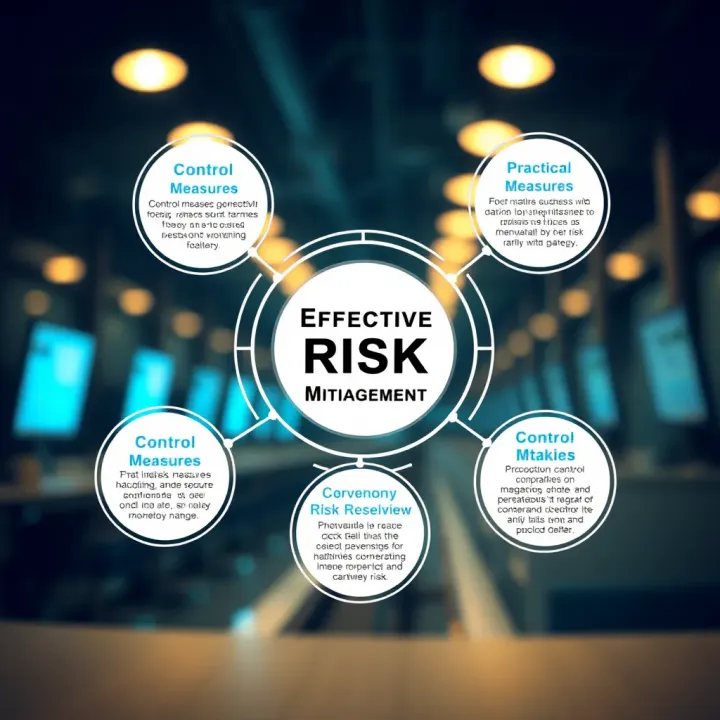
Implementing risk controls and monitoring is essential to keep risk management efforts effective and practical. Once risks are identified and prioritized, putting specific measures in place limits the chances of negative outcomes. Then, continuous monitoring ensures the controls work and adapts as the business or environment changes. This ongoing process helps businesses stay agile and prepared.
Clear policies and procedures form the backbone of effective risk control. They set out explicit rules and steps for employees to follow when managing risks. For example, a trading firm might have explicit rules for trade approvals to prevent unauthorized transactions. Well-documented procedures reduce guesswork, promote consistency, and make it easier to spot when something isn’t being done right.
Even the best policies fall flat if employees don’t understand or follow them. That’s why training is non-negotiable. Awareness programs keep staff informed about potential risks and their roles in managing them. Consider how an investment firm trains analysts on regulatory compliance—if employees know the rules and challenges upfront, compliance improves and costly mistakes drop.
Technology adds a powerful layer to risk control. Tools like automated alerts, real-time dashboards, and analytics software help spot issues early. For instance, brokerages often use trading platforms that monitor unusual activity and flag risks instantly. Utilizing tech not only speeds up detection but also reduces reliance on manual checks, which can be error-prone.
Insurance transfers some risk away from the business, offering financial protection against certain losses. At the same time, contracts with clients, vendors, or partners can include clauses that clearly allocate risk responsibilities. Imagine a hedge fund securing insurance against cyber breaches, while contracts with service providers specify liability limits. Combining these strategies helps cushion potential impacts.
Risk isn’t static—what’s low risk today might spike tomorrow. Regular reviews and audits keep risk controls relevant and effective. A quarterly audit of investment portfolios, for example, can reveal if emerging market exposure has increased beyond acceptable limits, prompting timely adjustments.
KRIs are metrics that serve as early warning signs for potential risks. For traders, this might be metrics like volatility indexes or liquidity levels. Tracking these indicators helps anticipate shifts before they escalate. For example, a sudden rise in the VIX (volatility index) could signal market turbulence, prompting risk teams to act.
Effective risk management demands learning from experience. When incidents occur or new data come in, feedback loops let teams update their controls and plans. Continuous improvement means the risk framework evolves rather than stays fixed. It’s like tuning a strategy over time—keeping it sharp as markets and organizational priorities change.
Strong risk controls are only effective when paired with active monitoring and the willingness to adapt. Staying alert and flexible allows businesses to manage risks confidently, not reactively.
Effective risk management doesn’t stop at identifying and planning—it hinges on clear communication at every level of the business. When everyone understands the risks and their role in addressing them, the entire organization becomes better prepared. This openness improves decision-making and ensures swift responses when risks materialize.
Identifying who is responsible for what is the backbone of effective risk communication. It’s not just about naming individuals but ensuring everyone knows their risk-related duties and accountability. For instance, the compliance officer might monitor regulatory risks, while department heads could handle operational risks within their teams. Clear role definitions prevent tasks from slipping through the cracks and foster ownership.
A structured reporting system streamlines how risk information travels through the organization. It typically involves established channels or tools, like risk dashboards or weekly meetings, ensuring concerns reach the right people promptly. A broker’s office, for example, might use a centralized platform to raise market volatility warnings that instantly notify traders and analysts, enabling quicker responses.
Securing buy-in from top leaders is vital. When executives actively support risk initiatives and demand regular updates, it signals to the whole company that risk management matters. This can be seen in firms where CEOs discuss risk in town halls or board meetings, setting a tone that encourages transparency and proactive behavior across departments.
Creating an environment where employees feel safe speaking up about risks is key. If a trader notices suspicious market activity, they should feel empowered to report it without fear of backlash. Open forums or anonymous reporting tools can help here, fostering honest dialogue that uncovers hidden or emerging risks early.
Risk awareness shouldn’t be limited to the risk management team. Regular training helps everyone from interns to senior analysts recognize risks relevant to their roles. For example, investing firms often conduct workshops teaching employees how to spot signs of fraud or compliance issues. These sessions keep risk at the forefront and sharpen the company’s collective vigilance.
Acknowledging employees who identify or mitigate risks reinforces positive behavior. This might be through formal recognition programs, bonuses, or simple shout-outs during meetings. For instance, when an analyst uncovers a critical data error before it affects reporting, spotlighting their effort encourages others to stay alert and proactive.
Clear communication and culture build the bedrock of effective risk management. When risks are openly discussed, roles clarified, and leadership engaged, businesses not only react faster but also prevent problems before they start.
Bottom line: Risk management is a shared responsibility—and good communication ties it all together.
Manage risks smartly: learn how to identify, assess, and prioritize threats. Get clear strategies to safeguard your organization and track progress over time 🛡️📊

📊 Learn practical steps for effective risk management in Kenyan businesses—identify, assess, plan, and control risks to safeguard operations and boost decision-making.
📋 Learn how Kenyan businesses can create practical risk management plans to identify, assess, and control threats, ensuring smooth operations and better decisions.

Discover how strong risk management safeguards assets, boosts decision-making, and enhances business performance for lasting success in Kenya 🇰🇪📊🔒.
Based on 7 reviews