
How to Start Forex Trading in Kenya: A Beginner's Guide
📈 Learn how to start forex trading in Kenya with clear steps, expert tips on brokers, key currencies, risk management, and using M-Pesa for smooth payments.
Edited By
Henry Mitchell
Getting started in forex trading can seem overwhelming, but breaking the process into clear steps makes it manageable. Forex, or foreign exchange trading, involves buying and selling currencies with the goal of profiting from fluctuations in exchange rates. If you're considering entering this market, you'll need more than just a gut feeling—knowledge and preparation are key.
First off, understand the market basics. Forex operates 24 hours a day, five days a week, with major trading centers in New York, London, and Tokyo. Currency pairs like EUR/USD or USD/JPY represent how much of one currency you pay to buy another. This constant movement offers opportunities, but also risks if you dive in blindly.
Choosing a reliable broker is your next priority. Brokers serve as your gateway to the market, providing platforms to place trades. Look for brokers that are regulated by organizations like the Commodity Futures Trading Commission (CFTC) or the National Futures Association (NFA) to ensure they're trustworthy. Also, compare fees and whether they offer demo accounts so you can practice before risking real money.
Once you have a broker, familiarize yourself with trading platforms such as MetaTrader 4 or 5. These tools display live charts, let you set stop losses, and execute trades quickly. Spending time learning the platform's features will save headaches later.
A solid trading strategy helps you decide when to enter or exit trades. Whether you prefer technical analysis using charts and indicators or fundamental analysis based on economic news, consistency matters. Never trade solely on a whim or tip.
Risk management is crucial to avoid losing more than you can afford. Common tactics include setting stop-loss orders and limiting the amount you risk per trade to a small percentage of your account.
Starting forex trading with clear knowledge and a plan helps you sort the signal from the noise. Rushing without this can lead to unnecessary losses.
In summary, begin by learning market basics, choose a reputable broker, master your trading platform, design your strategy, and practice good risk control. These foundational steps will set you up to trade forex with greater confidence and clarity.
Grasping the basics of the forex market is your first stepping stone to trading success. It’s not just jargon; it's about understanding how currency exchanges work, what influences price changes, and how you can spot opportunities. Knowing these fundamentals helps you make smarter decisions and avoid costly mistakes down the road.
Forex trading involves swapping one currency for another, aiming to profit from fluctuations in exchange rates. Think of it like exchanging dollars for euros when you travel, but on a much larger scale and with the intention of making money. For example, if you believe the euro will strengthen against the dollar, you might buy euros now and sell them later at a higher rate.
The forex market is the largest financial market globally, trading over $6 trillion daily. Unlike stock markets, forex operates 24 hours, five days a week, reflecting worldwide economic, political, and market sentiment.
Most forex traders focus on major currency pairs like EUR/USD, USD/JPY, GBP/USD, and USD/CHF. These pairs involve the most traded currencies globally and offer the best liquidity and tight spreads. The first currency in the pair is the base currency, and the second is the quote currency.
For instance, in EUR/USD, if the price is 1.10, it means 1 euro costs $1.10. If you buy this pair and the rate rises to 1.15, you can sell back your euros for a profit. These pairs respond to economic news and indicators—like interest rate changes or employment figures—making them popular among beginner and seasoned traders alike.
Understanding common terms helps you navigate the market without confusion. Here are a few essentials:
Pip: The smallest price move in a currency pair, typically 0.0001 for most pairs.
Spread: The difference between the bid (selling) and ask (buying) prices. This is essentially the broker’s fee.
Leverage: Borrowed capital that lets you control a bigger position than your actual investment.
Margin: The money you put up to open a position using leverage.
Lot Size: Standardized contract size; a standard lot is 100,000 units of the base currency.
Knowing these terms and how they play together is essential before you jump into placing trades. It keeps your operations clear and lets you assess potential profits and risks accurately.
Understanding these building blocks prepares you to pick the right broker, use trading platforms effectively, and craft strategies that fit your goals. Without this foundation, trading blindly could lead down a costly path.
Picking the right forex broker is one of the first and most critical steps for anyone starting out in forex trading. Your broker acts as the middleman between you and the market, so their reliability directly affects your trading experience, security of funds, and even your chances of success. If you choose poorly, you could face hidden fees, poor execution speeds, or worse — fraud.
When checking a broker, start with their regulatory status. In the US, look for brokers licensed by the National Futures Association (NFA) or the Commodity Futures Trading Commission (CFTC). These regulations ensure brokers meet certain standards regarding financial stability and transparent practices. For example, brokers like OANDA and Forex.com are regulated by these bodies, giving you more peace of mind.
Beware of brokers operating without any oversight or those registered in obscure jurisdictions. Such brokers might offer tempting promotions but carry a higher risk of fund mishandling or unreliable trade execution. Also, verify that the broker provides clear legal documentation, like a client agreement and risk disclosure statements. Skipping this step is like walking blindfolded into a crowded street.
Not all trading accounts are created equal. Most brokers offer various types to suit different traders’ needs — standard, mini, or micro accounts with varying minimum deposits and trade sizes. For beginners, a micro account can be a good choice since it lets you trade small amounts without risking too much capital.
Costs matter, too. Look beyond just the spreads (the difference between the buy and sell price). Some brokers charge commissions per trade, others roll fees into wider spreads. Watch out for additional costs like withdrawal fees, inactivity charges, or overnight financing fees (swap rates). For instance, Interactive Brokers offers tight spreads but charges a commission per trade, which can add up for active traders.
Choose an account that matches your budget and trading style—low costs help you stay profitable in the long run.
Checking reviews from other traders can reveal how brokers perform in real-life. Use multiple sources like forums, social media groups, and specialized review sites. Pay attention to recurring complaints about withdrawal delays, poor customer service, or slippage (orders executed at worse prices).
Keep in mind some reviews may be biased or fake—look for detailed feedback and consistent patterns. For example, if many traders report that a broker’s platform crashes during volatile times, that's a red flag you don’t want to ignore.
Tip: Balance reviews with your own testing via demo accounts. That way, you can verify the broker’s platform and service quality firsthand without risking real money.
Picking a well-regulated, fairly priced broker with good feedback will set you on solid ground. This foundation helps you focus on learning and trading rather than worrying about where your money’s parked.
Choosing the right trading platform and understanding the tools it offers can make or break your forex trading experience. These platforms act as your gateway to the market, letting you place trades, analyze price movements, and manage risks all in real time. If you rush into trading without mastering your platform, it’s easy to slip up – hitting the wrong button or misunderstanding an indicator can cost you money fast.
Most new traders start with platforms like MetaTrader 4 (MT4) or MetaTrader 5 (MT5). MT4 is a firm favorite because it’s user-friendly and packed with features like automated trading via Expert Advisors, customizable charts, and a wide range of technical indicators. MT5 builds on that with more timeframes, order types, and an economic calendar built right into the interface. Then there’s cTrader, which offers a sleek modern design, Level II pricing, and better order execution options — popular among more advanced traders.
Web-based platforms from brokers like OANDA or Forex.com provide straightforward access without needing software installation, perfect for people who want something simple. The key takeaway is to pick a platform that fits your tech comfort level and trading style.
Before risking your own money, open a demo account with your chosen platform. It lets you trade virtual money in real market conditions. This way, you get hands-on practice with order placement, navigating charts, and using trading tools. Imagine it as a sandbox where you build your skills risk-free. For instance, you might try placing simple trades with EUR/USD and test different stop-loss settings to see how they affect your potential losses.
Spend ample time on the demo account until you feel confident, not just about placing trades but understanding market behavior and platform quirks. It’s the best way to avoid rookie mistakes once you go live.
Charts form the backbone of forex trading analysis. You'll interact with candlestick charts most often, which show price movements within a specific time frame. Tools like Moving Averages smooth out price data to identify trends, while the Relative Strength Index (RSI) highlights overbought or oversold conditions.
Other handy tools include Fibonacci retracement levels to pinpoint potential reversal spots and Bollinger Bands for spotting volatility. Don't forget economic calendars; knowing when key reports like US Nonfarm Payrolls release can help you avoid entering trades just as the market swings wildly.
Mastering these tools is like having a GPS while navigating a busy city. They don’t guarantee success but sure make the journey clearer and safer.
In short, take your time to explore, customize, and essentially get comfortable with whatever trading platform you choose. The better you know your tools and environment, the less likely you are to make costly errors and the more prepared you’ll be to seize opportunities as they come.
A solid trading strategy acts like a roadmap in the forex market, guiding decisions and managing risks. Developing a practical approach helps you avoid chasing after every sudden market move or relying on guesswork. Instead, you build a consistent method based on clear rules that suit your trading style and goals. For example, a day trader's strategy might focus on quick trades during volatile hours, while a swing trader looks for patterns over several days.
Understanding the difference between fundamental and technical analysis is key to shaping your strategy. Fundamental analysis studies economic indicators like GDP growth, interest rate changes, or unemployment figures to predict currency value shifts. For instance, if the Federal Reserve signals possible rate hikes, the US dollar might strengthen.
Technical analysis, on the other hand, relies on historical price data and charts. Traders use tools like moving averages, support and resistance levels, or the Relative Strength Index (RSI) to gauge market trends. Picture spotting that the EUR/USD pair tends to bounce near a certain price point—that’s classic technical insight.
Many traders blend both approaches to balance market sentiment with data trends.
A straightforward entry and exit plan can save you from emotional blunders. This means deciding in advance when to buy or sell based on your criteria. For example, you might choose to enter a trade when the 50-day moving average crosses above the 200-day moving average—a widely-used signal called a "golden cross." Your exit might be set at a 2% profit target or a stop-loss that limits your losses to 1%.
Keep it simple to start. Overcomplicating often leads to hesitation or missed opportunities. Clear rules keep your trading objective and reduce second-guessing.
Before going live with real money, test your strategy using historical data or on a demo account. This trial run can reveal how it performs under different market conditions. Let’s say your strategy did great during trending markets but struggled in sideways trading—knowing this upfront helps you tweak or avoid certain scenarios.
Refining involves tracking your trades, noting what worked or didn’t, and making adjustments step-by-step. Remember, no strategy is perfect; the goal is steady improvement. Keep a trading journal or use software to log your decisions and results for honest reflection.
A practical forex trading strategy isn't about prediction perfection but about managing risks and making informed choices consistently.
By focusing on these elements, you build a foundation that can adapt with you as you gain experience in forex trading. Consistent practice and strategic thinking often separate casual traders from those who find long-term success.
Managing risks is the backbone of successful forex trading. Without it, even the best strategies can lead to losing your hard-earned money. Protecting your capital means preserving enough funds to stay in the game long-term, rather than risking it all on a single trade. For example, even if you spot a promising currency move, betting your entire account on it could wipe you out with one wrong turn.
Leverage lets you control a larger position than your actual capital by borrowing funds from your broker. For instance, a 50:1 leverage means you can trade $50 for every $1 in your account. While this might sound like free money, it cuts both ways. Leverage magnifies gains, but it also expands losses. Margin is the collateral your broker requires, essentially a security deposit to back your trades. Keep in mind, using leverage without a clear understanding is like playing with fire; a small price move against you could lead to a margin call, forcing you to add funds or close positions at a loss.
Stop-loss and take-profit orders are essential tools to lock in profits and limit losses automatically. Setting a stop-loss order means your trade closes once losses hit a certain point, preventing runaway losses if the market turns sharply against you. Conversely, a take-profit order locks in gains once the price hits your target. For example, if you buy EUR/USD at 1.10, you might set a stop-loss at 1.08 and a take-profit at 1.13. This helps you trade with discipline, sticking to your plan instead of acting on emotion when things don’t go as expected.
Keeping your emotions in check is tricky but crucial in forex trading. Excitement and fear can cause rash decisions like overtrading or ignoring your stop-loss. One trader might chase losses by doubling down, hoping for a rebound, which usually deepens the hole. Another traps themselves in “paralysis by analysis,” missing good setups out of fear of risk. To avoid these pitfalls, develop a routine: set realistic goals, review your trades regularly, and stick to your risk limits regardless of short-term wins or losses.
The bottom line is this: no amount of market knowledge can replace solid risk management. Protecting your capital means staying in the game long enough to profit consistently.
By mastering leverage, using stop-loss/take-profit orders, and maintaining discipline, you build a foundation that supports steady growth instead of unpredictable swings. This approach helps you treat forex trading like a business, not just a gamble.
The first trade marks a major milestone for any new forex trader. It puts all your preparation into action and lets you experience the market firsthand. This step isn't just about buying or selling currencies; it’s about applying everything you’ve learned—making smart choices, managing risks, and staying disciplined. Getting this right builds your confidence and sets the tone for future success.
Funding your trading account is the gateway to entering the market. Most brokers support several funding methods such as bank transfers, credit or debit cards, and digital wallets like PayPal or Skrill. For example, if you want quick access to your funds, using a credit card or e-wallet is often faster than a bank wire transfer, which can take several days.
When funding, verify minimum deposit requirements; some brokers allow as low as $50, while others require $500 or more. Also, check for funding fees and currency conversion costs to avoid surprises. Suppose you're funding your account with $500 via a bank transfer—make sure the broker accepts USD to prevent additional currency conversion fees.
Starting your first trade involves choosing a currency pair, deciding on position size, and setting orders. Let's say you pick EUR/USD, betting the euro will strengthen against the dollar. On your trading platform, enter the amount you want to trade, often measured in lots (a standard lot equals 100,000 units; many brokers let beginners trade mini lots at 10,000 units).
Before hitting 'Buy' or 'Sell,' set a stop-loss to limit potential losses and a take-profit to lock in gains automatically. For instance, if you buy EUR/USD at 1.1000, you might set a stop-loss at 1.0950 and a take-profit at 1.1100 to manage risk. Confirm your order, then watch the trade open in your account.
Once your trade is live, keep an eye on the market and your positions. Use your platform’s tools to monitor price movements and volume. If news impacts the currency pair—like an unexpected interest rate decision—you might need to adjust your stop-loss or close the trade early to protect gains or minimize losses.
Adjustments are part of active trading. For example, if your trade moves in your favor, you could move your stop-loss up to break even, guaranteeing no loss. Conversely, if the market swings against you, sticking rigidly to your plan prevents emotional decisions from turning a small loss into a big one.
Remember, the goal is steady progress, not quick wins. Watch your trades, learn from how prices move, and refine your approach based on experience.
Starting your first forex trade can feel challenging, but breaking it down into clear steps makes the process manageable. Funding your account properly, entering trades with caution, and actively managing positions puts you in control and sets a foundation for smart trading ahead.
📈 Learn how to start forex trading in Kenya with clear steps, expert tips on brokers, key currencies, risk management, and using M-Pesa for smooth payments.
Learn how to start forex trading in Kenya with tips on finding reliable brokers, understanding key terms, managing risks, and avoiding common trading mistakes 📈💼💡
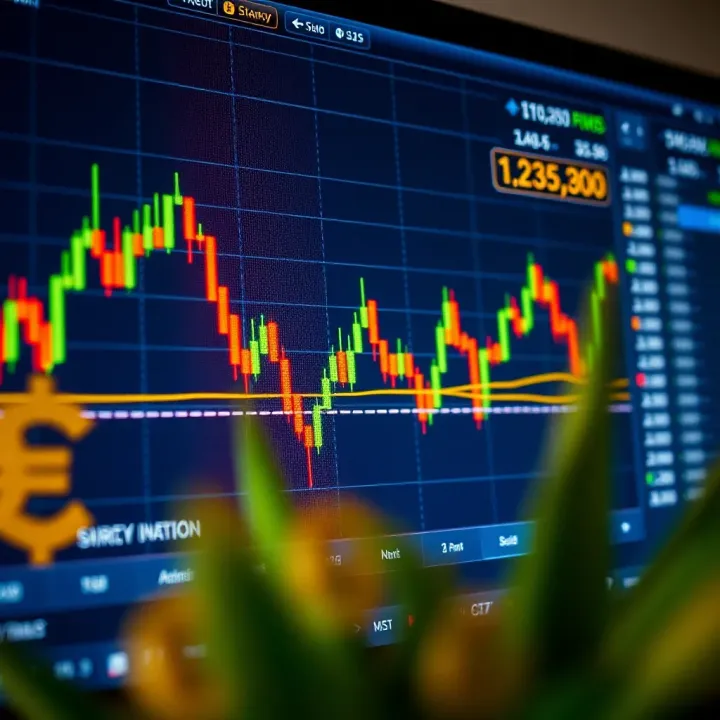
📈 Ready to start forex trading in Kenya? Learn how to pick regulated brokers, set up local accounts, manage risks, and use M-Pesa safely for smooth trading.

📚 Discover top books for mastering forex trading in Kenya. From basics to advanced tactics, boost your skills with expert insights and smart risk management.
Based on 9 reviews