

Understanding Binary: Basics and Uses
🔢 Understand binary numbers—how 0s and 1s power your mobile, computers, and networks. Learn conversions and practical uses in day-to-day tech and work.
Edited By
Sophie Clarke
Binary trading is a straightforward yet often misunderstood form of financial trading. Unlike traditional stock or forex trading, you make a simple yes-or-no prediction: will an asset's price be higher or lower than a set point by a specific time? Think of it like betting on a sports game, but instead, you're wagering on price movements in markets.
At its core, binary trading offers two possible outcomes: a fixed payout if you guess right, or a predetermined loss if your prediction misses the mark. For example, if you believe Apple’s stock price will be above $150 in the next hour and it is, you get a fixed return. If not, you lose the initial stake.

This capped risk and reward structure makes binary trading appealing to many newcomers. You know upfront your potential gain and loss, unlike standard trading, where markets can be volatile and unpredictable. However, this simplicity masks the underlying complexity—success depends heavily on timing, market knowledge, and understanding the chosen asset.
Key point: Binary trading is less about owning an asset and more about predicting short-term price movements with clear-cut outcomes.
You can trade a wide range of assets in binary trading. Common options include:
Stocks from companies like Tesla, Amazon, or Google
Currency pairs such as EUR/USD or USD/JPY
Commodities like gold, oil, or silver
Market indices like the S&P 500 or Dow Jones
Each asset behaves differently based on economic news, global events, and market sentiment. Knowing these factors can improve your predictions.
Binary trades operate with fixed expiration times. These vary widely—from as short as 60 seconds to daily or weekly expirations. The shorter the time frame, the faster you see results but also the more volatile and risky it can be. Longer expirations give you more time for the market to move in your favor but require patience and a strategic approach.
Imagine you predict the price of crude oil will rise within the next 5 minutes at $70 per barrel. You place a $100 trade. If the price closes above $70 in 5 minutes, you might receive $180 (your $100 plus $80 profit). If not, you lose your $100 stake.
Binary trading cuts through complexity with clear yes/no bets, but it demands strong market instincts and a solid grasp of timing. Understanding these basics sets the stage for exploring strategies, risk management, and how to approach this trading style effectively.
Binary trading might seem straightforward, but its significance lies in how it reshapes the way traders make decisions and manage risks. At its core, it boils down to predicting whether an asset's price will go up or down within a set timeframe. This simplicity makes it accessible to a wide range of traders, from novices just testing the waters to veterans who want to diversify their approaches.
Unlike traditional trading, binary trading offers clear-cut outcomes — you either win a fixed payout or lose your stake, depending on your prediction. This stark clarity helps traders quickly evaluate potential returns and decide if a trade fits their risk appetite. For example, if you bet $100 that the price of Apple stock will rise in the next hour, and you're right, you might earn a fixed $180 payout. If you’re wrong, you lose the $100 you risked. This all-or-nothing nature adds a layer of straightforwardness missing in many other trading forms.
Binary options are contracts that have only two possible outcomes at expiration — a fixed amount or nothing at all. They simplify complex market movements into a simple yes/no proposition: will the asset hit a certain price point by a specific time? For traders, this means focusing on direction rather than exact price levels, which lessens the guesswork.
Consider currency trading: rather than worrying about the exact dollar-yen exchange rate, you decide if the rate will be higher or lower after 15 minutes. If you bet correctly, you earn a predetermined payout; if not, you lose your initial stake. This makes binary options practical for fast-paced, short-term trading.
This payoff setup means the profit or loss is fixed from the start, removing any surprise variables. Traders know exactly how much they stand to gain or lose before making a move. This clarity helps prevent nasty shocks like unexpected slippage or margin calls that are common in traditional trading.
For instance, if you purchase a binary option on crude oil price movement, you might know beforehand the return is 80% if you win. Stake $100, and the maximum profit is $80; lose, and you forfeit the $100. This outright risk-reward balance appeals to traders who want predictable results.
Traditional trading often involves uncertain gains and unpredictable losses, depending on how much the underlying asset's price moves. Binary trading cuts through this uncertainty by locking in both risk and reward. This means you never lose more than you invest, and you always know your maximum potential return upfront.
This setup is especially practical for traders who want to manage exposure tightly. For example, rather than owning a volatile stock that can swing wildly, a binary option limits your downside to your initial stake. This makes it easier to budget trading capital without worrying about unexpected losses blowing your account.
Instead of complex analysis on entry and exit points, binary trading centers on a single question: will the price rise or fall? This streamlined choice reduces confusion, speeds decisions, and allows traders to act quickly, which is critical during volatile market moments.
Imagine you're watching the S&P 500 index. Instead of plotting multiple charts and indicators to figure out how far it might move, you just decide if it will be higher or lower in 30 minutes. This removes layers of technical clutter and can make trading less intimidating, especially for beginners.
Understanding these distinctions can help you decide if binary trading fits your style and goals. It simplifies risk and reward calculation but demands discipline and a clear strategy.
By grasping what binary trading means in practice, you set a strong foundation for exploring its mechanics, risks, and strategies in the following sections.
Understanding how binary trading operates is key for any trader aiming to participate confidently in this market. This section breaks down the practical steps—from picking an asset to finalizing a trade—highlighting the specific details and choices you’ll face.
Binary trading covers a range of assets, offering flexibility to suit different styles and interests. Common options include stocks from well-known companies like Apple or Tesla, major currency pairs such as USD/EUR, and commodities like gold or crude oil. For example, you might predict whether the price of gold will rise or fall in the next hour.
This variety matters because certain assets behave differently depending on market conditions. Currencies often react to geopolitical events, while stocks respond to earnings reports and industry trends. Knowing the asset’s behavior helps you make informed predictions.
When it comes to where you trade, nearly all binary options platforms provide access to these popular assets. Platforms like Nadex or IQ Option offer a wide selection, so you don't have to switch services just to trade different markets. However, not all platforms cover every asset, so it’s smart to check the available options before committing.
Choosing when your trade expires is a vital part of binary trading. Many platforms offer very short durations, some as quick as 60 seconds. These short-term expiration options appeal to traders who prefer fast outcomes and can capitalize on volatile markets.
That said, the timing you select directly impacts your chances and strategy. For instance, a one-minute trade on a volatile currency pair like GBP/USD requires quick judgment and can be riskier. Meanwhile, longer expiration periods allow more time for the predicted price movement to unfold but might be influenced by unexpected news or events.
At the core of binary trading lies a simple choice: call or put option. A call option bets the asset’s price will go up, while a put option bets it will go down. For example, if you believe Tesla’s stock price will rise within the next 15 minutes, you’d select a call option.
Executing your trade is straightforward on modern platforms. You select the asset, pick your time frame, decide whether you’re going call or put, and enter your investment amount. The interface typically displays your potential payout and risk upfront, so you know the maximum gain or loss right away.
The bottom line is: binary trading simplifies the complex world of markets to a clear yes-or-no prediction, with fixed outcomes and clear rules for every trade.
Navigating these steps well requires understanding both the tools and the market, but the process is designed to be accessible even if you’re new to trading. Knowing your assets, timing, and prediction types sets a solid foundation to proceed thoughtfully rather than guessing blindly.
When diving into binary trading, understanding the balance between risks and rewards is crucial. Knowing what you stand to gain — and lose — upfront helps you manage your trades smarter and protects your capital from unexpected hits. Binary trading simplifies some aspects by offering fixed outcomes, but that doesn't mean it's without risk.
Binary trading sets clear terms before you place your bet. The payout, if your prediction proves right, is predetermined by the broker and usually displayed upfront. For example, if you invest $100 in a binary option predicting a stock price to rise, and the broker offers an 80% payout, you’ll earn $80 in profit plus your original $100. The clarity here means you always know the reward if you win.
On the flip side, if your prediction is wrong, you'll typically lose the entire amount you staked — the $100 in this case. Some platforms return a small percentage of your stake to soften the blow, but losing your full investment remains the most common outcome. This transparent risk-reward setup lets you plan trades with precise knowledge of potential outcomes.
Binary options have fixed maximum gains and losses. Unlike traditional trading where gains can sometimes skyrocket or losses balloon unexpectedly, binary trading caps both. This design limits exposure and helps traders set clear boundaries.
Take for instance an options trade with a $50 stake and a guaranteed 75% payout. The maximum profit is $37.50, while the maximum loss is your $50 stake. This structure makes it easier to calculate how many winning trades you need to break even or profit, encouraging discipline and focused strategy.
The biggest risk in binary trading is the possibility of losing your entire stake on a trade. Since outcomes are all or nothing, a single wrong call wipes out your investment for that trade. That can add up quickly if you're not careful. For example, placing ten $100 trades with wrong predictions means you're down $1,000.
Market volatility plays a significant role too. Sudden price swings can shift assets beyond the predicted range just before expiration, causing unexpected losses even for trades that seemed promising minutes earlier. For instance, a news announcement might spike a currency's value, suddenly breaching your call or put option's strike price.
Managing risk means understanding these limits and tailoring your trades within your comfort zone. Always consider how much you're willing to lose on a single trade before jumping in.
By grasping these fixed payout models and risks, you can approach binary trading with more confidence and better control your exposure in this fast-paced environment.
Success in binary trading hinges on solid strategies and practical tips. With its all-or-nothing nature, making informed decisions is more than helpful—it’s necessary to avoid costly mistakes. This section highlights core approaches that traders should know, from analyzing markets to managing finances and emotions.
Using technical indicators helps traders spot patterns in asset price movements. Tools like moving averages, Bollinger Bands, and RSI (Relative Strength Index) offer concrete data points about trends and momentum. For example, when an asset’s RSI crosses above 70, it may signal overbought conditions suggesting a potential price drop, guiding traders toward a "put" option. These indicators don’t guarantee outcomes but provide a structured way to assess the market beyond gut feeling.
Chart setups combining several indicators often work better than relying on just one. Traders might look at volume alongside moving averages to confirm price trends. This layered approach improves the odds by filtering false signals in volatile markets.
Following market news involves tracking events that sway asset prices — like earnings reports, economic data releases, geopolitical developments, or central bank announcements. Suppose you hear that crude oil inventories unexpectedly increased; this news could push oil prices down, influencing your binary trade on commodities. Staying updated through financial news sources or market calendars enables you to anticipate sudden moves.
News impacts can be swift and significant. That said, it’s crucial to interpret headlines carefully and avoid acting on rumors or unverified information. Combining news insight with technical analysis often makes for a more balanced strategy.
Setting limits on how much capital you risk per trade or per day protects your bankroll over time. Many seasoned traders recommend risking no more than one to two percent of your total trading funds on a single binary option. For example, if your trading account holds $5,000, keeping stakes between $50 and $100 per trade helps manage losses when things don't pan out.
Discipline in capital allocation prevents chasing losses or overexposure. Some traders use daily loss limits—if they lose $300 in a day, they stop trading to avoid emotional errors or bigger hits.
Avoiding emotional decisions is probably the hardest tip to follow but absolutely necessary. Binary trading’s quick expiration times can trigger impulsive moves, such as doubling down after a loss or hesitating at the last moment. Emotions like fear and greed often cloud judgment.
One way to stay level-headed is to stick to a predefined trading plan that outlines entry criteria, budget limits, and exit rules. For example, if your strategy signals a "call" option and you’ve reviewed recent market trends and news, make the trade without second-guessing. Pausing to breathe or stepping away briefly after losses also helps maintain focus.
Keeping emotions out and playing smart wins over random bets every time.
Finally, regularly reviewing trades—both successful and failed—builds experience. It lets you adjust approaches based on what actually works, not just what feels right in the moment.
Bottom line: thorough research, cautious capital control, and emotional discipline provide the best shot at consistent binary trading results. These tips aren’t just theory; they’re practical rules that protect your money and improve decision quality day by day.
🔢 Understand binary numbers—how 0s and 1s power your mobile, computers, and networks. Learn conversions and practical uses in day-to-day tech and work.
Explore how binary works in computing 🖥️, understand its basics and arithmetic, plus see practical tech uses and data coding methods in everyday life.

Learn how binary trading works, including strategies, risks, and regulations in Kenya 🇰🇪. Get practical tips for smarter investing and managing your money wisely 📊💡.
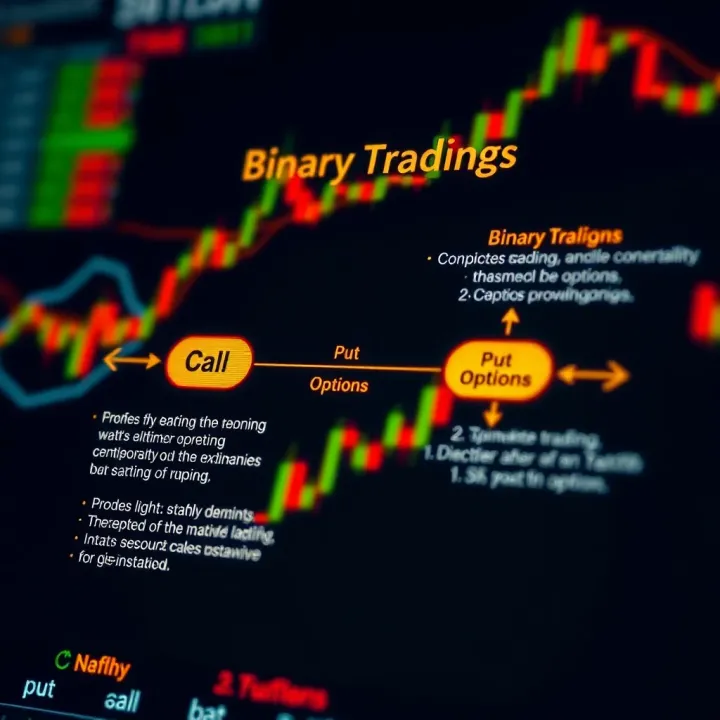
🌍 Explore binary trading in Kenya! Learn key strategies, legal tips, risks, platform picks, and tools to trade smarter and start strong today.
Based on 15 reviews