

Understanding Binary: Basics and Uses Explained
Explore how binary works in computing 🖥️, understand its basics and arithmetic, plus see practical tech uses and data coding methods in everyday life.
Edited By
Henry Mitchell
Binary forms the backbone of digital technology. At its core, it is a simple number system using only two digits: 0 and 1. This might sound basic, but these bits combine in countless ways to power everything from your mobile phone to complex trading platforms.
Unlike decimal, which we use in daily life and has ten digits (0–9), binary operates in base 2. This means each binary digit (bit) represents an increasing power of 2, starting from the right. For instance, the binary number 1011 equals 1×2³ + 0×2² + 1×2¹ + 1×2⁰, which totals 11 in decimal.
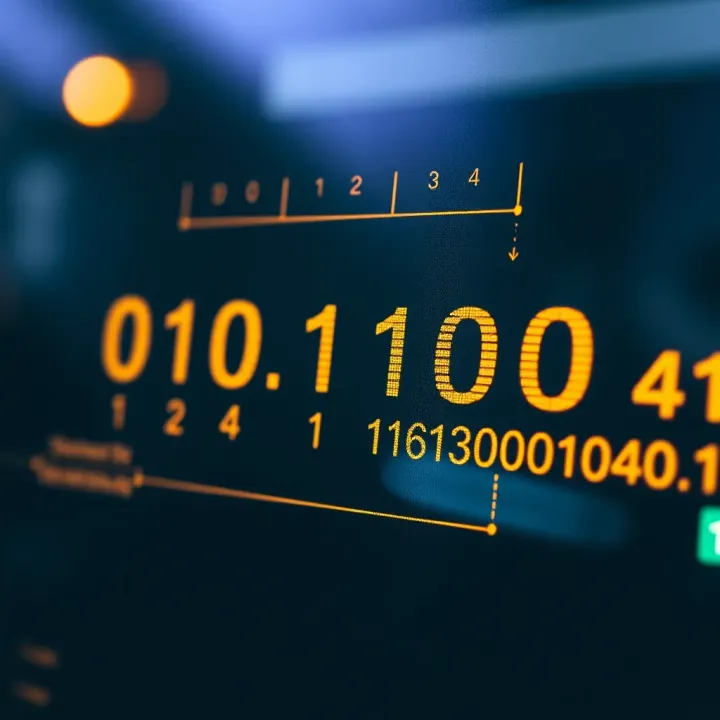
Understanding how to convert between binary and decimal is key for anyone interested in tech-driven fields like trading, data analysis, or software development. It helps demystify how information is stored and processed behind the scenes.
Financial systems rely heavily on computers that process vast data sets at lightning speeds. In Nairobi’s bustling trading scene, platforms use binary computations to monitor stock prices, execute trades, and manage portfolio risks efficiently. Even M-Pesa’s secure transactions depend on binary-coded encryptions.
Computing: Every app or software operates through machine language composed of binary code.
Networking: Internet communication protocols use binary to route information correctly.
Data Storage: Hard drives and SSDs store data as tiny binary states, representing everything from documents to videos.
Knowing the basics of binary lets investors and analysts better appreciate the technology’s role in the markets and everyday life. Next, we will explore how to convert numbers between binary and decimal with straightforward examples.
Binary is the basic language that computers and many digital devices use to operate. It might look simple, just zeros and ones, but this simplicity is what makes modern technology possible, from mobile phones to stock trading platforms. Understanding binary helps traders, investors, and analysts appreciate how data is processed and stored, which can improve their grasp of financial technologies and digital infrastructures.
At its core, binary is a number system that uses only two symbols: 0 and 1. Unlike the decimal system we use every day, which has ten digits (0 to 9), binary counts exclusively with these two digits. Think of it as a simple switch that is either off (0) or on (1). This simplicity allows electronic circuits to represent data reliably through electrical signals, where 0 is no current, and 1 is current flowing.
For example, the number 5 in decimal is represented as 101 in binary. Each position in the binary number stands for a power of two, starting from the right. This system might feel strange at first, but it's straightforward once you get used to the concept. Traders using financial software don't need to convert numbers manually but knowing binary exists helps demystify how data moves behind the scenes.
Every piece of software, from stock trading apps to analytics tools, relies on binary for its operations. Computers use binary to represent all types of information: numbers, text, images, and instructions. This uniform way of handling data enables machines to process complex calculations quickly and accurately.
If you imagine the Nairobi Securities Exchange (NSE) systems handling millions of transactions each day, the binary system is the silent engine behind these processes. Binary underpins logic gates and circuits in processors, allowing fast decision-making and data transfer. Without binary, modern computing would be far less efficient, and tools like real-time trading platforms or mobile banking apps like M-Pesa wouldn't function as seamlessly.
Mastering the basics of binary provides clarity on how digital systems you rely on for business, education, or everyday life actually function.
Familiarity with binary also aids professionals in understanding cybersecurity protocols and data encryption, which are essential for safe online transactions. Overall, binary bridges the gap between electronic hardware and the software applications vital to Kenya’s growing digital economy.
Understanding the binary number system is key for anyone involved in fields like trading, data analysis, or teaching computing basics. The binary system forms the backbone of digital technologies—from computers to networks—so grasping its principles helps you follow how data is represented and processed at the lowest level. Unlike the decimal system most of us use daily, binary operates on just two symbols: 0 and 1, which may seem limiting but actually allows remarkable efficiency and clarity in electronic circuits.
Binary digits, or bits, are the simplest form of data in computing. A bit can be either 0 or 1, signalling off or on, false or true. These bits combine to encode all kinds of information, from numbers to instructions. Think of bits as tiny switches that either allow current or cut it off, forming the language digital devices speak. For example, when you send money via M-Pesa on your mobile phone, your transaction is broken down into bits and processed by the system’s computers that rely entirely on these 0s and 1s.
We’re all familiar with the decimal system, which uses ten digits (0-9), with each position representing powers of 10. Binary works on a similar principle but with base 2. Each position in a binary number represents powers of 2, starting from the right with 2⁰, then 2¹, 2², and so forth. So, while the decimal number 13 is written as "13" (1×10 + 3×1), in binary it becomes "1101" (1×8 + 1×4 + 0×2 + 1×1). This simplicity makes it straightforward for electronic circuits that have only two states, such as on/off or high/low voltages.
Converting binary to decimal means calculating the total value that the binary bits represent. Each '1' bit counts as its position's power of two. For example, the binary number 1011 translates to decimal by adding: 1×8 + 0×4 + 1×2 + 1×1 = 11. This conversion matters when interpreting raw binary data into numbers meaningful to us, like prices, sensor readings, or user inputs. Traders analysing digital data feeds or educators teaching numeric systems benefit from knowing how to do such conversions, as they bridge the gap between machine language and human understanding.

Going the other way—decimal to binary—means breaking down the decimal number into sums of powers of two. The common method is dividing the decimal number by 2 repeatedly, noting the remainders (which are always 0 or 1). For instance, converting decimal 13 to binary involves dividing 13 by 2, getting remainder 1, then dividing 6 by 2 (remainder 0), and so forth, until no further division is possible. Writing these remainders in reverse order yields the binary number: 1101. Investors handling binary-coded market data or developers programming systems often use these conversions to ensure data aligns correctly between different formats.
Knowing how binary and decimal relate enhances your capacity to interpret data deeply, designing better strategies whether in programming, trading algorithms, or teaching digital literacy.
By mastering these basics, you're better equipped to decode the digital signals flowing through Kenya's bustling markets and technology hubs alike.
Binary code underpins almost all modern technology, making it essential for anything involving computers or digital communication. This system uses just two digits, 0 and 1, to represent data, instructions, and even multimedia. Its simplicity makes it reliable, easy to implement in hardware, and efficient for processing. Understanding how binary drives everyday tools helps traders, investors, and analysts appreciate the tech behind the market and consumer devices.
Computers rely on binary to represent everything from numbers and letters to complex images and sounds. Inside the computer's processor, electrical circuits switch between on (1) and off (0) states to perform calculations and logical operations. This binary switching is the language that CPUs understand, allowing them to execute software instructions. For example, when you open a spreadsheet, the computer converts your inputs into binary before processing and displaying results.
The use of binary streamlines data management and helps maintain accuracy. Since representing data in only two states reduces complexity, processors can run faster and with fewer errors. This efficiency is critical for stock trading platforms, where real-time data processing is non-negotiable.
Digital communication uses binary to encode messages sent across networks such as the internet, mobile phone systems, and Wi-Fi. Data is broken into bits, then transmitted as electrical signals, radio waves, or light pulses representing 0s and 1s. Receivers decode these bits back into readable content.
For instance, when you send an email or place an M-Pesa transaction, the information travels through various network nodes in binary form. Error-checking techniques ensure the data arrives intact, protecting financial transactions and sensitive communications. Understanding this flow clarifies why a stable connection and proper encryption matter so much in digital payments and online investments.
Your mobile phone uses binary to handle everything from basic calls to complex financial transactions via M-Pesa. When you send money or pay bills, the commands are converted into binary instructions processed by the phone's hardware and sent over telecommunication networks. This system ensures swift and secure processing, which is the backbone of Kenya’s thriving mobile money ecosystem.
M-Pesa’s reliance on binary allows millions of users to transact anytime, anywhere, without paper or physical cash. This efficiency supports the informal economy and enables convenient financial inclusion.
Digital TV transmits picture and sound as binary signals rather than the older analog method. These binary streams allow better quality images, clearer sound, and more channels within the same bandwidth. When your TV decodes these signals, it translates the 0s and 1s into the vibrant colours and crisp sounds you enjoy while watching sports or news.
This switch to digital broadcasting also supports interactive services and electronic programme guides, enhancing user experience.
In Nairobi and other towns, some matatu operators have adopted electronic payment systems linked to mobile wallets. These systems use binary-coded data to process payment confirmation, fare calculation, and ticket issuing. When you tap your phone or enter a payment number, the system quickly translates your request into binary signals to verify funds and record the transaction.
Such technology streamlines payments, reduces cash handling, and brings more transparency to the public transport sector. It also speeds up boarding times, helping reduce delays and crowding.
Binary might seem simple, but it’s the silent force powering the everyday tech that drives Kenya’s economy—from mobile banking to TV entertainment and public transport. Understanding its role helps make sense of the digital services we often take for granted.
Understanding the technical details of binary is key for anyone dealing with computing or digital systems. This part explains how binary logic, Boolean algebra, and data storage mechanisms really work together behind the scenes—and why they matter in practical terms. Getting to grips with these can sharpen your insight into how devices operate, process information, and manage large volumes of data.
At the heart of binary logic are simple gates: AND, OR, and NOT. Each one processes binary inputs (0s and 1s) to produce a single output. For example, an AND gate outputs 1 only if both inputs are 1; any other combination results in 0. The OR gate outputs 1 if at least one input is 1, and the NOT gate flips the input from 0 to 1 or vice versa.
These gates are like the basic grammar that computers use to understand and manipulate binary information. They form simple but powerful building blocks that combine to execute complex decisions and functions within software and hardware.
Logic gates form the foundation for everything from calculators to powerful servers. They enable processors to perform operations such as arithmetic, comparisons, and control flows needed in programming. For example, when you verify if funds in your M-Pesa account are sufficient before sending money, the system relies on these logic operations.
At a higher level, circuits made from these gates, called combinational and sequential circuits, manage data processing, memory operations, and signal control. Understanding this helps analysts and investors appreciate how innovations in chip design can impact performance and efficiency.
Binary data is stored and measured using bits and bytes. A bit is the smallest unit, holding either a 0 or 1. Eight bits make one byte, which can represent a letter, number, or symbol in digital systems. For example, your mobile phone stores text messages in bytes where each byte stands for a character.
Storage capacity for devices—from flash drives to servers—is often measured in bytes, using prefixes like kilobytes (KB), megabytes (MB), and gigabytes (GB). Knowing this helps you evaluate storage needs for tasks such as database management or cloud services.
Information in computers is stored on physical media like hard drives or solid-state drives by representing bits through electrical charges, magnetic orientations, or light states. When you save a file, the system converts your data into binary form and arranges it in these media using specific encoding standards.
Retrieval involves reading those binary states back and converting them into usable formats. Efficient storage and retrieval mechanisms affect not only speed but also security and cost—a vital consideration when managing financial or sensitive data.
A solid grasp of binary logic and storage techniques is essential for professionals involved in computing-related investments or education, providing practical insight into how technology actually runs under the hood.
Grasping binary is more than just an academic exercise; it plays a practical role in many aspects of technology that traders, investors, and analysts encounter daily. Knowing how binary works can clarify how computers handle data, why certain errors occur, or how digital security measures function. For example, when analysing network data or trading algorithms, understanding binary logic can help decode error messages or system outputs more quickly and accurately.
Binary forms the core language of all digital systems. Whether it’s a mobile phone processing your M-Pesa transaction or a computer running complex trading software, the actions hinge on binary instructions. For professionals involved in trading or investing, realising how such data is stored and processed gives an extra edge. For instance, when developing or reviewing an investment algorithm, recognising how bit storage limits might impact precision can influence decision-making.
Binary also underpins encryption and cybersecurity protocols. With rising cyber threats in Kenya’s growing digital economy, a solid grasp of binary basics helps in recognising vulnerabilities and boosting digital safety measures. Beyond technology, educators can use binary knowledge to demystify the digital world for students, making STEM subjects more accessible.
Getting hands-on with binary is the best way to internalise its principles. Start by converting small decimal numbers like 12 or 25 into their binary equivalents. Then, reverse the process by taking binary strings such as 1011 or 11100 and converting them back to decimal. Practising addition and subtraction with binary numbers strengthens your understanding further. For example, add binary 1101 + 101 (which equals 10010 in binary).
Try using everyday figures relevant to Kenyan contexts—for example, convert your daily mobile data usage or recent electricity bill numbers to binary. This practical twist helps embed the concept better. These exercises can be done on paper or using simple educational apps available locally.
Kenyan online education platforms such as eLimu and Kenya Institute of Curriculum Development (KICD) offer tailored tutorials and learning materials on binary and related ICT topics. These portals align with the 8-4-4 and Competency-Based Curriculum (CBC) systems, making them very useful for teachers and learners aiming to understand ICT fundamentals.
Moreover, some universities and technical institutes provide free or affordable online courses that cover binary systems within broader computer science or ICT programmes. Engaging with these resources offers a clear path from basic theory to its practical implementation in Kenyan settings.
Global platforms like Khan Academy and Coursera provide interactive courses and exercises on binary numbers and computer basics. These resources can complement local education by offering detailed explanations and practice opportunities, often with certificates that add value professionally.
For Kenyan professionals, websites with practical focus—such as tutorials on setting up secure digital transactions or understanding network data flows—often reference binary principles. These real-world applications increase the relevance of learning and can directly impact work efficiency, security awareness, and technical decision-making.
Understanding binary is a step towards comprehending the digital heartbeat of today’s economy. It’s not just theory, but a skill that unlocks practical insights in technology, trading, security, and education.
Explore how binary works in computing 🖥️, understand its basics and arithmetic, plus see practical tech uses and data coding methods in everyday life.

🔍 Explore how binary translators convert code across formats, boosting software and data communication. Understand types, tools, challenges, and key roles in computing.

Explore the meaning and practical uses of binary in tech 💻. Learn its history, how it powers everyday devices, and why it matters beyond numbers.

Explore how binary converters work ⚙️, their use in computing 💻, and easy methods to convert binary numbers for practical digital data handling 📊.
Based on 6 reviews