
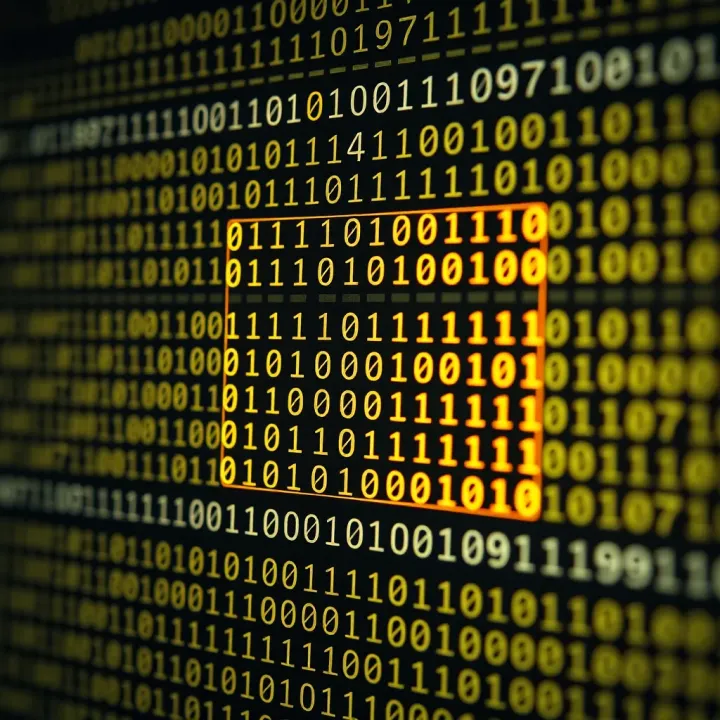
Understanding Binary Blocks in Computing
🔢 Explore binary blocks in computing and data storage. Learn their structure, manipulation techniques, and real-world uses in programming today.
Edited By
Oliver Reed
Binary is the heartbeat of modern computing. Whether you're analyzing stock trends, running complex simulations, or just browsing the web, your device's brain speaks in ones and zeros. These simple digits—0s and 1s—form the foundation of everything digital. Understanding how computers implement binary isn't just for tech geeks; it's crucial for anyone who wants to grasp how data moves and transforms in today's tech-driven world.
In this article, we'll dive into the nuts and bolts of binary implementation. From how binary represents data to how it’s processed and stored inside hardware and software, we’ll paint a clear picture without putting you to sleep with heavy jargon. We’ll also sprinkle in practical examples relevant to traders, investors, analysts, brokers, and educators who rely on technology daily.

Why bother? Because knowledge of binary can sharpen your understanding of system performance, data accuracy, and even security issues—things that directly impact decisions and outcomes in financial and educational sectors.
"Computers might speak in binary, but knowing this language helps you make sense of the complex financial and analytical systems they run."
What you can expect:
A breakdown of how binary data is represented in computers
How processors handle binary calculations to execute tasks
Storage methods for binary information, from RAM to solid-state drives
Real-world applications linking binary processing to everyday technology use
Let’s start this journey from the ground up—exploring how the simplest digits shape complicated computing tasks behind the scenes.
Understanding how binary representation works is like getting the blueprint of computing. It’s the basis of every operation that a computer performs, from simple calculations to complex transactions in financial markets. Without this foundation, digital devices wouldn’t be able to process or store any information reliably.
Binary representation boils down to using just two states, represented by 0 and 1, to encode data. This might sound basic, but it’s incredibly powerful because electronic circuits naturally handle two states — off or on, low voltage or high voltage. This simplicity helps reduce errors and increase the reliability of devices, which is why all modern technology relies on it.
For traders or analysts using any form of digital platform, grasping binary’s role means understanding what’s happening behind the scenes. For instance, when your trading software executes a buy or sell order, it’s binary data guiding the process in milliseconds. Knowing this also helps in appreciating why security and error correction protocols are so critical.
The binary system is a way of expressing information using only two digits: 0 and 1. It’s the language computers use because their hardware inherently operates with two voltage levels, which correspond to these digits. Each 0 or 1 is called a bit — the smallest unit of data.
This system’s main advantage is its simplicity and its ability to represent complex information through combinations of bits. For example, the number 5 in decimal is 101 in binary; a mix of zeros and ones that machines comprehend easily. This encoding enables clear, precise communication within machine components.
Digital devices—phones, laptops, ATMs—run on binary because it’s efficient and less prone to interference. Imagine trying to read a dial showing any of thousands of shades of color to represent something; it’d be confusing and error-prone. Binary’s two-state system (off/on) simplifies this, making electronics more robust and less likely to misinterpret signals.
This foundation also influences software design, networking, and data security. For professionals in trading and analytics, this means the platforms they rely on use binary to keep data consistent and transactions secure.
A bit is a single binary digit, either 0 or 1. However, one bit alone can only represent two states—like a coin showing heads or tails. To express more complex values, bits are combined into bytes, usually groups of eight bits. A byte can represent 256 different values (ranging from 0 to 255), sufficient to encode a character, such as a letter or symbol.
In everyday terms, think of bits as individual letters and bytes as words. That makes bytes the basic building blocks for nearly all data types, including text, images, and numbers.
The binary numeral system counts using powers of two, rather than ten like the decimal system we use daily. Each position in a binary number represents 2 raised to the power of its place, starting from zero on the right. For example:
The binary number 1101 equals:
(1 * 2³) + (1 * 2²) + (0 * 2¹) + (1 * 2⁰)
Which equals 8 + 4 + 0 + 1 = 13 in decimal.
This method ensures a straightforward pattern for computers to follow when performing arithmetic or storing data.
By understanding bits and how they form bytes, you’re better equipped to grasp how digital systems organize and manage information—an essential insight for anyone working with or trading on digital platforms.
Understanding how binary data is encoded is essential because it's the bridge between human-readable information and machine-level processing. In computing, every piece of data—numbers, text, images, or sounds—needs to be translated into a binary form that computers can handle efficiently. Without a clear way to encode data into binary, digital devices wouldn't be able to store or process information correctly.
Converting decimal to binary is the first step in making numbers understandable for computers. The decimal system we use daily is base-10, but computers work in base-2. To convert a decimal number, say 13, into binary, you repeatedly divide the number by 2 and record the remainder. For 13, dividing by 2 gives 6 (remainder 1), then 3 (remainder 0), then 1 (remainder 1), and finally 0 (remainder 1). Reading the remainders backward: 1101. This simple process is crucial when programming low-level tasks or debugging because it shows exactly how numbers sit in memory.
Binary arithmetic basics involve simple operations like addition, subtraction, multiplication, and division but using only 0s and 1s. For instance, adding 1 + 1 in binary results in 10, like carrying over in decimal system addition. These operations are fundamental for everything from calculators to complex algorithm computations in financial trading systems. Grasping these basics helps traders and analysts appreciate how raw data transforms inside processing units.

ASCII and Unicode encoding are methods to represent characters as binary code. ASCII, from the early days of computing, uses 7 or 8 bits to represent characters, like 'A' which corresponds to 01000001. However, ASCII covers only basic English characters and symbols. Unicode expands this to handle characters from nearly every language, supporting a much bigger set of symbols essential for international markets and diverse user interfaces. For traders or investors working with global platforms or reports, understanding that Unicode enables seamless communication across different languages and symbols in software is important.
Storing images and audio in binary involves breaking down visual and sound information into binary data. For example, a photo is typically saved in formats like JPEG or PNG by converting pixels into binary values representing color and brightness. Audio files like MP3 compress sound waves into binary bits capturing tone and timing. This binary encoding allows fast transmission and storage on digital media, crucial for brokers relying on real-time data feeds and analysts reviewing media content without delays or loss of quality.
In short, encoding ensures data is rightly formatted for storage and processing, letting computers and software systems speak the same binary language across different types of information.
By grasping these concepts, professionals working in finance and technology benefit by understanding how data translates into the digital operations that power their tools and platforms daily.
Binary implementation in computer hardware plays a fundamental role in how electronic devices operate behind the scenes. At its core, every digital device—from your laptop to a high-frequency trading server—relies on binary signals, representing information through combinations of 0s and 1s. This simplicity is powerful because it allows reliable, fast, and cost-effective hardware designs.
To understand the hardware aspect, we need to explore the basic building blocks where binary logic is physically realized and manipulated. It’s not just theory; it directly impacts performance, stability, and power consumption of computing devices.
Logic gates are the tiniest decision-makers in a computer’s brain, deciding whether to output 0 or 1 based on the inputs they receive. The most common gates—AND, OR, NOT, NAND, NOR, XOR—each follow specific rules laid out in truth tables. For example, an AND gate outputs 1 only if all its inputs are 1.
These gates aren't just academic exercises; they underpin every operation inside a processor. When you execute a trade order on your screen, millions of these gates have worked silently, making logical decisions at lightning speed.
Understanding logic gates helps grasp how simple binary decisions build up complex functions.
It’s foundational knowledge for fields like hardware design, embedded systems, and even cybersecurity.
Combine logic gates, and you get digital circuits that carry out tasks ranging from adding numbers to controlling memory flow. For instance, an adder circuit made of several gates can sum binary numbers—a critical step in almost any computation.
These circuits are arranged on microchips manufactured by companies like Intel and AMD. Each chip hosts billions of gates fashioned into complex arrangements that execute machine code. Familiarity with digital circuits reveals how hardware efficiently transforms raw binary into meaningful outputs.
Random Access Memory (RAM) stores binary data temporarily, offering quick read and write access to the processor. It uses transistors as tiny switches to represent bits, with an 'on' transistor indicating 1 and 'off' as 0.
RAM’s speed and binary nature mean that when you pull up a trading platform or spreadsheet, data manipulation happens in milliseconds. The binary data it holds fluctuates constantly, reflecting your ongoing interactions and computations.
Unlike RAM, storage devices like hard drives and SSDs store data persistently. Traditional hard drives use magnetic alignment of tiny regions on the disk—the direction corresponds to binary 0 or 1. SSDs, on the other hand, use floating-gate transistors to trap electrons and represent binary states.
These storage methods ensure that important files and databases, including market data and transaction records, remain intact even when the power is off.
Binary implementation in hardware turns everyday user actions into electrical signals and physical states precisely controlled by digital logic and memory technology.
In summary, the whole world inside your device hinges on these binary foundations—from microscopic logic gates firing in sync to memory chips holding data next to calculations. This efficient and compact implementation keeps digital technology efficient and reliable for all users, including traders and analysts who depend on swift data processing.
Understanding binary processing within software systems is like getting the gears turning in the digital engine – it’s where the raw zeros and ones take on meaningful forms, allowing software to talk directly to hardware. It's a key part of how computers transform encoded instructions into practical actions, from running a spreadsheet to streaming a video. This section sheds light on how binary data operates behind the scenes in software, making everything tick smoothly.
Binary machine code is the most basic language a computer understands—literally a stream of ones and zeros that represents instructions for the processor. Unlike human-friendly programming languages, machine code is tedious to read but executes lightning-fast. This code tells the CPU exactly what to do: add numbers, jump to another instruction, or move data around. For example, an Intel processor uses a complex yet precise set of binary commands tailored to its architecture, ensuring efficient execution. In essence, binary machine code is the interface between human-written code and hardware commands.
Instruction sets and operations define the range of commands a processor can perform. Each processor family, like ARM or x86, has its own instruction set, which translates higher-level commands into specific sequences of binary machine code. These instructions cover operations like arithmetic, data movement, and control flow. Knowing about instruction sets is crucial for software developers optimizing performance-critical applications, such as trading algorithms that rely on swift calculations. By grasping these sets, analysts can appreciate why some software runs faster on certain hardware setups.
Compilers and binary output serve as the translators that convert high-level human-friendly languages like C++ or Java into binary machine code. When you write a program, the compiler breaks down your instructions into an efficient series of binary commands that your processor can execute directly. For instance, GCC is a widely used compiler that translates C code into optimized machine code for various architectures. This conversion is vital because it bridges human intent with hardware execution, ensuring software performs well without bogging down the system.
Interpreters and bytecode offer a slightly different approach, where code isn’t fully compiled to native machine code immediately. Instead, many languages like Python or Java use an intermediate step called bytecode, which is a compact, efficient binary representation that an interpreter can execute. Java’s JVM interprets bytecode, allowing programs to run on any system with a JVM, adding portability but sometimes at a small performance cost. This process is essential for developers needing flexibility across platforms without rewriting code for every machine.
Binary processing in software is not just about zeros and ones; it’s about the translation, execution, and optimization that link software logic with physical hardware operations, making computers both powerful and versatile.
Understanding these layers of binary processing helps traders, investors, and analysts see how software truly operates under the hood—highlighting why speed, efficiency, and compatibility matter in critical computing tasks like financial modeling and data analysis.
Binary implementation isn’t just a behind-the-scenes detail—it’s the backbone of many everyday technologies. Whether you’re trading stocks, analyzing market data, or simply sending a message, binary data plays a crucial role. This section looks at where binary implementation shows up most commonly, focusing on networking and data transmission, as well as security and encryption. These are practical arenas where understanding binary can make a real difference.
When you’re streaming live market updates or trading on a platform, the information travels in chunks known as binary data packets. These packets are like digital envelopes containing bits of data transported over the internet or any network. Each packet has a header with routing info and a payload holding the actual data, all encoded in binary.
For example, when a stock trader clicks "Buy," that instruction is broken down into binary, packed into a data packet, and sent to the exchange’s server. This makes the process lightning fast and reliable. Understanding these packets can help tech teams optimize network speeds and troubleshoot issues that might slow down trades.
Protocols like TCP/IP or UDP govern how binary data packets are sent and received. They set rules ensuring data arrives intact and in order. TCP/IP, for instance, double-checks data to prevent errors, essential when milliseconds can mean thousands of dollars in the stock world.
Consider HTTPS, which secures online transactions by wrapping binary data in encryption, adding a safety layer. Knowing how these protocols work helps analysts appreciate why certain networks perform better and how data integrity is maintained.
At the heart of digital security, binary keys enable cryptography — turning readable data into scrambled code to keep it safe. These keys are sequences of binary bits that lock and unlock data, much like a padlock.
In finance and trading, this is crucial to protect sensitive info such as client details or transaction records. RSA and AES encryption algorithms rely on binary keys to keep your investments secure from hackers. Understanding these concepts reassures users that their data is guarded by complex, yet elegant, binary methods.
Encryption takes binary data and transforms it to ensure only authorized parties can access it. When you send a confidential report or a trade instruction, your data gets encoded into a secure binary format, invisible to eavesdroppers.
This encoding uses hash functions or symmetric keys, converting readable info into a jumble of bits. VPNs and secure messaging apps employ such binary encoding techniques daily. For brokers and analysts, grasping this mechanism explains how privacy is maintained over risky networks.
Binary implementation is more than just computer talk—it's the language keeping our digital interactions accurate, secure, and reliable, especially in high-stakes environments like trading and investment.
By appreciating these common applications, professionals in finance and related fields can better understand the systems they rely on every day. This knowledge isn't just technical jargon; it’s a tool that can enhance decision-making and security awareness in all digital dealings.
Binary systems are the backbone of computing, but they come with their own set of challenges and restrictions that anyone working with digital technology needs to know about. Understanding these issues helps traders, analysts, and educators alike grasp why certain glitches crop up and what limits the digital devices they depend on.
Binary data is remarkably efficient, but it's not immune to errors. Common binary errors usually occur due to noise, interference, or hardware faults which can flip bits from 0 to 1, or vice versa. For example, when transmitting data over a network, a single flipped bit might transform a valid transaction record into gibberish, potentially causing errors in financial reports or trading algorithms.
To keep things reliable, error detection and correction techniques are essential. One straightforward method is the parity check, where an extra bit is added to make the total number of 1s either even or odd. If a single bit flips during transmission, the parity won't match, signaling that an error occurred. This method is simple but limited since it can only detect odd numbers of bit errors.
For more robust checks, cyclic redundancy checks (CRC) come into play. CRC algorithms generate a checksum based on the data's bits before sending, and the receiver recalculates this to verify integrity. These are commonly used in network protocols and storage devices because they can detect multiple-bit errors more reliably. Traders or brokers dealing with high-frequency data exchanges probably rely on CRC to ensure their real-time data stays accurate.
Effective error detection and correction mean fewer data mishaps, which is crucial when milliseconds can affect trading decisions.
One limitation in binary computing is the finite size of binary representation. Since computers use fixed-length bit sequences, they can only represent numbers up to a certain maximum. For instance, a 32-bit integer can hold around 4.2 billion different values, which sounds large but can quickly be outpaced in high-precision simulations or huge datasets.
This limit also affects decimal number accuracy. Floating-point representation, a common way to store real numbers, can introduce rounding errors. Financial analysts working with currency conversions know that tiny decimal mismatches can add up, impacting profit calculations or risk assessments.
Looking ahead, future trends in binary computation involve pushing these boundaries with techniques such as quantum computing and alternative number systems. Quantum computers use qubits, which can represent 0 and 1 simultaneously, potentially solving problems beyond classical binary capabilities.
Additionally, researchers explore multi-valued logic systems that go beyond 0 and 1 to include more states per unit, which may improve data density and processing speed. While these ideas aren't mainstream yet, they hint at future ways to overcome today's binary constraints—something investors and analysts will want to keep an eye on as technology evolves.
Understanding the challenges and limitations helps professionals anticipate problems and adopt technologies that best fit their needs, ensuring binary systems continue to serve as a solid foundation for computing in all sectors.
🔢 Explore binary blocks in computing and data storage. Learn their structure, manipulation techniques, and real-world uses in programming today.

Explore how binary digits (bits) power computing 🖥️, shaping data processing and tech innovations in Kenya and beyond 🌍.

🔢 Understand binary subtraction with clear explanations, practical examples, and tips to avoid mistakes—all tailored for learners and tech pros in Kenya.
🔢 Explore binary multiplication basics, step-by-step methods, and its role in computing and digital tech, plus tips to optimize this essential process.
Based on 15 reviews