

Practical Forex Trading Strategies for Kenyan Traders
📈 Discover practical forex trading strategies tailored for Kenyan traders! Learn risk management, market tips, and smart techniques to boost your wins. 🇰🇪
Edited By
Victoria Saunders
Forex trading happens around the clock, with markets in Asia, Europe, and the Americas opening and closing at different hours. This constant activity across time zones creates a dynamic environment that influences trading volumes, liquidity, and price volatility.
Understanding these time zones is key for traders wanting to optimise their strategies. For Kenyan traders, knowing when specific sessions are active allows better timing for entries, exits, and risk management.
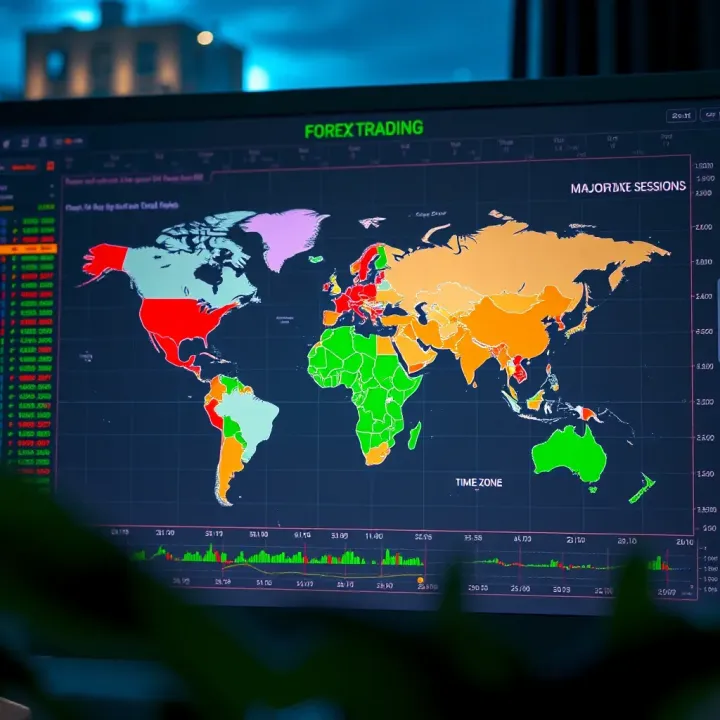
The global forex market is generally divided into four main sessions based on geographic regions:
Asian Session (Tokyo): Active roughly from 12 am to 9 am East Africa Time (EAT). This session sees steady movement in currencies like the Japanese yen (JPY), the Australian dollar (AUD), and the New Zealand dollar (NZD).
European Session (London): Opens around 9 am and closes by 6 pm EAT. This is the largest forex session, with high liquidity and trade volumes. Major pairs like EUR/USD, GBP/USD, and USD/CHF are most active.
American Session (New York): Runs from about 2 pm to 11 pm EAT. It often overlaps with the European session in the afternoon, creating peak trading activity and volatility.
Pacific Session (Sydney): Less prominent but important for early liquidity, running approximately 10 pm to 7 am EAT.
Trading volumes and volatility shift sharply between these sessions. For instance, during the European–American overlap (2 pm to 6 pm EAT), price movements tend to be more significant due to high participant activity. Conversely, the Asian session usually has lower volatility, making it suitable for less risky trading strategies.
Currency pairs linked to active markets during their session tend to have tighter spreads and better price action. For example, trading USD/JPY during the Tokyo session gives clearer signals compared to random hours.
Tip: Align your trading hours with sessions where your chosen currency pairs display active movement to increase chances of success.
Time your trades to the European session if you prefer higher volatility and liquidity.
Use the quieter Asian session for careful, low-risk trading setups.
Watch the overlap between London and New York sessions for potentially larger price swings but remember to manage risk tightly.
Keep an eye on economic news releases; they usually happen during the main sessions and can cause sudden market moves.
By syncing your trading strategy with these forex time zones, you gain better control over market behaviour, improve timing, and tailor your approach to suit different market conditions.
Understanding forex trading hours worldwide is essential for anyone involved in currency trading. Since the forex market operates continuously across different time zones, knowing when markets open and close helps traders plan their strategies effectively. For instance, a Kenyan trader recognising key trading hours can avoid low-activity periods and focus on sessions with better liquidity to improve chances of profitable trades.
The forex market never truly sleeps because it lacks a single central exchange. Instead, it functions as a network of banks, brokers, and traders spread across the world, making it a decentralised market. This continuous flow means that as one major financial centre closes, another opens, allowing trading to carry on without interruption. For example, when Tokyo’s session ends, London’s session begins, keeping the market active around the clock.
Global financial centres like Tokyo, London, and New York play a major role in maintaining this 24-hour flow. These hubs each run their own active trading hours, influenced by local time zones and economic activity. Their combined operations ensure there are always participants ready to buy or sell currencies. Kenyan traders can benefit by understanding when these centres operate, since activity spikes during these hours bring more trading opportunities.
The forex market is divided into major sessions linked to these financial centres: the Asian session (Tokyo), the European session (London), and the North American session (New York). Each session features distinct trading behaviours and active currency pairs. For instance, the Asian session commonly sees activity in USD/JPY and AUD/USD pairs, while the European session centres around EUR/USD and GBP/USD.
Trading volumes vary greatly between these sessions. Volume tends to be lower during the Asian session, picks up when London opens, and peaks during the overlap of the London and New York sessions. Higher volumes usually mean tighter spreads and better execution. As an example, Kenyan traders might notice that evening hours, coinciding with London’s open, offer better liquidity compared to early morning hours aligned with Tokyo.
Knowing the structure and timing of forex trading sessions helps traders choose when to enter the market, manage risks better, and align their strategies for the most active periods.
In summary, understanding forex trading hours worldwide bridges the gap between global market activity and individual trading decisions. This knowledge can be the difference between navigating choppy markets or riding smooth waves of liquidity and volatility.
Understanding the distinct characteristics of forex trading sessions helps traders align their strategies with market behaviours. Each session brings unique liquidity levels, volatility, and preferred currency pairs. Knowing these details allows for better timing of trades, maximising profit potential while managing risks.
The Asian session primarily runs from 12:00 am to 9:00 am East Africa Time (EAT), with Tokyo as the main hub. For Kenyan traders, active forex trading begins late at night through early morning. This window suits night owls or those managing daytime commitments, offering opportunities to trade when other markets are closed.
During the Asian session, currency pairs linked to the Japanese yen (JPY), Australian dollar (AUD), and New Zealand dollar (NZD) tend to show activity. For instance, USD/JPY and AUD/JPY pairs exhibit noticeable movement. Traders focusing on these pairs can anticipate trends driven by economic news from Japan, Australia, and New Zealand.
The Asian session generally has lower volatility compared to European and US sessions but maintains steady liquidity. This consistency can be ideal for traders preferring swing or carry trade strategies rather than quick scalping. However, unexpected news releases, such as Bank of Japan announcements, can spark sudden price swings.
The London session operates from 10:00 am to 7:00 pm EAT, covering typical office hours in Kenya. This makes it convenient for traders to watch markets during their day. The session overlaps with the end of the Asian session and the start of the New York session, increasing overall market activity.
London acts as the largest forex trading centre, where roughly 30-40% of daily forex volume occurs. Major economic data from the UK and European Union emerge during this time, influencing currency movement. Kenyan traders should pay close attention to announcements like Bank of England interest rate decisions or Eurozone GDP figures.
Pairs involving the euro (EUR), British pound (GBP), and Swiss franc (CHF) are most active in the London session. Examples include EUR/USD, GBP/USD, and USD/CHF. Volatility spikes in these pairs can offer high-return opportunities, especially during economic events or market open times.
The New York session runs from 3:00 pm to 12:00 am EAT, making it accessible for traders who prefer afternoon and evening activity. This session overlaps with London for a few hours, boosting liquidity and market movements.
The overlap between London and New York sessions (3:00 pm to 7:00 pm EAT) is the busiest trading period. During this time, volatility and volumes peak, creating ideal conditions for short-term traders and scalpers. Markets react strongly to US economic reports, such as non-farm payrolls and Federal Reserve announcements.
The New York session often features sharp price movements, especially in USD-related pairs like USD/CAD and EUR/USD. Traders should expect increased volatility but also more predictable trends based on US market sentiment. Proper risk management is crucial during this active trading period.
Being familiar with the timing and traits of these forex sessions lets Kenyan traders schedule their activities wisely, choose suitable currency pairs, and react effectively to market changes that align with their local time and lifestyle.
Grasping the overlaps between forex trading sessions is vital for traders. These periods bring together two active markets, causing surges in trading volumes and liquidity. For Kenyan traders, understanding when these overlaps occur helps in pinpointing times with greater market activity, which can translate into better opportunities for entering or exiting trades.
When two trading sessions overlap, the number of active participants in the market rises sharply. For example, the London and New York sessions overlap for about four hours each day. This period typically sees the largest volume of trades and tighter spreads, which benefits traders by allowing smoother and faster transactions. High liquidity during these overlaps reduces the cost of trading as the difference between buying and selling prices narrows.
Session overlaps often come with increased price movements due to the influx of orders. This higher volatility means prices can swing significantly within short periods, creating chances for traders to make quick profits. However, these movements can also be sudden and unpredictable, so traders need to be prepared with strategies that handle fast-changing markets.
The London-New York overlap is the most notable, running from 3 pm to 7 pm East Africa Time (EAT). This window sees the most intense trading and affects major currency pairs like EUR/USD, GBP/USD, and USD/JPY. Another overlap occurs between the Tokyo and London sessions, though it is shorter and less volatile—from 11 am to 12 pm EAT—and mainly impacts Asian and European stocks and currencies.
High-activity periods can cause quick changes in price, which might trigger stop-loss orders or cause traders to panic. A good approach involves setting narrower stop-loss levels during overlaps while monitoring positions actively. Kenyan traders should avoid chasing trades impulsively during these swings and instead stick to a clear plan.
Using tools like volatility indicators or ATR (Average True Range) can help traders gauge market movement extent and adjust their risk accordingly. Strategies such as scalping or shorter-term swing trades are often more suited for these periods, as they aim to profit from smaller price shifts within the volatility.
During overlaps, some currency pairs are more active and liquid than others. Traders should focus on major pairs like EUR/USD, GBP/USD, and USD/CHF when London and New York sessions overlap. These pairs typically respond well to the increased activity, offering more predictable price behaviour and better spreads, making trading cost-effective and efficient.
Overlaps between trading sessions are windows where liquidity and volatility coincide, but they demand heightened attention and risk management to navigate successfully.
Understanding these overlaps allows Kenyan traders to optimise their trading hours and strategy choices, helping them make smarter decisions aligned with market rhythms.
Aligning forex trading hours with global sessions is key for Kenyan traders to make the most of market movements. Since forex operates 24/5 across time zones, understanding when major sessions open and close in East Africa Time (EAT) helps traders catch peaks in liquidity and volatility. This timing knowledge avoids trading in quiet hours that often have little movement and wider spreads, which can eat into profits.
For example, Kenya is three hours ahead of London during Standard Time and two hours during British Summer Time. Knowing these differences allows traders to plan their day effectively rather than waking up or staying up at odd hours without purpose.
To trade smartly, Kenyan traders need a clear view of forex session times adjusted to EAT. The Asian session usually runs from 4 am to 1 pm EAT, the European session from 10 am to 7 pm EAT, and the North American session from 3 pm to midnight EAT. These shifts affect when currencies like the Japanese yen or British pound see the most action.
Practically, this means if you are trading from Nairobi, you can monitor the Asian session early in the morning, catch the busy London hours mid-day, and pick up on New York activity in the late afternoon through evening. This knowledge helps identify the best windows for executing strategies tied to specific currency pairs.
Traders balancing other commitments might prefer to focus on the European and North American sessions, which overlap from around 3 pm to 7 pm EAT. This period tends to yield higher volumes and sharper price moves, offering good entry or exit points.
Some traders might start their day with the Asian session to catch early movements, then take a break during quieter hours before returning in the late afternoon. This approach keeps trading hours manageable while still engaging during most active market phases.
Most Kenyan traders hold day jobs or other activities that limit their availability during typical market hours. By understanding session timings, it's possible to slot trading around your schedule instead of the other way round. For instance, evening trading during the New York session's start aligns well with post-work hours.
The overlap between London and New York sessions around 3 pm to 7 pm EAT offers strong liquidity. Kenyan traders can benefit from this period without disrupting daily routines. It often sees reliable trends and tighter spreads, reducing trading costs and risk.
Several modern trading platforms, including MetaTrader 4/5 and cTrader, allow users to display session times in their local timezone, making it easier to spot opening and closing of sessions directly on charts. This feature helps Kenyan traders react quickly without manual conversion.
Mobile apps with custom alerts provide real-time notifications for session starts, high volatility, or news releases. For busy Kenyans, receiving timely alerts on phones ensures they don't miss key moments even when away from the computer. Apps like TradingView and brokerage platforms supporting M-Pesa payments also cater well to the local market.
Knowing when to trade goes hand in hand with knowing what to trade. Aligning session times with your daily life and using technology can greatly improve your forex trading results as a Kenyan trader.
Maximising forex trading during the main sessions requires a clear understanding of how market behaviour changes with time zones. Knowing when to adjust your strategies based on the session can improve your chances of success and reduce risk. For Kenyan traders, aligning your trading times with the active periods of specific sessions — Asian, European, or North American — makes a big difference. Here, we focus on practical advice to help you time your trades well and understand the trading rhythm based on session characteristics.
Scalping, or making quick trades for small profits, works best when the market is highly active and volatile. The overlaps between major sessions — like when London and New York are both open — create this environment. During these hours, liquidity surges and price movements are rapid. For example, between 4 pm and 6 pm EAT, both sessions operate, providing greater price swings and tighter spreads. This allows scalpers to enter and exit trades quickly with minimal slippage.
However, scalping demands close attention and fast decisions. Kenyan traders looking to scalp should monitor real-time news and use platforms with low latency to stay ahead. Avoid scalping during low-activity hours, as the price tends to stagnate, increasing the risk of losses or missed opportunities.
Swing trading involves holding positions over longer periods, taking advantage of broader market trends. This strategy fits quieter sessions with less volatility, such as the Asian session outside the Tokyo active hours. During these times, price moves tend to be smoother and less erratic, giving traders a chance to analyse price action and set entries with more patience.
For traders in Kenya, focusing on swing trading during the early hours (around 2 am to 9 am EAT) allows balancing a day job with forex activities. Currency pairs like USD/JPY and AUD/USD often show steady trends with fewer surprise spikes in these sessions, which suits swing trading techniques.
One common pitfall is trading during quiet market hours when liquidity is low. This usually means wider spreads, less predictable price action, and higher risks of slippage. For example, trading EUR/USD during the early morning hours in Kenya (around midnight to 2 am EAT) can be frustrating since neither the European nor American markets are active then.
Sticking to the times when major sessions are open ensures better execution and more consistent price patterns. Kenyan traders should create a schedule that matches active market hours relevant to their target currency pairs to avoid these pitfalls.
Daylight saving time can catch traders off guard, shifting session hours by one hour and affecting timing. While Kenya does not observe daylight saving, major markets like London and New York do. If traders don’t adjust their clocks accordingly, they may miss crucial overlaps or trade during off-hours unintentionally.
A practical tip is to mark these changes in your trading calendar each year and adjust alarm times or trading routines. Many trading platforms and mobile apps now offer alerts adjusted for daylight saving, helping Kenyan traders stay in sync without guesswork.
Understanding forex trading hours and tailoring strategies accordingly is not just helpful but necessary. By respecting active sessions and avoiding time zone mix-ups, you are better placed to trade smartly and manage your risks effectively.
By applying these practical tips, Kenyan forex traders can improve performance, protect capital, and better navigate the dynamic, around-the-clock forex market.
📈 Discover practical forex trading strategies tailored for Kenyan traders! Learn risk management, market tips, and smart techniques to boost your wins. 🇰🇪
Explore proven forex trading strategies for Kenyan traders 🇰🇪. Learn key tactics, risk management, and tools to boost your trading success 📊💹.
📊 Discover how to read forex trading charts, identify patterns, and use technical indicators effectively to make smarter currency trades in Kenya’s market.
Explore top forex trading companies in Kenya 🇰🇪, learn about regulation, broker reliability, services, and key tips to pick the right one for you 📈💼.
Based on 5 reviews