

Forex Trading for Beginners in Kenya
📈 Learn forex trading basics for beginners in Kenya with this practical PDF guide. Discover tools, start safely, and master strategies to grow your funds confidently.
Edited By
Benjamin Clark
Trading foreign exchange, or forex, might seem overwhelming at first, but it’s one of the most accessible markets for anyone interested in finance. Unlike stock markets that close at the end of the day, forex operates 24 hours a day, five days a week. This nonstop action can offer plenty of opportunities, but it also demands a solid understanding of how the market functions.
At its core, forex trading involves buying one currency while selling another simultaneously. Currency pairs like EUR/USD or USD/JPY are the building blocks of this market. The value of a pair reflects how much one currency is worth compared to the other. For example, if EUR/USD is 1.10, it means one euro costs $1.10.
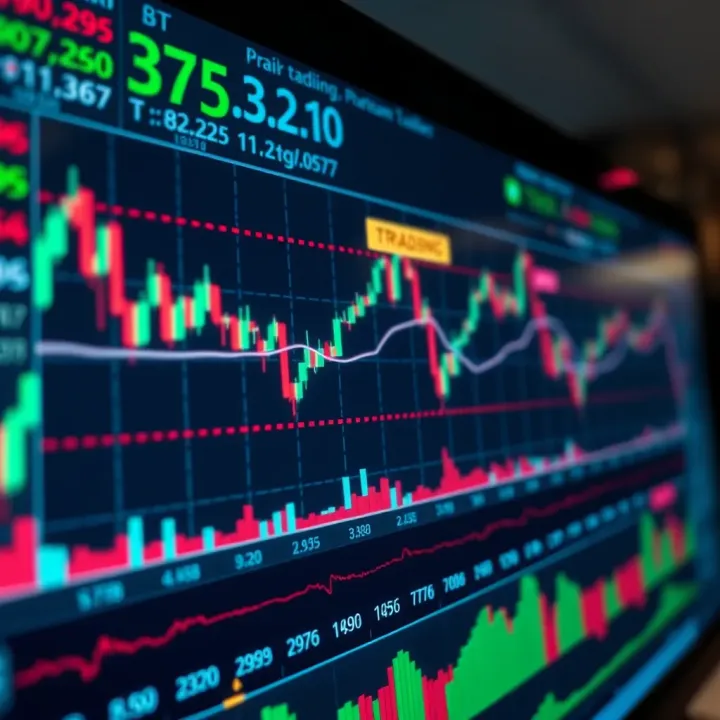
Understanding these pairs is essential because all trading decisions come down to predicting whether a currency will rise or fall against its counterpart. But it’s not all about guesswork; traders use tools like charts, indicators, and economic news to guide their choices.
Keep in mind, the forex market is highly liquid and volatile. While that can mean quick profits, it also means risks are real and significant.
Getting familiar with key terms will give you a leg up:
Pip: The smallest price move a currency pair can make.
Leverage: Borrowed capital that lets you control larger positions but increases risk.
Spread: The difference between the buying and selling price.
Starting with a demo account lets you practice without risking real money. As you trade, focus on developing discipline, managing risk, and sticking to a plan rather than chasing quick wins.
In this guide, we’ll cover these essentials in detail, along with strategies and risk management tips tailored for beginners. By the end, you’ll know how to approach forex trading confidently and smartly.
Grasping the basics of forex trading is the first step for anyone wanting to dive into the currency market. It sets the foundation for making informed trades, managing risks, and understanding market behavior. Without a solid grasp of key concepts like currency pairs, market players, and trading times, it’s easy to get lost or make costly mistakes.
The forex market is the global marketplace where currencies are traded. Unlike stock markets tied to specific countries, forex is decentralized, operating 24 hours a day across various financial centers. For example, when a US investor buys euros with dollars, they're actively participating in forex trading. This market moves trillions of dollars daily, making it the largest and most liquid financial market worldwide.
Several participants drive the forex market, including commercial banks, central banks, hedge funds, corporations, and individual retail traders. Commercial banks execute the bulk of trades for clients and themselves. Central banks intervene to stabilize national currencies when needed. Retail traders, though smaller in volume, influence market sentiment and liquidity.
Forex differs from other markets like stocks or commodities in its round-the-clock trading, high liquidity, and the way currencies are quoted in pairs rather than individual units. This means traders speculate on the relative value between two currencies rather than just buying or selling one.
Currencies in forex are always traded in pairs: the base currency and the quote currency. The base currency is the first in the pair and represents the currency you're buying or selling. For instance, in the EUR/USD pair, EUR is the base currency, and USD is the quote currency. If the pair is priced at 1.20, it means 1 euro equals 1.20 US dollars.
Pairs are classified as major, minor, or exotic. Majors like EUR/USD, USD/JPY, and GBP/USD involve the most traded currencies. Minors exclude the US dollar but include pairs like EUR/GBP. Exotics pair a major currency with one from a smaller or emerging market, such as USD/TRY. Exotic pairs tend to be more volatile and have wider spreads.
Understanding quotes involves reading prices and pips. A pip is usually the smallest price move, like 0.0001 for most pairs. So if EUR/USD moves from 1.2000 to 1.2005, it has moved 5 pips. This precision helps traders calculate profits and losses accurately.
The forex market never sleeps thanks to overlapping global trading sessions centered in London, New York, Tokyo, and Sydney. Each session brings its own levels of activity and liquidity. For example, the London session tends to have high volume and volatility due to Europe’s economic influence.
The best times to trade usually occur when sessions overlap, like the New York-London overlap from 8 AM to noon ET. This period often provides tighter spreads and more trading opportunities.
Trading sessions affect volatility. The Tokyo session, usually quieter, can see sudden spikes when major Asian markets react to news. Knowing these patterns helps traders time entries and exits to match market conditions.
Mastering these basics puts you on the path to trading confidently rather than guessing. It’s about understanding how the market ticks and positioning yourself to make smarter moves.
Getting started in forex trading sets the foundation for your entire trading journey. Knowing how to pick a trustworthy broker and set up your first account correctly can save you from costly mistakes later on. Let’s break down the practical steps so you can get on solid ground before risking any real money.
Picking the right broker is your first move and it’s critical because they act as the bridge between you and the forex market. When choosing a broker, consider their reputation, fees, customer support, and platform usability. For example, brokers like OANDA and IG have solid track records and transparent pricing, making them popular choices for beginners.
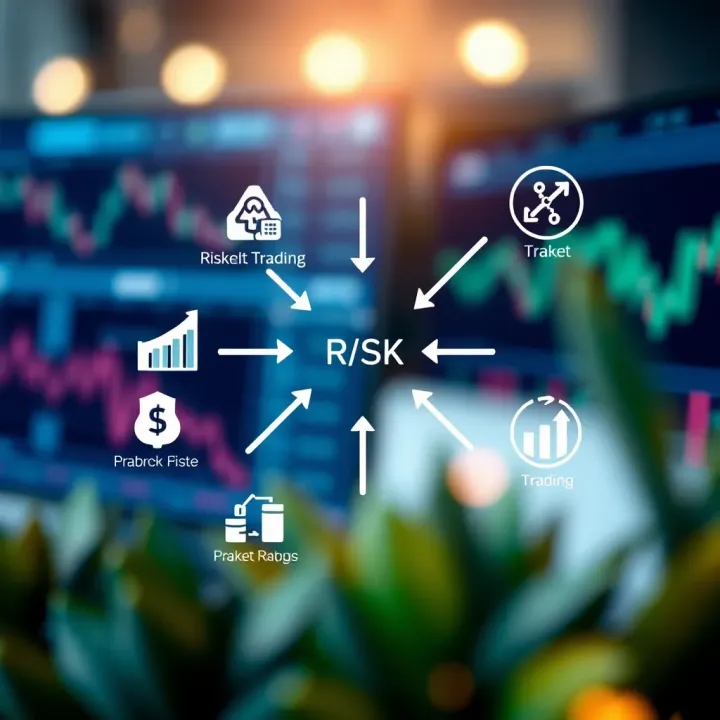
Regulation and fund safety are non-negotiable here. Look for brokers regulated by bodies like the U.S. Commodity Futures Trading Commission (CFTC) or the National Futures Association (NFA). These regulators enforce rules that protect your money and ensure fair trading practices. Brokers without proper licenses might offer tempting deals but they pose big risks.
Account types and spreads matter because they affect your trading costs and flexibility. Most brokers offer standard and mini accounts, catering to different budget levels. Also, spreads—the difference between buying and selling price—can vary widely. For instance, forex brokers like Forex.com offer competitive fixed and variable spreads. Low spreads help reduce trading costs, especially if you trade frequently.
Opening a trading account usually involves submitting your ID, proof of address, and completing a basic application—much like opening a bank account. This process verifies your identity and complies with financial regulations. Once approved, you’ll fund your account through various options like bank transfer, credit card, or e-wallet.
Most brokers provide demo accounts as a practice space. Demo accounts use virtual money and real market data, allowing you to test strategies without risking cash. Imagine trying to drive in a simulator before hitting the road — that’s what demo trading accomplishes. Brokers like TD Ameritrade and Interactive Brokers offer demo platforms with no expiry.
Finally, you'll need to familiarize yourself with trading platforms and tools. MetaTrader 4 and 5 are the industry standards, offering charting tools, indicators, and automated trading capabilities. User-friendly platforms reduce the learning curve and help you execute trades efficiently. Choosing a platform also means considering compatibility with your devices and the types of orders the platform supports.
Starting smart by choosing the right broker and setting up your account properly gives you a solid edge and helps avoid unnecessary risk early on.
By following these steps thoughtfully, you'll be better prepared to navigate the forex market with confidence and control.
Understanding fundamental concepts and analysis is a key step in forex trading. It helps you grasp why currencies move by looking at real-world factors beyond price charts. This kind of analysis can give you an edge by showing how economic events and policies influence currency values.
Economic indicators are data points that reflect the health of a country's economy and have a direct impact on its currency value. Common indicators include employment numbers, GDP growth, inflation rates, and retail sales. For example, a strong jobs report in the U.S. usually strengthens the dollar because it signals a healthy economy.
News releases tied to these indicators often cause quick price shifts, so forex traders watch them closely. When the Federal Reserve announces inflation numbers or unemployment stats, the forex market can react violently, presenting both risk and opportunity.
Using trading calendars can help you prep for these events. Calendars list the dates and times when key economic data comes out, helping you avoid surprises. Planning trades around these releases means you can reduce risk or capitalize on volatility.
Fundamental analysis means evaluating how a country's economic health affects its currency's strength. You look at data like GDP growth, unemployment rates, and consumer confidence. For example, if the Eurozone's GDP shrinks, the euro often weakens compared to other currencies.
Interest rates and monetary policy by central banks play a huge role. When the Federal Reserve raises rates, it tends to attract foreign investment, causing the dollar to rise. Conversely, cutting rates usually weakens the currency as borrowing becomes cheaper.
Traders often combine fundamental analysis with technical analysis. While fundamentals explain why prices might move over weeks or months, technical charts help time entries and exits. For instance, if economic data looks promising but the price charts show strong resistance, you might wait before buying.
Keep in mind, no single indicator or analysis method should dictate your trades. A balanced view combining fundamentals with price action offers the strongest insights.
This balanced approach makes you better equipped to handle the unpredictable nature of forex markets and improve your decision-making over time.
Technical analysis is a vital part of forex trading, helping traders make sense of price movements using historical data. Unlike fundamental analysis that focuses on economic news and indicators, technical analysis zeroes in on charts, trends, and patterns to forecast possible future price action. For beginners, understanding the essentials of charts, price patterns, and indicators can turn confusion into actionable insight.
There are three main chart types: line charts, bar charts, and candlestick charts. Line charts connect closing prices over a period, offering a straightforward view of the market’s direction. Bar charts show opening, closing, high, and low prices within each period, giving more detail. Candlestick charts combine these elements with a visually intuitive format, painting bullish and bearish sentiment through colored "candles." For example, a candlestick with a long upper wick suggests sellers pushed prices down after a spike.
Recognizing common price patterns like support and resistance levels is crucial. Support acts as a floor preventing prices from falling further, while resistance serves as a ceiling where prices often stall. Imagine the EUR/USD pair dipping multiple times to 1.10 but bouncing back—that's support. Spotting these levels helps traders decide when to enter or exit trades.
Patterns formed around support and resistance, such as double tops or head and shoulders, can signal upcoming reversals or continuations. Traders use these shapes as hints about where the price might head next. For instance, a breakout above resistance may indicate a strong upward move, presenting a buying opportunity.
Moving averages smooth out price data to highlight trend direction, with common types being the simple moving average (SMA) and exponential moving average (EMA). The Relative Strength Index (RSI) measures momentum by showing if a currency pair is overbought or oversold, typically on a scale from 0 to 100. The Moving Average Convergence Divergence (MACD) combines moving averages to indicate bullish or bearish momentum shifts. Watching these indicators together can give a clearer picture—like seeing the RSI dip below 30 suggesting oversold conditions while MACD crosses upward.
Combining indicators reduces false signals. For example, a trader might wait for both MACD to turn bullish and the price to break resistance before entering a long position. This cross-confirmation avoids relying too heavily on any single tool, which can be misleading if taken alone.
However, over-relying on indicators can be a trap. Indicators lag the market since they’re based on past data. Blindly trusting them may cause delayed trades or missed opportunities. Experienced traders balance indicators with price action and market context instead of treating them as crystal balls.
Technical analysis tools give you a better shot at reading the market, but blending indicators with good judgment is key to trading success.
Having a clear trading strategy is what separates casual traders from professionals. It’s not enough to just jump into the forex market without a solid plan. A strategy helps you stay disciplined, manage risks, and make consistent decisions rather than reacting on a whim. Think of it as your roadmap: it guides your entries, exits, and position sizes so you can trade with confidence and control.
Different traders suit different styles depending on their time commitment, risk tolerance, and objectives. Day trading means opening and closing positions within the same day—perfect if you want quick moves but can monitor the market closely. Swing trading holds positions for several days to catch broader trends, which takes less screen time but requires patience. Scalping involves very short trades aiming for tiny profits on small price changes, needing fast reflexes and strict discipline.
Setting realistic profit targets and limits is key to avoiding disappointment. For example, expecting a 10% return every month can lead to risky moves, while aiming for 1-2% per trade keeps your expectations grounded. Define your goals based on your account size, trading style, and market conditions. This clarity helps curb emotional decisions and keeps your risk in check.
Managing risk isn’t optional—it’s the backbone of surviving the forex market. You should never risk more than a small percentage of your trading capital on a single trade, usually 1-2%, to avoid devastating losses. This way, a string of bad trades won’t wipe out your account.
Stop loss and take profit orders protect your capital automatically. A stop loss limits how much you lose if the market moves against you, while a take profit locks in gains when your target price hits. Setting these orders in advance reduces stress and lets you stick to your plan even when emotions run high.
Deciding how large a position to take depends on your risk tolerance and trade setup. Suppose you risk $50 on a trade with a 50-pip stop loss; your lot size should match so that if the trade hits the stop, you only lose that $50. Calculating this upfront means you can trade smarter and stay within your comfort zone.
Tracking your trades and performance is vital for growth. Note down entry and exit points, reasons for entering trades, outcomes, and lessons learned. Over time, you’ll spot patterns—what works and what doesn’t—and make data-driven improvements.
Learning from mistakes and successes sharpens your skills. Maybe you notice you’re better at trading with certain pairs or times of day, or you see recurring errors like ignoring stop losses. Journals turn emotional trading into a structured learning experience, helping you build confidence and consistency.
The bottom line is, a trading strategy combined with risk management and a detailed journal gives you a clear edge. It transforms trading from guesswork into a disciplined process that can deliver steady results over time.
Practical tips are vital for anyone stepping into the forex market. Trading currency pairs isn’t just about understanding charts or indicators; it’s about managing your approach, emotions, and ongoing learning. These tips help you avoid common beginner traps and build a solid foundation.
Using demo accounts first is a smart way to get your feet wet without risking real money. Demo accounts mimic live market conditions and let you test strategies, understand platform functions, and get comfortable with order types. For example, if you want to try scalping the EUR/USD pair, a demo account lets you practice the speed and timing without risking a dime.
Avoiding emotional trading is critical. The forex market can trigger fear and greed, causing beginners to overtrade or panic during losses. Imagine you hold a losing position overnight; it's tempting to close it impulsively, but a disciplined trader assesses whether the move fits the strategy before reacting. Keeping emotions in check lets you stick to your plan instead of chasing quick wins or abandoning good trades.
Maintaining patience and consistency can be tough when results don't pop up immediately. Forex isn’t a get-rich-quick scheme. Successful traders often wait days or weeks to see their plans pay off. For instance, a swing trader might hold a position for several days, patiently waiting for the setup to unfold instead of jumping in and out every hour. Staying consistent in your routine and strategy develops discipline and better long-term results.
Recommended books and websites offer a wealth of knowledge anchored in real-world experience. Books like "Currency Trading for Dummies" by Brian Dolan provide clear explanations for newbies, while websites like BabyPips.com offer free courses and tutorials. These resources serve as ongoing education, helping traders deepen their understanding beyond simple tactics.
Following market news and analysis keeps you informed about the economic events that sway currency values. Regularly checking news from sources such as Reuters, Bloomberg, or CNBC helps you track Fed announcements, job reports, and geopolitical events that affect trading decisions. Using an economic calendar to spot upcoming reports can prevent surprises and guide trade timings.
Joining forex communities and forums connects you to experienced traders and real-time insights. Platforms like Trade2Win or Forex Factory host discussions where you can ask questions, share strategies, and learn from successes and mistakes. Being part of a community also offers emotional support, which is key when navigating the ups and downs of forex trading.
Starting small, managing emotions, and staying curious about the market are as important as mastering charts and indicators. Practical habits like these lay the groundwork for consistent performance and growth as a trader.
📈 Learn forex trading basics for beginners in Kenya with this practical PDF guide. Discover tools, start safely, and master strategies to grow your funds confidently.
📈 Start forex trading in Kenya with this practical guide. Learn how to pick local brokers, use M-Pesa for payments, avoid common mistakes, and manage risks well.
📈 Start your forex trading journey with clear, practical tips from 2022! Learn essential strategies, manage risk, and stay updated to trade confidently in Kenya’s market.
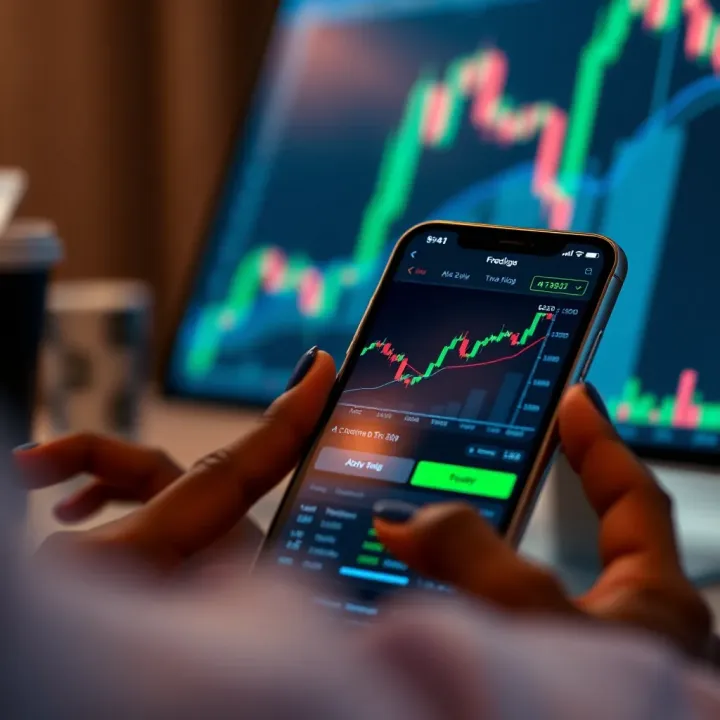
📱 New to forex in Kenya? Learn how to pick the best trading apps, avoid common mistakes, and start trading confidently with practical, beginner-friendly tips!
Based on 13 reviews