
Understanding Forex Trading Bots in Kenya
Explore how forex trading bots work, their benefits and risks, plus tips for Kenyan traders to pick and manage bots effectively 📈🤖
Edited By
Emily Foster
Forex trading, often called foreign exchange trading, involves buying and selling currencies from different countries. The goal is usually to make a profit by taking advantage of changes in exchange rates. For example, a trader may buy US dollars when they believe the dollar will strengthen against the Kenyan shilling, then sell the dollars later at a higher rate.
The forex market is the largest financial market in the world, with daily transactions exceeding $6 trillion. It operates 24 hours a day, five days a week, allowing traders across time zones, including Kenya, to participate at their convenience. Major forex centres include London, New York, Tokyo, and Sydney.
Unlike stock markets with fixed locations, forex trading is mostly done electronically over-the-counter (OTC) via platforms provided by brokers. This means there’s no central exchange; prices are set through supply and demand among traders worldwide.
Currency prices depend on many factors:
Economic indicators: Inflation, interest rates, and GDP growth affect currency strength.
Political stability: Elections, policies, or conflicts can cause currency value to fluctuate.
Market sentiment: Traders’ expectations and reactions to news shape price movements.
Supply and demand: Large trades by institutions or governments can influence rates.
In Kenya, factors like the Central Bank’s monetary policy, foreign reserves, and remittance flows also impact the shilling’s value.
People approach forex trading with different strategies:
Spot trading: Buying and selling currencies for immediate delivery.
Forward contracts: Agreements to exchange currencies at a set rate on a future date.
CFDs (Contracts for Difference): Speculating on currency price movements without owning the actual currency.
Traders may use technical analysis, studying chart patterns and indicators, or fundamental analysis, focusing on economic events. Often, a mix of both guides decisions.
Success in forex trading requires understanding market dynamics, disciplined risk management, and staying updated on global and local economic news.
By grasping these basics, Kenyan traders can navigate the forex market more confidently and make informed choices that suit their financial goals.
Forex trading, or foreign exchange trading, refers to the process of buying and selling currencies from different countries. Its primary goal is to make a profit by taking advantage of changes in currency values. Imagine exchanging Kenyan shillings for US dollars today because you believe the dollar will strengthen against the shilling in the coming days. If this happens, you can sell the dollars back at a higher rate, making a profit. This process happens every day around the world and affects everything from imports and exports to tourism.
At its core, forex trading involves the exchange of one currency for another. Unlike stock markets, forex operates 24 hours a day, five days a week, because currency trading happens globally across several financial centres. Forex is the largest financial market by volume — more than $6 trillion trades daily. Traders range from large banks and governments to individual investors in Nairobi or Mombasa using online platforms.
One practical example is a Kenyan business importing electronics from China. They often need to convert shillings to Chinese yuan (renminbi) to pay their suppliers. If the yuan weakens against the shilling at the time of purchase, the business pays less in shillings, saving money. Similarly, speculative traders aim to predict such movements and benefit from short-term price changes.
Currency exchange relies on pairs, like USD/KES (US dollar against Kenyan shilling). The first currency is called the base currency, and the second is the quote currency. The pair’s price tells you how much of the quote currency you need to buy one unit of the base currency. For example, if USD/KES is 110, one US dollar costs 110 Kenyan shillings.
These rates fluctuate constantly due to demand and supply influenced by factors such as economic indicators, political news, and interest rate changes. If many traders expect the US economy to grow faster, more people might buy US dollars, pushing its price higher compared to other currencies. Meanwhile, central banks, like the Central Bank of Kenya (CBK), may intervene by adjusting interest rates to influence their currency’s value and maintain economic stability.
Understanding how currency exchange works helps traders make informed decisions rather than guessing. Watching live rates, tracking economic news, and analysing market trends form the backbone of successful forex trading.
In summary, forex trading means participating in the global currency market, exploiting price differences, and managing risk to achieve profit. It’s a dynamic, fast-paced activity linked closely to world economics, requiring knowledge, strategy, and patience to succeed.
Understanding the structure and operation of the forex market is key to grasping how currency trading works. Unlike stock markets that operate from specific physical locations and time slots, forex runs 24 hours a day across global financial centres. This continuous operation allows traders in Kenya to engage any time — whether it's morning in Nairobi or evening in London.
The forex market is truly global, linking banks, corporations, governments, and individual traders around the world. Its existence depends on interconnected trading hubs in cities like London, New York, Tokyo, and Sydney. This worldwide set-up means currency pairs reflect international events almost instantly. For example, when the US Federal Reserve announces interest rate changes, traders in Nairobi can react without delay thanks to this global connectivity.
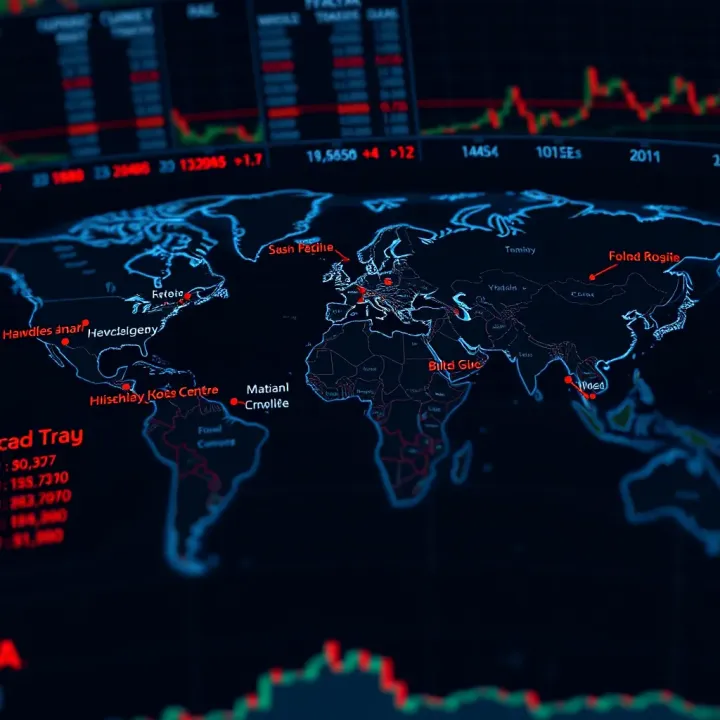
Currency pairs represent the value of one currency against another. In forex trading, pairs like the US dollar versus the euro (USD/EUR) or the US dollar versus the Japanese yen (USD/JPY) are called majors. These pairs dominate trading volumes because their economies drive global trade and finance. For Kenyan traders, the USD/KES (US dollar to Kenyan shilling) is especially important, heavily influenced by local demand for imports and exports. Understanding which pairs are most active helps traders focus their analysis and trading strategies.
Forex trading involves diverse participants, each with unique motivations and impacts:
Central Banks: They regulate money supply and influence exchange rates, often intervening to stabilise their currencies.
Commercial Banks: They execute large currency transactions for clients and for their own accounts.
Corporations: Businesses trading internationally use forex to hedge risks from currency fluctuations.
Retail Traders: Individuals trading through online platforms, including many Kenyans seeking profit opportunities.
Brokers: Firms providing the trading platform and access to the forex market for retail traders.
The forex market’s structure, with its global reach, diverse participants, and continuous operation, creates abundant opportunities but also demands sharp awareness of how different forces interact.
In Kenya, understanding these fundamentals offers practical advantages, such as knowing when to trade based on timezone overlaps or economic reports. Recognising the major currency pairs relevant locally and the roles of various market players leads to more informed decisions. This section helps traders and analysts see beyond price charts to the market’s underlying flow and operation.
Understanding what moves currency prices is key to making informed trades in the forex market. Currency prices do not fluctuate randomly; specific economic signals, political changes, and central bank actions directly affect their values. Grasping these influences can help traders anticipate market moves and manage risks better.
Economic indicators provide snapshots of a country's financial health. Indicators like inflation rates, unemployment figures, GDP growth, and trade balances send strong signals to forex traders. For instance, if Kenya’s inflation rate suddenly drops, it may strengthen the Kenyan shilling because lower inflation often means higher purchasing power. Conversely, if unemployment in the US rises sharply, it may weaken the US dollar as it signals economic weakness.
Traders watch regular releases of these indicators closely. A surprising rise or fall compared to forecasts can trigger swift currency price changes. For example, the monthly US non-farm payroll report often causes noticeable volatility in global currency pairs involving the US dollar. Kenyan investors should keep track of such reports from major economies, as they can affect the value of the shilling indirectly through trade and investment flows.
Political stability or unrest also pushes currency prices about. Elections, policy changes, government crises, or even speculation around leadership can impact market confidence. Consider the 2017 Kenyan general elections: currency traders waited anxiously for the outcome, and the shilling showed volatility amid uncertainties. When markets feel uncertain, many traders prefer to move their investments to “safe haven” currencies like the US dollar or Swiss franc.
Market sentiment—the overall mood of traders—can amplify the effect of political events. Rumours or social media buzz may spark quick moves in forex prices even before official news emerges. That’s why it’s wise for traders to stay updated and critically assess sources, especially on sensitive topics like regional conflicts or unexpected policy announcements.
Political events often have both short-term shocks and longer-term ripple effects on currencies, so traders need to monitor both.
Central banks play a crucial role in shaping currency values through their control of interest rates and monetary policy. When a central bank raises interest rates, it usually attracts foreign investors seeking better returns, pushing up the currency’s value. For example, if the Central Bank of Kenya (CBK) increases the MPR (Minimum Prudent Rate), the shilling might appreciate as investors move funds into Kenya for higher yields.
On the flip side, cutting rates tends to depreciate a currency as it lowers attraction for foreign capital. Central banks also intervene directly by buying or selling currencies to stabilise the market or control inflation. Such moves are often closely watched by forex traders because they signal the bank’s economic outlook and policy direction.
Interest rate differentials between countries, not just the absolute level, often drive forex trends. Traders compare rates between, say, the US Federal Reserve and CBK to decide where to place their bets. Understanding central bank signals helps traders position themselves ahead of currency moves.
Currencies respond to a mix of these economic, political, and monetary factors. A strong grasp of what influences them makes a trader more prepared—not just reliant on guesswork. This knowledge is especially useful in Kenya, where local events intersect with global trends to shape shilling movements on forex platforms.
To trade successfully, understanding the common methods and tools in forex is key. These help you to navigate the market, identify opportunities, and protect your resources. Let’s break down three important aspects: leverage and margin, fundamental versus technical analysis, and trading platforms.
Leverage lets you control a bigger position with a small amount of your own money, called the margin. For example, with a leverage of 100:1, you can trade KSh 100,000 worth of currency by putting up just KSh 1,000. This magnifies potential profits but also increases risks. If the market moves against you, losses can quickly wipe out your margin. In Kenya, brokers often offer leverage levels from 50:1 to 500:1, but beginners should start low to avoid heavy losses.
Make sure to monitor margin closely. If your account balance falls below required margin, you may face a margin call, forcing position closure. So, leverage is a double-edged sword: useful for maximising returns but dangerous if unchecked.
Fundamental analysis focuses on economic indicators and events shaping currency values. For instance, if the Central Bank of Kenya raises interest rates, it often strengthens the shilling as investors seek higher returns. Reports on GDP, inflation, unemployment, or political stability also influence price moves.
On the other hand, technical analysis relies on past price data and chart patterns to predict future movements. Traders use tools like moving averages, Relative Strength Index (RSI), and candlestick patterns to spot trends or reversals. For example, if EUR/USD is repeatedly bouncing off a support level, technical traders see this as a signal to buy.
Both methods have their place. Beginners in Kenya often combine the two—following economic news to understand market moods, while using charts for precise entry and exit points.
A good trading platform is your gateway to the forex market. Most brokers provide software like MetaTrader 4 or MetaTrader 5, popular for their reliability and features. These platforms grant real-time quotes, charting tools, and automated trading capabilities.
Using the platform effectively means:
Setting up your account and ensuring deposits are processed smoothly (M-Pesa is a common payment method in Kenya).
Customising charts to your strategy, perhaps adding trend lines or indicators.
Placing orders properly, including market orders, limit orders, and stop-loss orders to manage risks.
Keeping track of news feeds integrated on some platforms to stay updated.
Practice on demo accounts first to avoid costly mistakes.
As a takeaway, choosing the right tools and understanding how to use them helps you trade with confidence. Whether it’s managing leverage, analysing markets, or navigating platforms, each element builds your ability to make informed decisions in forex trading.
Trading forex carries several risks that can affect your capital. It's wise to understand these challenges well before jumping in. In Kenya's growing market, where many are drawn to forex hoping to earn outside conventional jobs, recognising risks helps you trade smarter and avoid common pitfalls.
Currency prices can swing wildly in short periods due to economic news, political changes, or sudden market reactions. For example, a surprise decision by the Central Bank of Kenya (CBK) to change interest rates can send the Kenyan shilling sharply up or down against the US dollar. Such volatility can lead to quick profits, but also hefty losses if you aren't prepared. Novice traders often underestimate how fast markets move and end up holding losing trades longer than they should.
Remember, forex markets can change direction without warning, so staying alert is crucial.
Many beginners come to forex trading with high hopes but little preparation. A frequent mistake is overtrading—placing too many trades without a clear plan, which drains capital through spreads and commissions. Another is ignoring proper research; relying solely on tips from social media or hearsay can be costly. Some traders also neglect to use risk management tools, exposing themselves to losses beyond their comfort zone. For example, a trader who uses excessive leverage might lose several months of savings in a day due to sharp currency moves.
Successful traders control potential losses using strategies like stop-loss orders. A stop-loss automatically closes a trade when the price hits a level you set, limiting how much you lose. This practical tool prevents emotions from driving bad decisions. Besides stop-losses, diversifying trades and keeping leverage low are effective ways to manage risk. For instance, instead of betting all your money on the USD/KES pair, you might also trade EUR/USD, spreading out risk across different markets.
In summary, understanding and managing risks in forex trading is not optional but necessary. With proper caution, you can protect your funds while benefiting from forex’s opportunities.
Starting forex trading in Kenya requires more than just understanding how the market works. You need practical tips to navigate local conditions, regulations, and the choices available. These pointers help you avoid pitfalls and set a strong foundation for trading success.
Selecting a licensed forex broker is the first vital step. In Kenya, the Capital Markets Authority (CMA) regulates forex brokers. Choosing a broker licensed by CMA offers protection because such firms follow specific rules on transparency, fund security, and reporting standards. For example, brokers like EGM Securities and FXPesa are licensed and active in Kenya.
Working with unlicensed brokers exposes you to risks such as fraud or fund mismanagement. Ensure your broker provides clear details on fees, spreads, and withdrawal procedures. It’s worth investing time to research brokers by checking reviews, asking fellow traders, or consulting forums like KenyaForex.
Before risking real money, it’s wise to practise with demo accounts most brokers provide. Demo accounts simulate live trading using virtual money, allowing you to experiment with strategies and familiarise with trading platforms like MetaTrader 4 or 5. For instance, if you’re new to technical analysis, practice identifying chart patterns and placing trades without financial risk.
Kenyan traders often overlook demos and jump straight to live accounts, which can lead to costly mistakes. Using demo accounts helps build confidence, understand order types, and manage timing. It's like learning to drive in an empty parking lot before hitting busy Nairobi roads.
Knowing local rules is essential. Apart from CMA oversight, forex gains in Kenya are subject to taxation by the Kenya Revenue Authority (KRA). Profits from forex trading count as income, and you must declare them during tax filing. Also, Value Added Tax (VAT) might apply to certain broker fees.
Since unclear record-keeping is a common trap, keep detailed records of all trades, deposits, and withdrawals. This simplifies KRA compliance and avoids surprises during audits. For example, if you withdraw profits via M-Pesa or bank transfer, keep screenshots or bank statements as proof.
You also need to be aware that forex trading might affect your eligibility for loans if your declared income fluctuates. Always consult a tax professional or KRA’s guidance when filing returns.
Trading forex in Kenya is not just about market knowledge; understanding the local broker landscape, practising safely, and complying with regulations shapes your long-term success.
By following these practical tips, you’re better placed to trade forex responsibly and increase chances of making profitable decisions in Kenya’s growing forex market.
Explore how forex trading bots work, their benefits and risks, plus tips for Kenyan traders to pick and manage bots effectively 📈🤖
📊 Discover how to read forex trading charts, identify patterns, and use technical indicators effectively to make smarter currency trades in Kenya’s market.
Explore top forex trading companies in Kenya 🇰🇪, learn about regulation, broker reliability, services, and key tips to pick the right one for you 📈💼.
Learn forex trading basics in Kenya 🇰🇪: market operation, key terms, trading strategies, risk management, and tools to start with confidence 💹💡.
Based on 8 reviews