

Using Forex Trading Bots in Kenya: A Practical Guide
Discover how to use forex trading bots in Kenya🔍 Learn benefits, risks, legal tips⚖️ and practical strategies to improve your forex trading game🚀
Edited By
Henry Clarkson
Forex trading, simply put, is the buying and selling of currencies with the goal of making a profit from fluctuations in exchange rates. For Kenyan traders, this market offers opportunities to grow income, whether as a part-time hustle or a more serious venture.
The forex market is the largest and most liquid financial market worldwide, operating 24 hours a day on weekdays. This means you can trade at nearly any time, which suits the busy schedules many Kenyans have. Unlike shares or commodities, you’re not buying physical goods but speculating on currency values such as the US dollar against the Kenyan shilling (USD/KES).
Getting started requires understanding several basics:
Currency Pairs: Currencies are traded in pairs. For example, USD/KES refers to how many Kenyan shillings one US dollar can buy. Profit comes from predicting whether one currency will strengthen or weaken against the other.
Leverage: This is money borrowed from your broker to increase your trade size. In Kenya, brokers might offer leverage ratios like 1:100, meaning with KSh 1,000, you control KSh 100,000 worth of currency. While leverage increases potential gains, it also magnifies losses, so managing risks is critical.
Trading Platforms: Many Kenyan traders use platforms like MetaTrader 4 or 5, which link to local brokers approved by the Capital Markets Authority (CMA). M-Pesa integration allows for easy deposits and withdrawals, speeding transactions and reducing hassles.
Start by choosing a CMA-regulated broker with good reviews to ensure your funds are safe and transparent trading.
Risk management is key to sustaining profits. Set stop-loss orders to limit potential losses and only use capital you can afford to lose. Also, keep an eye on global events like US Federal Reserve announcements or commodity prices that influence currency behaviour.
In the next sections, we’ll look at how to open your first forex trading account in Kenya, ways to analyse currencies, and practical tips to avoid common pitfalls that eat into your earnings.
Grasping the basics of forex trading sets the foundation for anyone keen to participate effectively in the foreign exchange market. For Kenyan traders, understanding these fundamentals helps navigate what can seem like a complex world, turning uncertainty into informed decision-making. This section breaks down essential elements, starting with what forex trading is and how it differs from other financial markets, then explores major currency pairs important to Kenyan users, and finally looks at how the global forex market operates.
Forex trading simply means buying one currency while simultaneously selling another. It’s the exchange of currencies in pairs, with the hope that one currency will strengthen relative to the other, allowing traders to earn profits from these price changes. For example, if a Kenyan trader believes the US dollar will gain value against the euro, they might buy USD/EUR with the intention of selling it later at a higher price.
This market is vital for everyday international trade and investment. When companies import goods or Kenyans travel abroad, currency exchange happens instantly through the forex market, making it the largest and most liquid market worldwide.
The currency market operates 24 hours because different financial centres open and close at various times across the globe. This round-the-clock trading means you can buy or sell currencies almost any time, depending on when major hubs like London, New York, or Tokyo are active. Prices fluctuate constantly due to supply and demand influenced by events such as government policies, economic data releases, and geopolitical developments.
For instance, if Kenya's Central Bank changes interest rates, the Kenyan shilling might respond by strengthening or weakening, impacting how easy or profitable it is to trade this currency against others.
Unlike stock markets that focus on company shares, forex deals exclusively with currency pairs. These pairs represent economies rather than individual companies, so their movement depends more on broad economic factors than corporate earnings. Forex markets also differ because they don’t have a central exchange or physical location; instead, trading happens electronically between banks, brokers, and traders.
For Kenyan traders, forex can offer greater liquidity and flexibility compared to stock markets, with the added advantage of lower capital requirements and access to leverage—though this also increases risk.
The most traded currencies are known as “major pairs,” typically involving the US dollar (USD) combined with currencies like the euro (EUR), British pound (GBP), Japanese yen (JPY), or the Swiss franc (CHF). These pairs usually have tight spreads and high liquidity, making trading smoother and costs lower.
Why are some pairs more traded? It’s mostly due to the economic scale, stability, and global importance of the countries involved. The USD's dominance in world trade means pairs involving the dollar are the most active. For example, EUR/USD commands a great deal of attention because it links Europe’s economy with the US.
Kenyan traders should pay attention to pairs that involve currencies relevant to their daily financial activities. USD/KES (Kenyan shilling) is a key pair, especially for importing businesses or individuals handling remittances. Others such as GBP/USD or EUR/USD also feature prominently, given Kenya’s trade ties and diaspora connections to the UK and Europe.
Understanding these pairs ensures Kenyan traders can react effectively to shifts in the local shilling or major economies, optimising their trading strategies.
The forex market opens at 5 pm on Sunday in New York and closes at 5 pm on Friday, with trading happening around different time zones. Liquidity peaks during overlaps between major markets — for example, when London and New York sessions coincide. This means that traders often find the best opportunities when more participants are active, leading to better prices and faster trade executions.
Central banks play a strong role in forex markets. For example, the Central Bank of Kenya influences the shilling’s value through monetary policy decisions. Similarly, economic indicators like inflation rates, GDP growth, and employment figures from the US or Eurozone can sway currency valuation globally.
Kenyan traders should watch these indicators closely as they often trigger sharp moves in forex prices, creating trading opportunities or warning signs for risk management.
Understanding the basics helps you engage with the forex market confidently, aware of how currencies move and what drives those movements locally and internationally.
Beginning forex trading in Kenya means understanding the local context as much as the global market. Being aware of how Kenyan forex brokers operate, the platforms you’ll use, and how to fund your account can lay a solid foundation for your trading activities. This section looks at practical steps for setting up your trading journey smoothly and safely.
When picking a forex broker, don't just look at flashy ads or promises of fast profits. The key is to find one that offers reliable execution, reasonable spreads, and solid customer support. For Kenyan traders, access to local payment methods like M-Pesa or bank transfers is a must, as it eases deposit and withdrawal processes without excessive fees.
Regulation matters a lot. Brokers authorised by the Capital Markets Authority (CMA) in Kenya undergo checks on fairness and compliance, so choosing a CMA-regulated broker reduces the risk of fraud. It's best to avoid offshore brokers without local compliance, even if their platforms seem attractive.
Top forex brokers accessible in Kenya include firms like HotForex, XM, and Exness. These providers accept KSh deposits through convenient channels and offer competitive spreads suitable for both new and experienced Kenyan traders. Comparing these brokers based on their account features, commissions, and customer feedback can help you decide which fits your trading style.
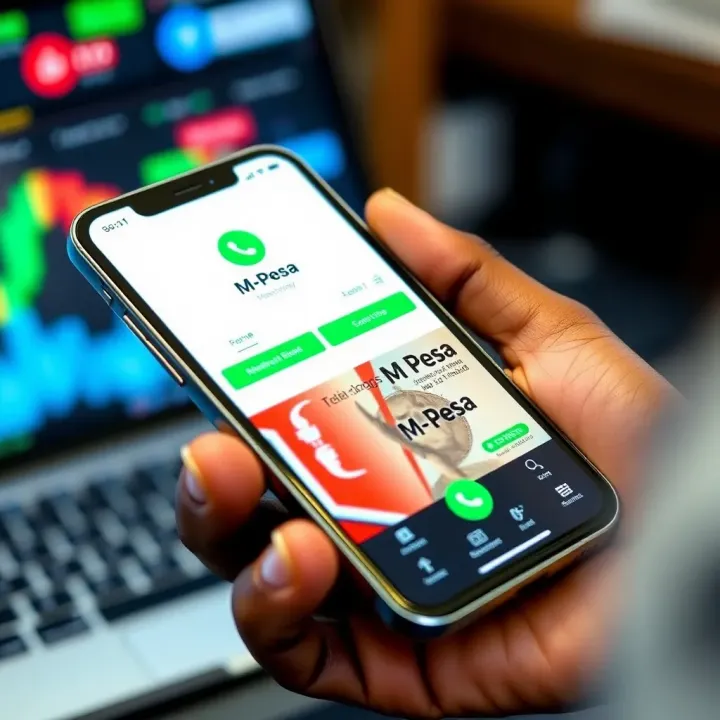
MetaTrader 4 (MT4) and MetaTrader 5 (MT5) remain the most popular platforms among Kenyan forex traders. They offer user-friendly interfaces, charting tools, and automated trading options. For instance, MT5 adds more timeframes and order types, which can appeal to traders wanting more flexibility.
Always start with a demo account before committing real money. This helps you get comfortable with the platform's functions and test strategies without risking your capital. Kenyan brokers often provide demo accounts free of charge with virtual funds, so you can practise as much as you need.
With Kenya's strong mobile networks like Safaricom, mobile trading using MT4 or MT5 apps is quite convenient. It lets you monitor trades on the go and react to market moves without being tied to a laptop. This suits busy traders who need flexibility while commuting on matatus or during breaks.
Funding your trading account in Kenya has become easier thanks to integration with M-Pesa alongside traditional bank transfers. Depositing KSh is usually instant on M-Pesa, which also supports fast withdrawals. This convenience lowers barriers and encourages more participation in forex trading.
Minimum deposits vary by broker but often start as low as KSh 1,000, making forex accessible to many Kenyans. Keep in mind that starting with a small budget means managing your trades carefully since profits and losses scale with trade size.
Trading accounts come in various types, such as standard, mini, and micro accounts. Standard accounts suit traders with larger capital and prefer normal lot sizes, while micro accounts allow beginners to trade smaller volumes, reducing risk. Some brokers also offer Islamic accounts without interest, aligning with specific cultural practices.
Choosing the right broker, platform, and funding method tailored to the Kenyan market makes your forex trading journey smoother and safer. Taking the time to set up properly can save you from common pitfalls and put you in a stronger position to succeed.
Understanding core forex trading concepts is essential before diving into the market. These basics equip you to make informed decisions and manage risks effectively, preventing costly errors common among new traders. By grasping the importance of pips, lots, leverage, charts, and order types, Kenyan traders will gain a practical edge and navigate market fluctuations with confidence.
A pip (percentage in point) represents the smallest price change in a currency pair, typically 0.0001 for most pairs. For Kenyan traders dealing with pairs like USD/KES, it might look different but the principle holds. Each pip's value directly affects your profit or loss. For example, if USD/KES moves from 110.50 to 110.55, that 5-pip change could mean KSh 500 gain or loss on a standard trade. Knowing how pips influence your returns helps you set realistic goals and limits.
Lot sizes define the volume of your trade. A standard lot equals 100,000 units of the base currency, but beginners often trade mini (10,000) or micro (1,000) lots to manage exposure. Suppose you trade a micro lot of USD/KES; a one-pip movement affects your account less deeply, making it easier to learn without risking too much capital. Adjusting lot size suits your risk appetite and account balance.
Leverage allows you to control a larger position with a small deposit. For instance, with 1:100 leverage, KSh 1,000 can control KSh 100,000 worth of currency. While this boosts potential profits, it magnifies losses too. A small adverse price move can wipe your deposit if you don't set stop-loss orders. That's why understanding leverage is critical—it’s a double-edged sword demanding disciplined risk management.
Candlestick patterns provide visual cues about market sentiment. A green (bullish) candle shows price rising during that period, while red (bearish) indicates a fall. Recognising simple patterns like doji or hammer helps predict possible reversals. For example, after a sharp drop in USD/EUR, a hammer candle might hint at buyers stepping in.
Support and resistance are price levels where the market tends to pause or reverse. Imagine USD/KES keeps bouncing back every time it hits 110.0 – this level acts as support. Identifying these zones helps you decide entry or exit points, limiting risks by aligning your trades with market behaviour rather than guessing.
Moving averages smooth out price data to reveal trends. A 50-day moving average shows the average price over 50 days, filtering daily fluctuations. If the current price stays above this average, it's often seen as an upward trend. Kenyan traders tracking USD/EUR can use moving averages to stay on the right side of the market without watching charts constantly.
A market order buys or sells immediately at the current price. This is useful when you want to enter or exit a trade quickly. In contrast, a limit order sets a specific price to buy or sell. For example, if USD/EUR is at 1.1000 but you want to buy only if it falls to 1.0950, a limit order automates this.
Stop-loss orders automatically close a trade to prevent further losses, while take-profit orders lock in gains when the price hits your target. Kenyan traders often use these to protect their M-Pesa-funded accounts from unexpected swings.
Using the right order type depends on your strategy. Market orders suit fast moves or news events, whereas limit orders fit patient traders waiting for better prices. Stop-loss and take-profit orders are essential for managing risk and emotions, keeping you focused on long-term gains.
Sticking to core forex concepts like pips, leverage, charts, and order types gives you the foundation to trade confidently and protect your money in volatile markets. Start small, stay patient, and always use risk controls.
Managing risk and crafting a clear trading strategy go hand in hand. In forex trading, losses can pile up fast if you don't keep a tight grip on risks. That's why knowing when to step back and how much to risk per trade is just as vital as choosing when to enter the market. For Kenyan traders, this protects your capital against sudden shilling swings and global market shocks.
Stop-loss orders act like a safety net. They automatically close your trade when the market moves against you by a predefined amount. For example, if you set a stop-loss at 50 pips, you won’t lose more than that on a single trade. This stops emotions from taking over when prices get choppy—no need to stare at charts all day worrying.
A common approach is risking only one to two percent of your trading capital on each trade. So, if your account has KSh 100,000, you risk KSh 1,000 to KSh 2,000 per deal. This way, a run of losses won’t wipe out your savings quickly. It keeps your trading sustainable in the long haul.
Leverage can boost profits but equally magnifies losses. For instance, with 1:100 leverage, just a small price movement causes big gains or losses. Many Kenyan traders might be tempted to use high leverage since it requires less starting capital. However, overleveraging can lead to losing more than your deposit. Always choose a leverage level you’re comfortable with and avoid risking too much in one go.
Scalping involves making quick trades for small profits within minutes. Day trading means opening and closing trades within the same day to catch short-term moves. Swing trading holds positions for several days, aiming to catch the main trends.
Each style suits different lifestyles. For example, if you work a 9-5 job, swing trading might fit better since it requires less screen time. Scalpers need constant attention, which isn't easy if you're juggling daily errands.
Indicators like Moving Averages, RSI (Relative Strength Index), and MACD (Moving Average Convergence Divergence) help identify trend direction and potential entry points. Think of them as tools that simplify complex price movements. A common technique is to confirm signals with more than one indicator to reduce false alarms.
Running your strategy on historical data shows how it would have performed. This helps spot weaknesses without risking real money. Many trading platforms have 'backtesting' features. For Kenyan traders, backtesting can shed light on how local market hours or shilling volatility might affect your approach.
Greed and fear often trigger bad decisions like chasing losses or jumping into trades without proper analysis. Staying calm and sticking to your plan helps avoid costly mistakes. For example, if you planned to risk KSh 1,000 but suddenly feel pressured to increase this after a loss, pause and reassess.
"Your biggest asset in trading is your discipline, not the capital you start with."
Writing down every trade’s details and outcome helps you learn from both wins and losses. It reveals patterns like which setups work best or when emotions cloud your judgement. Kenyan traders managing time between work and trading find journals useful to track progress systematically.
Markets evolve. New economic policies, changes in central bank rates, or global events influence forex prices. Regularly update your knowledge through courses, webinars, and trusted news sources. Adapting keeps you ahead instead of stuck with outdated methods.
Good risk management combined with a solid trading plan turns forex from a risky venture into a manageable business. This is the foundation for steady growth and avoiding surprises in the fast-moving currency markets.
Having practical tips and reliable resources tailored for Kenyan traders is vital for success in forex trading. The local context, including market dynamics and payment methods, shapes how you approach trading and manage risks. This section focuses on key considerations such as currency movements, payment options, and learning platforms, all grounded in familiar Kenyan realities.
The Kenya shilling (KES) can be quite volatile, especially when affected by agricultural performance or foreign reserve changes. For forex traders, this means trades involving KES pairs require close attention since currency swings can make or break profits quickly. For example, a sudden dip in the shilling against the US dollar may impact trades if you're dealing with USD/KES, so timing and market awareness are key.
Keeping an eye on East African Community (EAC) economies matters because events in countries like Tanzania or Uganda often influence Kenya's currency and market sentiment. For instance, changes in trade agreements or fiscal policies in neighbouring states can spillover, affecting forex volatility. News outlets and economic reports focusing on the region provide early signals of opportunities or risks.
Events such as US Federal Reserve interest rate changes or geopolitical tensions in oil-producing nations have broader effects that reach the Kenyan market. Global trade disruptions may affect commodity prices, which in turn influence the shilling's strength. As a trader, understanding these links helps in anticipating market reactions beyond local news.
Most Kenyan forex brokers now support M-Pesa for adding funds or withdrawing profits, making transactions quick and accessible without traditional bank hassles. Besides M-Pesa, bank transfers and mobile banking apps like KCB M-Pesa or Equity Bank's mobile wallet offer reliable alternatives. Understanding which payment option your broker accepts helps avoid delays.
When using mobile money or online banking, ensure your accounts have strong PINs and avoid sharing sensitive details. Fraud is common, so always verify payment requests directly through your broker’s official channels. Using secure internet connections rather than public Wi-Fi reduces the risk of hacking.
Mistakes like sending money to wrong recipient numbers or not confirming transaction success can cause losses or delays. Always double-check details before confirming payments and keep transaction receipts or screenshots as proof. Also, be wary of unofficial payment requests claiming to be from brokers—it’s safer to transact only through platforms linked to your trading account.
There are several Kenyan-focused forex trading courses that include live webinars, practical exercises, and mentorship. Websites like Nairobi Securities Exchange’s e-learning platform and local financial academies offer tailored content that fits the Kenyan market context. These courses help build confidence and sharpen skills before risking real money.
Joining Facebook groups or Telegram channels dedicated to Kenyan forex traders offers real-time discussions, peer support, and shared resources. Engaging in such communities helps you learn from experienced traders and stay updated on trends or broker reviews relevant to Kenya’s market.
Regularly following news from credible sources like Standard Digital Business or Business Daily Kenya keeps you informed about market-moving events. Sign up for newsletters from local brokers or financial analysts who provide alerts on forex signals and economic happenings. Staying informed is a simple way to improve your trading decisions.
Good forex trading in Kenya relies not just on knowing how to trade, but also on understanding local market nuances, using trusted payment systems safely, and continuously learning from a supportive community.
Discover how to use forex trading bots in Kenya🔍 Learn benefits, risks, legal tips⚖️ and practical strategies to improve your forex trading game🚀
Discover top forex trading classes in Kenya 🇰🇪 Learn practical skills, compare costs, and pick the best provider to boost your trading confidence today 📈
Explore the best forex brokers in Kenya 🇰🇪, learn about regulations, top picks, and tips to trade safely and confidently in the local market 💹
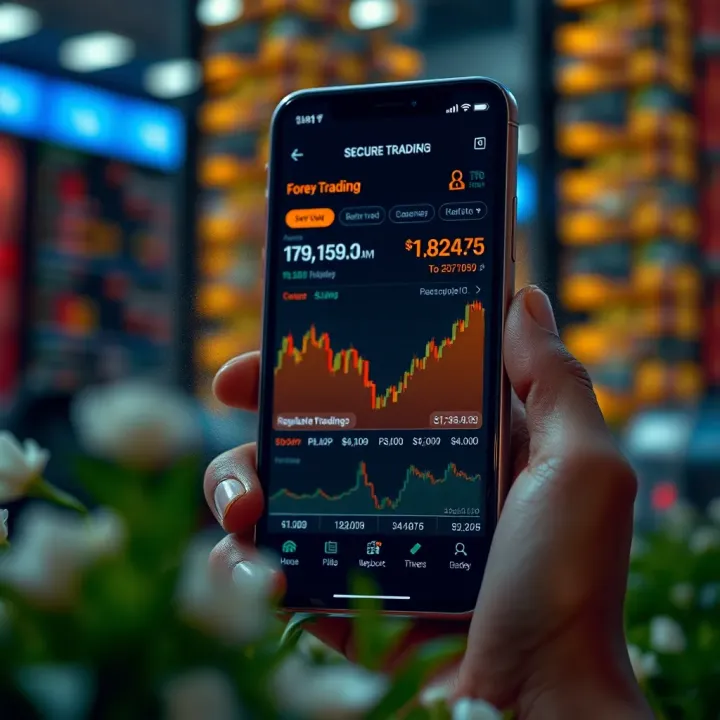
Explore the best forex trading apps in Kenya 📱, learn how to pick secure platforms, understand local rules, and trade confidently on your mobile device.
Based on 11 reviews