

Using Forex Trading Bots in Kenya: A Practical Guide
Discover how to use forex trading bots in Kenya🔍 Learn benefits, risks, legal tips⚖️ and practical strategies to improve your forex trading game🚀
Edited By
Amelia Scott
Forex trading, short for foreign exchange trading, refers to buying and selling currencies from different countries. For Kenyan traders, it offers a chance to profit by trading pairs like the US dollar (USD) against the Kenyan shilling (KES), or other popular pairs such as EUR/USD or GBP/JPY. Since forex is the largest financial market with daily turnover exceeding $6 trillion, it provides high liquidity and the ability to trade almost 24 hours, 5 days a week.
Understanding basic terms helps before diving in. Currency pairs come in two parts: the base currency and the quote currency. For example, in USD/KES, the USD is the base, while KES is the quote. If the price moves from 110 to 111, it means the shilling has weakened against the dollar.
Leverage is a tool many Kenyan traders use to increase their market exposure with less capital. For instance, with leverage of 1:100, a trader can control KS00,000 worth of currency with just KS,000. But while leverage boosts gains, it can quickly multiply losses too, so using it carefully is key.
Besides understanding market basics, knowing how to choose a trustworthy broker is crucial. Kenyan traders should prioritise brokers regulated by reputable authorities, such as the Capital Markets Authority (CMA) in Kenya or well-known global regulators to ensure safety of funds.
Using local payment methods like M-Pesa for deposits and withdrawals simplifies the process. Many brokers now accept M-Pesa, giving Kenyan traders faster and cheaper transactions compared to bank wire transfers.
Successful forex trading relies on clear knowledge of how the market works, cautious use of leverage, and partnering with reliable brokers who support local payment options.
To get started with trading, Kenyan traders typically:
Open an account with a regulated forex broker supporting M-Pesa
Fund their account using M-Pesa or bank transfer
Use demo accounts to practice before trading real money
Learn technical and fundamental analysis to spot good trading opportunities
Start trading with small positions and increase gradually as skills improve
With these practical steps and a solid grasp of forex basics, Kenyan traders can navigate the fast-moving currency markets with greater confidence and reduce unnecessary risks.
Getting to grips with forex trading is the stepping stone for anyone keen on navigating this global marketplace effectively. It helps traders understand how currency values fluctuate and why, so they can make informed decisions instead of just guessing. In Kenya, where exchange rates significantly affect businesses and personal finances, having a solid grasp on forex trading means you can better protect your funds and even explore profit opportunities.
Forex trading involves buying one currency while selling another simultaneously, essentially betting on which one will strengthen or weaken. For example, if you expect the US dollar (USD) will strengthen against the Kenyan shilling (KES), you might buy USD/KES. If done correctly, you can profit when the exchange rate moves in your favour. It's a fast-paced market with billions of dollars changing hands every day, allowing traders to respond quickly to global economic news.
The forex market operates through a network of banks, financial institutions, corporations, governments, and individual traders. Banks, especially large ones in London, New York, and Tokyo, provide liquidity by buying and selling currencies on a massive scale. Kenyan commercial banks also participate, particularly when handling foreign trade or remittances.
Corporations use forex to hedge against currency risks during international business, while governments and central banks might intervene to stabilise their currency or control inflation. Individual traders in Kenya, often through online platforms, join this ecosystem seeking profit opportunities. Understanding who the main players are helps you anticipate market moves, such as when central banks announce policy changes that tend to shake currency prices.
Forex trading runs 24 hours a day from Monday to Friday, opening in Asia and moving through Europe before closing in North America. The market divides into major sessions: the Asian session (Tokyo), the European session (London), and the US session (New York). Each session has its own rhythm and volatility based on regional economic news and business activities.
For Kenyan traders, the European and US sessions are particularly important since they overlap with Kenya’s daytime and evening hours. During these times, liquidity is higher, spreads tend to narrow, and price movements can be more predictable. Choosing the right trading hours based on these sessions can improve your chances of executing trades with favourable prices and less slippage.
Knowing the workings and participants in forex trading sets you up for smarter trading choices. You avoid diving in blindly and instead approach the market with insight and confidence.
Understanding key concepts in forex trading is essential for anyone aiming to succeed in the market. Mastery of terms like currency pairs, pips, lots, and leverage helps traders make informed choices, avoid costly mistakes, and evaluate risks effectively. For Kenyan traders, grasping these ideas allows you to navigate global forex markets with confidence and precision.
Major currency pairs involve the most traded currencies globally, such as the US Dollar (USD), Euro (EUR), British Pound (GBP), Japanese Yen (JPY), Swiss Franc (CHF), Canadian Dollar (CAD), and Australian Dollar (AUD). These pairs, like EUR/USD or GBP/USD, tend to have high liquidity and tighter spreads, making them attractive for traders with varying experience levels.
For example, the USD/KES (Kenyan Shilling) pair is less frequently traded outside local markets, so you’ll often rely on major pairs for broader market exposure. Because these pairs usually move steadily and predictably, they suit traders who want to avoid excessive volatility.
Minor pairs don’t include the US Dollar but combine other major currencies, such as EUR/GBP or AUD/JPY. These pairs may have lower liquidity compared to majors but can present profitable opportunities due to occasional price swings.
Exotic pairs combine a major currency like USD with currencies from emerging or smaller economies, such as USD/ZAR (South African Rand) or USD/TRY (Turkish Lira). For Kenyan traders, exotic pairs can be appealing but typically come with wider spreads and greater volatility. Trading these requires careful risk management and a good understanding of the underlying economic factors.
A pip is the smallest price move that a currency pair can make, usually 0.0001 for most pairs. This tiny measurement helps traders track profits or losses clearly. For instance, if EUR/USD moves from 1.1200 to 1.1205, that’s a five-pip increase.
Understanding pips keeps your trading precise. When you see price charts or set stop-loss orders, you’re essentially deciding on pip distances that align with your risk appetite.
In forex, currencies are traded in lots—standard units representing the amount you buy or sell. A standard lot equals 100,000 units of the base currency, but smaller sizes like mini lots (10,000 units) and micro lots (1,000 units) are common, especially for beginners.
Choosing the right lot size directly affects your exposure and potential gains or losses. For example, trading one micro lot of USD/JPY means every pip movement equals about KSh 1 in value, making this suitable for Kenyan traders starting with limited capital.
Leverage lets you control larger positions with a smaller deposit, boosting your potential profits. For example, with 1:100 leverage, you can enter a KSh 100,000 trade with only KSh 1,000.
However, leverage cuts both ways. If the market moves against you, losses multiply just as quickly. Kenyan traders should use leverage cautiously, balancing the chance to increase returns against the risk of wiping out accounts rapidly. Proper risk management tools like stop-loss orders are essential when trading on leverage.
Mastering these key forex concepts equips you to trade smarter, protect your funds, and spot real opportunities amid market noise.
Understanding these basics is your first step toward becoming a disciplined and informed forex trader in Kenya's dynamic trading environment.
Starting forex trading in Kenya requires a clear understanding of the local market and practical steps that match the environment here. This stage is crucial because it sets the foundation for safe and effective trading. Getting started properly can help avoid common pitfalls like falling into scams or choosing brokers that do not support local payment methods like M-Pesa, which is widely used and trusted.
One of the first things a Kenyan trader should check is whether a forex broker is regulated. Regulation means the broker follows set rules to protect your investments and personal data. In Kenya, the Capital Markets Authority (CMA) is the primary regulator for investment firms. Using a CMA-regulated broker gives you some assurance that the broker meets standards for fairness and security. Avoid brokers with no regulatory oversight as they may pose risks like withholding withdrawals or manipulating prices.
Choosing between a local or international broker depends on your trading goals and comfort. Local brokers often understand Kenyan traders’ needs better, provide customer support in local languages, and allow easy funding through M-Pesa or bank transfers. However, they may offer limited currency pairs or trading platforms. On the other hand, international brokers tend to have more advanced features, more currency pairs including exotic options, and tighter spreads. But, they might lack swift local customer support or direct M-Pesa integration. You can also consider brokers regulated in trusted jurisdictions like the UK’s FCA or Australia’s ASIC.
M-Pesa is king when it comes to payments in Kenya, and many forex brokers now accept it for deposits and withdrawals. This means you don’t need a bank account to start trading; just your mobile phone and M-Pesa wallet will do. Some platforms also support bank transfers, Airtel Money, or credit cards, but M-Pesa remains the fastest and most accessible option, especially in remote or rural areas with limited banking facilities.
After funding your account, the next step is to set up and familiarise yourself with a trading platform. Most brokers use popular software such as MetaTrader 4 (MT4) or MetaTrader 5 (MT5) which you can download on your computer or mobile phone. These platforms provide tools for analysing charts, placing trades, and managing your portfolio. Practising with a demo account first helps you gain confidence without risking real money. Setting up alerts and customising the interface can improve your trading efficiency, so take time to explore these features.
Starting with a well-regulated broker and easy payment options like M-Pesa will save you headaches and build a strong foundation in forex trading from Kenya.
By following these practical steps, you’ll be on a clear path towards becoming a confident forex trader who understands both the global currency market and local tools available to you.
Trading strategies and techniques form the backbone of successful forex trading. They help traders, especially those in Kenya, make informed decisions based on both market data and real-world events. Proper strategies reduce guesswork, offering a systematic approach to buying or selling currencies that can improve your chances of profit and reduce emotional decisions.
Economic indicators like inflation rates, employment figures, and GDP growth give clues about a country’s economic health. For Kenyan traders, monitoring indicators from major economies like the US, Eurozone, and China is important since such countries influence the Kenyan shilling indirectly. For instance, a higher-than-expected US inflation rate may prompt the Federal Reserve to raise interest rates, making the US dollar stronger. This shift can affect currency pairs involving the Kenyan shilling, especially USD/KES.
Kenyan traders benefit by anticipating these moves early. Watching monthly reports such as the US Non-Farm Payrolls or the Eurozone’s Consumer Price Index helps you understand when currencies might strengthen or weaken. Timely knowledge allows you to enter or exit trades before big market shifts happen.
Central banks, including the Central Bank of Kenya (CBK) and the US Federal Reserve, shape forex markets through their policies. Changes in interest rates or currency interventions directly influence currency values. When CBK hikes interest rates, it can raise the Kenyan shilling’s value since investors seek higher returns on shilling deposits.
This makes it crucial for traders to track central bank statements and meeting outcomes. Sudden policy changes often prompt sharp price moves. For example, if CBK signals concerns about inflation and hints at tightening monetary policy, the shilling might strengthen. Understanding this dynamic helps Kenyan traders adjust their positions accordingly.
Charts offer visual representations of past price movements, allowing traders to identify trends, support and resistance levels, and potential reversal points. Indicators like Moving Averages, Relative Strength Index (RSI), and Bollinger Bands provide additional insights into market momentum and volatility.
Kenyan traders often rely on these tools to spot entry and exit points, especially when fundamental news is unclear or conflicting. For example, a trader noticing an RSI below 30 might consider the currency pair oversold, signalling a possible price bounce.
Platforms like MetaTrader 4 and 5 remain popular because they offer multiple charting tools, automated trading options, and compatibility with local brokers. Meanwhile, apps like TradingView provide social trading features where Kenyan traders can view and share charts and analysis.
Besides software, local knowledge tools such as watching CBK updates, Kenya’s inflation reports, and M-Pesa transaction trends also enhance trading decisions. Using these alongside typical technical tools creates a well-rounded strategy grounded in both global market conditions and Kenyan-specific factors.
Successful forex trading in Kenya requires blending both fundamental and technical analysis to respond swiftly to market changes while tailoring strategies to local realities.
Understanding risks is vital for anyone stepping into forex trading. The forex market moves fast and can be unpredictable, so knowing what risks you face and how to control them helps protect your investment from heavy losses. Especially for Kenyan traders, managing these risks means you won’t lose your hard-earned shillings on avoidable mistakes.
Forex markets can be quite volatile—this means currency prices can swing sharply within minutes or hours. For instance, a sudden change in US Federal Reserve policy or unexpected economic data might send the US dollar tumbling against the Kenyan shilling or other currencies. This volatility can work both ways: it offers traders chances to make profits but also exposes them to steep losses if the market moves against their positions rapidly.
For Kenyan traders, understanding local and global events that trigger volatility is crucial. Political events, drought affecting export crops, or changes in commodity prices like tea and coffee directly influence forex rates linked to the shilling. Being alert to such factors allows you to anticipate price shifts better.
Leverage means borrowing money from your broker to increase the size of your trades. While it helps magnify profits, it also magnifies losses. Consider you trade with 1:100 leverage—if the market moves 1% against you, your losses could wipe out your entire invested capital. Many new traders, excited by the potential gains, use high leverage without adequate risk controls and end up losing more than they expected.
In Kenya, brokers often offer significant leverage to attract clients, but it’s best to use it cautiously. Treat leverage like a double-edged sword: it can boost your gains but also put your savings at risk very quickly.
A stop-loss order is like a safety net that automatically closes a trade at a predetermined price to limit losses. For example, if you buy the euro against the dollar at 1.10 and set a stop-loss at 1.08, your trade will close once the price falls to 1.08, preventing further losses.
Stop-loss orders help Kenyan traders keep emotions in check and stick to their risk limits. Without them, a sudden market move could wipe out your capital before you react. It’s wise to set stop-loss levels based on your analysis, not randomly.
This strategy involves determining how much of your trading capital you risk on a single trade. Instead of betting everything on one trade, divide your capital into smaller chunks according to your risk appetite. For instance, risking 2% of your total trading fund per trade means if you have KSh 100,000 in your account, each trade risks KSh 2,000.
Proper position sizing is key to surviving losing streaks. It keeps your losses manageable and prevents emotional decisions from desperation or overconfidence. Kenyan traders should practise calculating position sizes depending on account size and market conditions to maintain steady growth.
Keeping risks under control is not just about avoiding losses—it’s a foundation for building consistent trading success over time.
By recognising the types of risks and practising proven management techniques like stop-loss orders and smart position sizing, Kenyan traders can trade forex more confidently and sustainably.
Discover how to use forex trading bots in Kenya🔍 Learn benefits, risks, legal tips⚖️ and practical strategies to improve your forex trading game🚀
Discover top forex trading classes in Kenya 🇰🇪 Learn practical skills, compare costs, and pick the best provider to boost your trading confidence today 📈
Explore the best forex brokers in Kenya 🇰🇪, learn about regulations, top picks, and tips to trade safely and confidently in the local market 💹
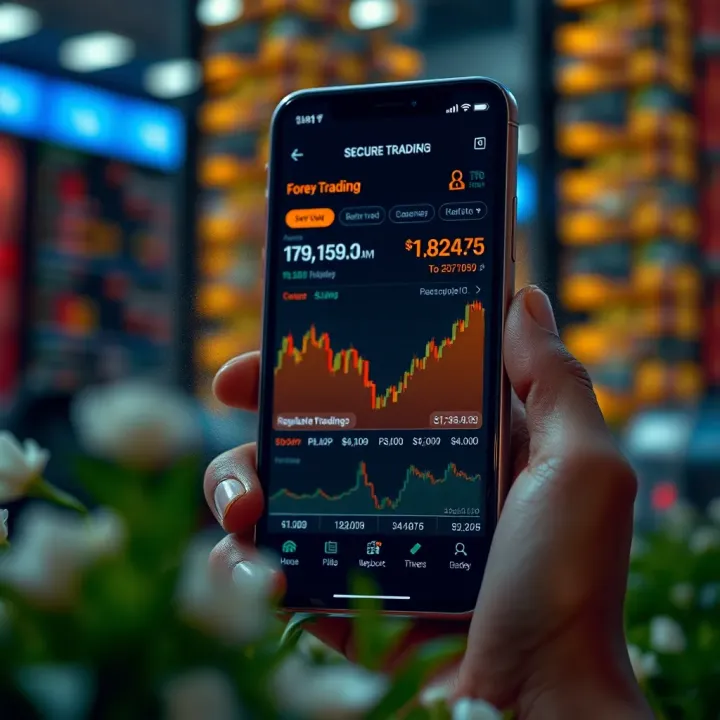
Explore the best forex trading apps in Kenya 📱, learn how to pick secure platforms, understand local rules, and trade confidently on your mobile device.
Based on 14 reviews