
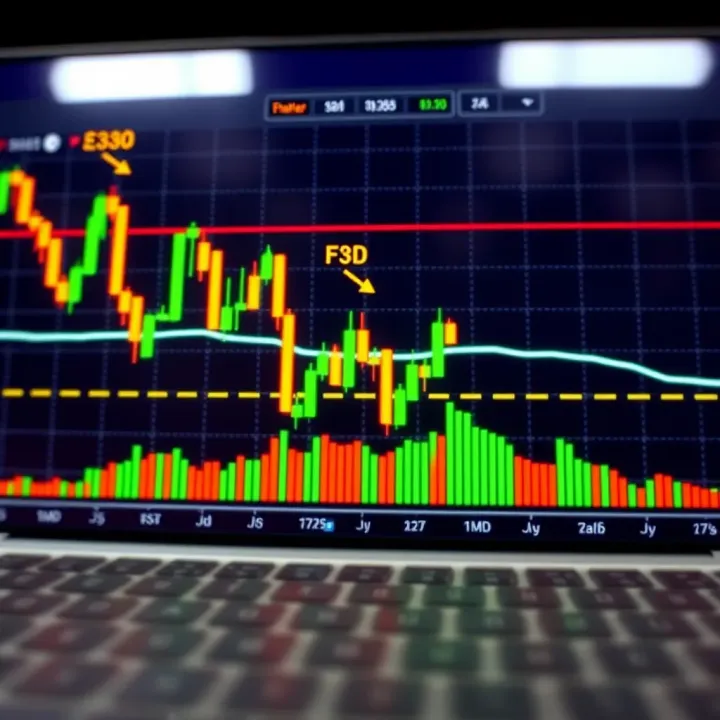
Understanding Chart Patterns in Forex Trading
📈 Learn to spot key forex chart patterns to predict market moves confidently. Master technical analysis skills and enhance your trading strategy today!
Edited By
Isabella Hughes
Chart patterns are like road signs for traders, showing possible paths the market might take next. For anyone involved in trading – whether you're in Nairobi, Mombasa, or anywhere else – understanding these signs can save you some costly mistakes.
This article will walk you through seven essential chart patterns that frequently crop up in markets. Knowing these patterns helps you figure out when to get in, when to hold tight, and when to get out before prices dive or soar unexpectedly.

Why bother learning this? Because trading can be a bit like sailing during a storm without any compass. Chart patterns give you that compass, easier to read than complex equations or fancy software outputs. They rely mostly on price movements and volumes that any digital platform shows clearly.
We'll keep things straightforward—no fluff or fancy jargon. The goal is to make these patterns easy to spot on your own charts, understand what they likely mean, and use them effectively alongside your trading plan.
Whether you're trading on the Nairobi Securities Exchange or dipping your toes in global markets, these patterns can give you an edge. Stick around to sharpen this vital skill—you'll see its value soon enough.
Chart patterns serve as a fundamental tool for traders trying to make sense of price movements in markets. They give us a way to interpret the battle between buyers and sellers, revealing clues on what might happen next. In Kenya’s bustling markets, understanding these patterns can mean the difference between jumping in too early or missing out entirely. For example, spotting a "double top" in Safaricom shares might hint that the stock price is about to reverse, signaling cautious traders to prepare.
The importance of mastering chart patterns lies in their practical benefits: they help you time your entries and exits and manage risks better. Unlike random guesses, these patterns, when understood well, offer a more grounded approach to predicting market behavior. Key considerations here include learning to identify reliable patterns and knowing when to trust them – which sets the foundation for any trading strategy worth its salt.
Every chart pattern tells a story about the psychology of the market participants. Think of it like a tug-of-war between bulls and bears. When a pattern forms, it’s a snapshot of collective emotions like fear, greed, hesitation, and confidence playing out. A head-and-shoulders pattern, for instance, reflects fading buying power as prices fail to reach new highs, signaling sellers might soon take control.
Understanding this psychological context lets traders anticipate what others are likely to do next, giving a sort of "inside view." It’s not guesswork but reading the crowd’s mood swings captured in price action. This insight helps investors avoid traps and position themselves where the momentum is shifting.
Chart patterns don’t just look pretty; they act like road signs on the trading path. They hint at what’s likely to come based on historical tendencies. For example, a triangle pattern often precedes a sharp price move once the market breaks out of the narrowing range.
This predictive power comes from repeating human behavior. Since market players tend to act similarly in comparable situations, patterns help forecast potential breakouts, reversals, or continuations. When combined with volume analysis or support and resistance levels, patterns can sharpen your trade decisions. Knowing that an ascending triangle often leads to an upward breakout allows traders to plan their moves with more confidence.
The seven chart patterns highlighted here are not picky; they show up in all markets—stocks, forex, commodities, and more. This makes them versatile tools for traders in Nairobi's NSE or anyone dealing with currencies in the Nairobi Forex market.
Their presence across markets means that whether you trade the US dollar or East African stocks, these patterns keep popping back. Being fluent in them saves time and effort compared to having to relearn different signals for each asset class. For Kenyan traders dabbling in multiple markets, this consistency is a big plus.
These seven aren’t just fashionable trends—they’re proven workhorses. Their shapes are straightforward enough to spot without advanced software but still reliable enough to trust in your analysis. Patterns like flags and pennants are easy to identify even on a smartphone app, providing quick clues for short-term moves.
Simplicity doesn't mean they are dumb; it means they cut through the noise. By focusing on these patterns, traders avoid overcomplicating their charts with confusing indicators and instead use clear, time-tested signs. This boost in reliability can single-handedly improve decision-making and trading outcomes.
Recognizing common chart patterns equips traders with a practical toolkit to read market sentiment and anticipate price shifts, making trading less of a shot in the dark and more like calculated moves on a chessboard.
Getting a handle on the seven key chart patterns is like having a reliable toolbox for trading. These patterns pop up in all sorts of markets, whether it's stocks in the Nairobi Securities Exchange or forex in the global markets. Knowing them helps traders see what the bigger picture might look like before jumping in or pulling out of a trade.
Understanding these patterns offers practical benefits. For example, a well-identified 'Head and Shoulders' pattern might warn you that the current trend is losing steam, so you might decide to tighten your stop-loss or take profits. On the other hand, spotting a 'Cup and Handle' could hint that there's a fresh wave of buying coming, giving you a chance to enter early.
One thing to keep in mind: the patterns aren’t foolproof signals but tools to help weigh odds. They're most useful when combined with other factors like volume, news, or technical indicators. Real traders don’t rely on signals in isolation, because the market loves to throw curveballs.
Line charts are straightforward — they connect closing prices over time, showing the overall direction but missing finer details. If you’re tracking a stock like Safaricom or Equity Bank, a line chart gives a quick glance at whether the price is moving up, down, or sideways.
Candlestick charts step up the game. Each candlestick represents a specific time frame (like a day or an hour), showing opening, closing, high, and low prices. This gives you insights into market sentiment — bulls pushing prices up or bears pulling them down. Candlestick patterns like dojis or hammers can hint at reversals or pauses in trends.
Understanding both chart types helps you spot patterns that might not be obvious on a line chart. Switching between them depending on your trading style or timeframe is a good habit.
When hunting for chart patterns, focus on a few clear signs:
Shape: Does the price action form peaks and troughs resembling a specific pattern, like a triangle or a double top?
Volume: Like a smoke signal, volume confirms the strength of a pattern. For example, breakouts on heavy volume carry more weight.
Trend context: Patterns tell different stories depending on whether they appear in a trend or a range.
Time duration: Some patterns take weeks or months to form, others just a few days. This affects how seriously you take them.
For instance, imagine tracking KCB's shares. If you spot a descending triangle where prices form lower highs but find support at a certain level, watch how volume behaves when it nears that support. A volume spike with a break below could be your cue to prepare for a downturn.
Each pattern has its own shape, but some traits cut across all:

They’re made up of price swings forming identifiable highs and lows.
Most signal a balance or battle between buyers and sellers.
Patterns either hint at a continuation of the current trend or a reversal.
They often show where price might stall before making the next move.
For example, a 'Flag' looks like a small rectangle slanting against the prevailing trend — it’s like the market catching its breath before charging ahead.
Patterns send out clues about what might happen next:
Reversal patterns like 'Double Tops' or 'Head and Shoulders' signal the current trend may end.
Continuation patterns such as 'Triangles' and 'Flags' suggest the trend will likely keep going.
Breakouts from these patterns often come with increased volume, confirming the move.
Take the 'Cup and Handle' seen on some stocks in the NSE—it usually means bullish action is on the horizon after the handle forms and breaks out.
Recognizing and interpreting these patterns gives traders a leg up, but it’s smart to mix this with other tools and do a bit of homework before pulling the trigger.
By understanding these core chart patterns, traders in Kenya and globally can better gauge market mood swings and plan their trades accordingly. Remember, no pattern guarantees success, but knowing them puts you in the game with better odds.
Understanding the nitty-gritty of each chart pattern is where the rubber meets the road for traders. It turns theoretical knowledge into actionable insights that can guide entry, exit, and risk management decisions. This section dives deep into the shape, formation, and what signals these patterns send through price action. Knowing these details helps traders avoid guesswork and spot patterns confidently during live trading.
The head and shoulders pattern looks like three peaks: the middle one—the "head"—is taller than the two "shoulders" flanking it. It almost resembles a human head and shoulders silhouette, which makes it easier to spot once you know what to look for. A key point is that the two shoulders should be roughly equal in height, but that doesn't mean they have to be perfectly symmetrical. Picture a worn-out debate club podium where the center mic is higher; the shoulders dip to roughly the same level on each side.
This pattern is a strong hint that the prevailing trend—usually an uptrend—is about to flip. When the price dips below the neckline connecting the lows between the shoulders, it often signals a bearish reversal. Traders watch this moment closely to enter a short position or exit a long. It's like a warning bell that the bulls are losing steam, and bears might be taking control. For example, if a stock like Safaricom struggles to break beyond a certain point twice but sees a higher peak in between, a break below the neckline could suggest falling prices ahead.
The double top occurs when price peaks twice at approximately the same level with a moderate dip in between. On the flip side, a double bottom forms when the price hits a similar low twice, with a bounce in between. Confirmation comes when the price breaks past the low or high that separates these two peaks or troughs. Think of it like tapping twice on the ceiling or floor and getting a firm knock back, signaling resistance or support.
These patterns often mark the end of the current trend and the start of a new one. A double top suggests a bearish reversal, while a double bottom indicates a bullish turn. Traders often wait for confirmation before acting because false signals can pop up. For instance, in Nairobi Securities Exchange stocks, double tops have frequently heralded downward moves after prolonged rallies.
Triangles come in three flavors: ascending, descending, and symmetrical. An ascending triangle features a flat resistance line on top and a rising support line. Descending triangles set up the opposite way, with a flat support line and a declining resistance line. Symmetrical triangles show converging trend lines with no clear horizontal boundary, representing balance between buyers and sellers.
Breakouts happen when price escapes the triangle boundary, often signaling a strong move in the breakout direction. Ascending triangles usually break upward, descending triangles downward, but symmetrical ones can go either way. Volume often climbs during the lead-up, then spikes as the breakout happens. Traders see this as the market’s way of making a decision after a pause, similar to traffic converging at a narrowing road before speeding up in one lane.
Flags and pennants form after sharp price moves and signal brief pauses before the trend continues. Flags look like small rectangles slanting against the previous trend, while pennants look like tiny symmetrical triangles. They act like catching your breath before sprinting again.
Volume usually surges during the initial big move and drops during the flag or pennant formation. Then, another volume burst accompanies the breakout in the original direction. For example, if Equity Bank jumps on strong earnings and then briefly pulls back in a flag, volume patterns help confirm the next leg up.
Imagine the letter "U" forming a bowl that's a bit more rounded than a simple V-shaped dip; that's the cup. After the cup, a small downward or sideways drift simulates the handle. This pattern can take weeks or months to develop, making it more suited for intermediate to long-term traders.
The cup and handle pattern often signals a bullish continuation. When price breaks above the handle's resistance, it suggests renewed buying interest with potential for a strong upward run. For instance, this pattern has been noted in tech stocks on the US exchanges and can apply equally to active stocks in Kenya like KCB Group, indicating good entry points.
Rectangles form when price bounces between defined support and resistance lines horizontally, creating a trading range or consolidation. This back-and-forth action represents indecision, like a tug-of-war that neither side wins.
Watch for price eventually breaking through the top or bottom border. Volume tends to stay subdued within the range but spikes on the breakout. That spike confirms the breakout's validity. For example, a stock stuck between KES 30 and 35 for weeks may suddenly surge past 35 on high volume, signaling a fresh trend.
Wedges look like converging trend lines moving either upward (rising wedge) or downward (falling wedge). Both lines slope in the same direction. A rising wedge typically tilts upward but narrows, whereas a falling wedge slopes downward getting tighter.
A rising wedge cautions about weakening bullish momentum, often a bearish reversal or breakdown follows. Conversely, a falling wedge can indicate a slowdown in selling pressure and probable bullish breakout ahead. Spotting these helps traders get ahead of momentum changes, like noticing a car losing speed before an unexpected turn.
Recognizing the detailed traits of each pattern empowers traders to apply them correctly. They become tools, not just decorative shapes on charts, giving traders in Kenya and beyond an edge when the market gets choppy or unpredictable.
Using chart patterns effectively can really change the way you approach trading. These patterns are more than just shapes on a chart—they're signals based on how traders behave, which help you spot potential moves before they happen. Getting a hang of when to jump in or out, and how to protect your investments, can save you from costly mistakes.
For example, say you’re watching a stock that's forming a double bottom pattern. This often signals a potential reversal from a downtrend to an uptrend. If you act fast and enter a trade right after the confirmation, you could catch the price as it starts climbing. But without knowing where to place your stop-loss, one sudden dip could wipe out your gains.
Figuring out the right moment to enter or exit based on chart patterns boils down to spotting confirmation signals and understanding the pattern fully. The key is not to jump in as soon as you see a pattern forming but wait for a decisive move, like a breakout from a horned shape or a neck line breach.
Take the ascending triangle pattern for example—prices climb towards a horizontal resistance, bouncing higher with every dip. When the price finally breaks that horizontal level on good volume, that's your green light to enter. Entering too early might get you stuck if the breakout doesn’t hold.
A stop-loss is your safety net. It limits losses when the market doesn’t move as expected. Effective use of stops is often the difference between a bad trade and a disaster. For instance, if you’re trading a head and shoulders pattern, placing a stop just above the right shoulder can protect you if the supposed reversal turns out to be false.
Some traders prefer a fixed percentage stop, but placing stops just outside pattern boundaries usually works better. It’s like setting a fence around your trade; you give it room to breathe but keep risks in check.
Not every pattern plays out perfectly—false breakouts and fake reversals are common traps. One mistake is assuming a pattern will complete without waiting for confirmation. Jumping the gun can lead to losses, especially in choppy markets.
Another pitfall is ignoring the bigger picture. A good pattern on a 5-minute chart might not mean much if the daily chart is trending strongly against it. Always cross-check multiple time frames to avoid these snares.
Volume is a powerful ally when reading chart patterns. A breakout with low volume might be a head fake, while a strong surge confirms commitment behind the move. For example, when a flag pattern forms during an uptrend, you want to see volume contracting as the flag develops and then expanding when the price breaks out.
Indicators like the Relative Strength Index (RSI) or Moving Average Convergence Divergence (MACD) can also back up your pattern analysis. If a breakout happens with RSI climbing out of oversold territory, it backs up the idea that momentum supports the move.
Remember, using chart patterns without volume or indicator confirmation is like trying to guess the weather without looking outside—possible but risky.
In summary, using chart patterns isn’t just about recognizing shapes. It’s about combining them with smart timing, risk control, and confirming signals to make more reliable trading decisions. This approach reduces guesswork and improves the chance of success in unpredictable markets.
When it comes to mastering chart patterns, having ready access to quality resources can make all the difference. Chart pattern PDFs serve as handy tools that traders can consult on the go, saving time and helping to reinforce understanding through repeated review. In a fast-paced market, being able to pull out a clear, visual guide speeds up decision-making and reduces reliance on memory alone.
Printable guides put key chart patterns right at your fingertips during trade analysis. For example, when scanning the Nairobi Securities Exchange charts, a quick glance at a printed PDF helps confirm whether a pattern like a double bottom or wedge is taking shape without fumbling through complex software menus. Traders can jot notes or highlight portions on the guide itself, making the learning process tactile and personalized. This sort of immediate accessibility is especially valuable in live trading scenarios where every second counts.
Charts and patterns naturally lend themselves to visual learning, and PDFs that clearly illustrate these concepts often make it easier to recognize patterns during real-time trading. Color-coded examples, annotations, and step-by-step breakdowns reinforce comprehension far better than text alone. Visuals help bridge the gap for beginner traders who might find theoretical explanations abstract, while seasoned traders benefit from quick pattern recognition that can boost confidence and accuracy.
Finding trustworthy PDFs means sticking to reputable sources that prioritize factual content and market-tested strategies. Websites like Investopedia, BabyPips, and the official Nairobi Securities Exchange educational portal often provide downloadable materials that are frequently updated and aligned with current market practices. These sources err on the side of clarity over hype, offering straightforward explanations ideal for serious traders.
Beyond general educational sites, specialized trading platforms and brokerages like IG Group, Saxo Bank, and Interactive Brokers often offer comprehensive trading guides including chart pattern PDFs. These documents typically come from industry professionals with practical experience, ensuring that the information relates directly to execution. Accessing such resources can help traders in Kenya sharpen their skills and keep up with international trading standards.
Keep in mind: Having a go-to library of chart pattern PDFs can become your secret weapon in navigating volatile markets. They aren’t just study material but practical aides during real trading decisions.
Using these resources effectively turns abstract chart patterns into tangible signals that you can confidently act upon.
📈 Learn to spot key forex chart patterns to predict market moves confidently. Master technical analysis skills and enhance your trading strategy today!

📈 Learn how to spot and use chart patterns in trading to predict market moves and boost your investment success in Kenya's markets.

📊 Learn key forex chart patterns like head & shoulders, triangles, and flags to spot market moves confidently. Perfect for Kenyan traders seeking smart strategies!

📊 Discover how to read key chart patterns in trading with our detailed guide and access free PDF downloads to boost your skills in Kenya and beyond.
Based on 12 reviews