

Using Forex Trading Bots in Kenya: A Practical Guide
Discover how to use forex trading bots in Kenya🔍 Learn benefits, risks, legal tips⚖️ and practical strategies to improve your forex trading game🚀
Edited By
Sophie Clarke
Forex trading involves buying and selling foreign currencies with the goal of making a profit. It’s the largest financial market globally, with daily trades exceeding $6 trillion. For Kenyan traders, forex offers an opportunity to tap into international markets right from their laptop or mobile device. However, success demands more than luck; it requires solid knowledge and practical skills.
Many beginners find forex trading daunting because of its technical nature and fast pace. That’s where forex trading PDFs come in handy. These documents provide structured, easy-to-follow content that traders can study at their own pace. They make learning accessible, whether you want to understand basic concepts like currency pairs and pips or master strategies such as trend following or range trading.
Starting with clear, reliable resources helps avoid costly mistakes and builds confidence over time.
Portability: You can download and study offline anywhere, whether commuting in a matatu or waiting in a queue.
Consolidated Knowledge: PDFs often compile various aspects—market fundamentals, trading psychology, risk management—into one place.
Step-by-Step Guidance: Good PDFs break down complex topics into manageable sections, great for self-paced learning.
Kenyan traders should prioritise practical knowledge that matches their trading environment. For example, understanding how global events impact currency pairs like USD/KES is vital. Similarly, risk management, such as setting stop losses to protect capital amid forex volatility, should be non-negotiable.
Regular practice with demo accounts combined with insights from PDFs can sharpen your skills. Many downloadable PDFs also include workbook exercises or case studies, enabling you to apply theory in real-life scenarios.
This guide will show you how to select trustworthy forex trading PDFs, understand core forex concepts, and apply effective trading strategies tailored for Kenya’s market. You’ll also get tips on managing risks wisely and improving your trading discipline.
With the right information and consistent practice, forex trading can be a viable way to grow your income and participate in global finance. Let’s start by building a solid foundation in the basics.
Grasping the basics of forex trading is essential for anyone aiming to succeed in this fast-paced market. Without a solid understanding, even the best strategies can falter. For Kenyan traders especially, knowing how the forex market works helps in making informed decisions and managing risks better.
Forex trading involves buying and selling currencies against each other in pairs, such as USD/KES (US dollar against Kenyan shilling). It's the largest financial market globally, with trillions of dollars traded daily. This market allows traders to speculate on currency price movements, aiming to profit from fluctuations.
For example, if a trader believes the US dollar will strengthen against the shilling, they may buy USD/KES expecting the exchange rate to rise. This simple act of exchanging one currency for another forms the core of forex trading.
Unlike stock markets, the forex market is decentralised, operating 24 hours a day via a network of banks, brokers, and traders worldwide. This continuous operation means forex trading is influenced by global economic events, political developments, and market sentiment at any hour.
In Kenya, online platforms and brokers connect local traders to this global market, enabling them to trade currency pairs through their computers or mobile phones. The market uses leverage, meaning traders can control larger amounts of money with a smaller investment, though this also increases risk.
Currencies are always traded in pairs because exchanging one currency requires buying another. The first currency in a pair is the base currency, and the second is the quote currency. For example, in EUR/USD, the euro is the base, while the US dollar is the quote currency.
Understanding which currency is which helps traders interpret price movements. If EUR/USD moves from 1.1000 to 1.1050, the euro has strengthened against the dollar. Kenyan traders often focus on pairs involving the shilling, like USD/KES or EUR/KES, because these impact import and export costs directly.
Kenya's forex market is vibrant, thanks to active interest from retail and institutional traders. The most popular currencies traded locally include the US dollar (USD), euro (EUR), British pound (GBP), and the Kenyan shilling (KES). The USD/KES pair is particularly significant since many businesses and individuals depend on dollar transactions.
The regulatory framework is governed mainly by the Capital Markets Authority (CMA) and the Central Bank of Kenya (CBK). These institutions ensure brokers operate fairly and help protect Kenyan traders from fraud. For example, only brokers licensed by CMA and registered with CBK should be trusted.
Kenyan traders mostly participate through online forex brokers, combining access to global markets with tools for analysis and risk management. Many also use demo accounts for practice before risking real money. Mobile trading apps and platforms have made forex more accessible, giving even those outside Nairobi a chance to join the market.
Understanding forex fundamentals is not just academic; it directly impacts your ability to trade wisely. Knowing how currencies pair up, the market’s operation, and Kenya’s role prepares you to navigate forex with confidence and caution.
Forex trading PDFs offer several practical advantages for Kenyan traders seeking to build skills effectively. They provide a flexible, easy-to-access resource that fits naturally into a trader's busy day. Since these PDFs can be downloaded and saved on various devices, traders can access essential knowledge anytime, whether during a commute or in moments away from the trading screen.
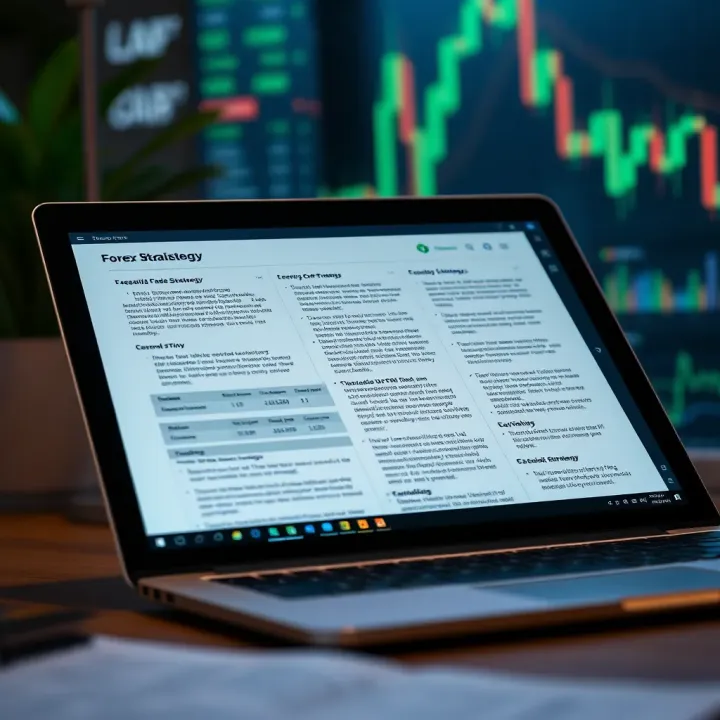
Learning forex through PDFs is particularly handy because you don’t need to be online to access the content. Many Kenyan traders may have intermittent internet access, especially outside major cities, so having educational materials ready to use on a mobile phone or laptop without stressing about connectivity is a big plus. Also, PDFs can be quickly shared or stored for reference without bulky files or complicated software.
Forex trading is complex and takes time to master. PDFs allow learners to move at a comfortable speed without pressure to keep up with live classes or webinars. For example, a trader can re-read sections on technical indicators or forex market terms until fully understood. This approach suits those balancing trading with other commitments, like jobs or family, offering control over when and how to absorb information.
Since PDFs remain accessible offline, Kenyan traders can review materials even in low-signal areas. This means learning can continue in transit—like during a matatu ride or waiting at the bus stop—making efficient use of time that would otherwise be wasted. Also, trading day insights or recent market updates saved as PDFs can be referenced when preparing strategies.
Good forex PDFs break down complex concepts in straightforward language, exactly what Kenyan traders need to avoid confusion. For instance, explaining leverage with simple maths or using local currency examples (like quoting trades in KSh) helps relate theory to real trading scenarios. Including practical examples, such as sample trades or scenario analyses, makes the material actionable rather than just academic.
Visuals help clarify patterns and trends that words alone struggle to demonstrate. A well-designed PDF will have clear charts showing price movements or candlestick patterns, plus diagrams explaining concepts like support and resistance. With such aids, learners can grasp what traders observe daily on platforms like MetaTrader or cTrader.
Forex trading in Kenya is influenced by local economic events, regulatory guidelines, and popular currency pairs involving the Kenyan shilling. PDFs that consider these specifics are invaluable. They might cover aspects like how KRA foreign exchange regulations affect trading or how major global events impact the USD/KES pair. Such context makes learning more relevant and applicable to everyday Kenyan traders.
Using forex trading PDFs tailored to Kenya empowers traders with knowledge they can access anytime, relate directly to their market, and absorb at their own speed. This approach helps build confidence and improves trading outcomes over time.
Understanding core forex trading strategies is essential for anyone serious about succeeding in the forex market. Using PDFs to learn these strategies gives traders a practical way to grasp complex concepts and reference materials anytime—especially important with fluctuating internet access in many parts of Kenya. Well-structured PDFs break down strategies into digestible lessons, backed by clear examples and illustrative charts that Kenyan traders can relate to.
Forex trading relies heavily on analysing price charts that display currency movements over time. These charts help traders spot trends and potential reversal points. Indicators, like oscillators and trend lines, offer additional insight, revealing whether a currency pair is overbought or oversold or highlighting momentum shifts. For example, the chart of USD/KES over the past month may show steady uptrends during times of increased diaspora remittances.
Moving averages smooth out price data, making it easier to identify trends. Kenyan traders might use simple moving averages (SMA) to spot when a currency is gaining momentum. The Relative Strength Index (RSI) measures speed and change of price movements on a scale of zero to 100. RSI values above 70 may suggest the currency is overbought; below 30, oversold. These tools combined help in timing entry and exit points.
Forex trading PDFs often provide step-by-step guides on reading charts and interpreting indicators with visuals. Unlike scattered online resources, PDFs allow traders to study offline and practice the techniques repeatedly. They might include Kenyan market-specific examples, such as those involving USD/KES or EUR/USD, making the content more relevant.
Fundamental analysis focuses on economic data and how it influences currency values. Important indicators include inflation rates, interest rates, GDP growth, and employment numbers. For Kenyan traders, watching CBK (Central Bank of Kenya) monetary policies and inflation reports helps anticipate the shilling’s strength against major currencies. These events often trigger notable currency fluctuations.
Global events like US Federal Reserve rate changes, Brexit developments, or geopolitical tensions affect currency demand worldwide. For instance, unstable oil prices might impact the Kenyan shilling indirectly through trade balance fluctuations. Traders who keep track of these news can better predict when to buy or sell.
PDFs summarise complex economic reports in accessible language, highlighting key points. This helps traders avoid drowning in data and focus on actionable insights. Kenyan forex PDFs often explain how to combine local economic releases with global news to make balanced trading decisions.
Many successful traders blend technical charts with fundamental data to confirm trade decisions. For example, a trader might identify a bullish trend in the USD/KES chart but decide to wait if upcoming Kenyan inflation data suggests weakening shilling strength. Combining both strategies offers a more complete market picture.
Well-known PDFs include case studies showing how traders applied both strategies during events like the COVID-19 pandemic, which caused extreme volatility. These examples demonstrate practical application rather than just theory, guiding Kenyan traders through real-world scenarios.
Using PDFs, traders learn various strategies, experiment on demo accounts, and slowly refine an approach that suits their schedule, risk tolerance, and goals. Some may prefer a fast-paced technical style; others might lean on fundamental news and longer holds. The key is consistent practice guided by clear, structured learning materials.
Mastering forex trading means understanding its strategies inside out. PDFs provide a reliable, easy-to-use resource for Kenyan traders to build skills steadily and trade confidently in any market condition.
Managing risk is an essential part of successful forex trading. PDFs dedicated to risk management provide traders with clear, step-by-step methods to protect capital instead of relying on guesswork. For Kenyan traders especially, where financial cushions may be limited, understanding risk techniques can prevent a single bad trade from wiping out savings.
Common types of forex trading risks include market risk, liquidity risk, and leverage risk. Market risk arises from unpredictable price changes—say the USD/KES suddenly drops after a government announcement. Liquidity risk happens when you can’t easily buy or sell a currency pair without affecting its price, which tends to occur in less-traded currencies. Leverage risk, often overlooked, multiplies potential losses along with profits, meaning a small bad move can lead to significant losses.
Volatility and leverage explained: Forex markets are known for their volatility—prices can swing sharply within minutes. While such fluctuations offer chances for profit, they also increase danger. Leverage lets you control large amounts of currency with a small deposit, common to many Kenyan brokers. For example, using 50:1 leverage means KSh 1,000 can control KSh 50,000 worth of currency. This can fatten gains but also expose your account to rapid losses, especially during volatile events like elections or central bank rate announcements.
Why risk management matters is simple: it keeps you trading over the long haul. Without controlling risk, even a string of small losses can drain your balance. PDFs teach traders to accept losses as part of the game, plan entries and exits carefully, and avoid emotional decisions that often lead to reckless trades. This approach preserves capital and improves confidence.
Setting stop-loss and take-profit levels is a straightforward method taught in many forex PDFs. A stop-loss automatically closes your trade if the price moves against you by a set amount—protecting you from bigger losses. Meanwhile, take-profit locks in gains when the price hits your target. For instance, if you buy EUR/USD at 1.1000, you might set a stop-loss at 1.0950 and take-profit at 1.1100. This way, you control how much you risk and what profit to expect upfront.
Position sizing strategies help traders decide how much capital to allocate per trade. PDFs often recommend risking only a small percentage of your total account balance—typically 1-2%—to avoid overexposure. For example, with a KSh 100,000 account, risking 1% means only KSh 1,000 is at risk per trade. Position sizing varies depending on stop-loss distance and leverage, helping you keep losses manageable even across losing streaks.
Developing a trading plan through PDF resources provides a framework to organise your trades, manage emotions, and stay disciplined. A trading plan covers goals, risk tolerance, entry and exit criteria, and daily review routines. Many PDF guides include templates or examples tailored for Kenyan traders considering local market timings and currency pairs. Having this plan documented helps avoid impulsive decisions and ensures you learn from every trade, improving consistently.
Managing risk isn't just about avoiding losses; it's about making sure you remain in the game long enough to succeed. Forex trading PDFs demystify this process with clear, practical tools that guide both beginners and experienced traders through every step of risk control.
Overall, incorporating what you learn from these PDF guides into your daily trading can change your approach from guesswork to strategy. For Kenyan traders needing straightforward, practical methods, these resources are invaluable in building profitable and sustainable forex practices.
Finding reliable forex trading PDFs matters because these documents shape your understanding and decisions. Not all PDFs are created equal—some may be outdated, biased, or too generic. Trusted materials ensure you learn proven concepts and tactics that suit your needs as a Kenyan trader.
Official broker websites and educational platforms are among the best places to find high-quality forex guides. Brokers like FXPesa or HotForex Kenya often provide free, regularly updated PDFs tailored to beginner and advanced traders. These documents usually explain how their platforms work alongside standard forex concepts, so you get practical knowledge specific to what you’ll actually use.
Forex trading forums and communities offer another valuable resource. Places like Forex Peace Army or local Facebook trading groups often share PDFs recommended by experienced members. You gain access to peer reviews and can ask questions about the material. However, always cross-check the PDF content since informal sharing sometimes spreads outdated or biased guides.
Local Kenyan forex training providers such as ForexTime or online academies often distribute PDFs as part of their courses. These usually focus on local market peculiarities like the Kenyan shilling’s behaviour against the dollar or regulatory updates from CMA Kenya. Using PDFs from these providers helps bridge the gap between global forex theory and practical trading in Kenya.
Checking author credentials is fundamental. Credible PDFs are often authored by people with proven track records—as traders, financial educators, or analysts. Look for authors who have published multiple materials or are linked to known platforms. Be wary of anonymous or overly promotional content with no clear authorship.
Reviews and recommendations can save you time. Search for feedback on forums, blogs, or social media to see what other traders say. Positive user experiences and detailed critiques suggest the PDF is useful. Conversely, many complaints about unclear explanations or outdated information are red flags.
Updating knowledge with current market conditions is critical. Forex markets change with global events, economic policies, and new technologies. Trusted PDFs reflect these changes, so check their publication date. A guide from five years ago might miss how M-Pesa payment trends affect money flow or recent CMA regulations.
Taking notes and practising alongside reading helps solidify concepts. While reading a PDF, jot down key points or questions to deepen your understanding. Don’t just read passively; engage actively by marking sections that need more attention.
Applying lessons to demo trading accounts allows you to test strategies without risking real money. After studying a PDF’s tips, simulate trades on broker platforms like FXPesa or XM. This hands-on approach helps connect theory with practice.
Regularly revisiting and updating your knowledge keeps you sharp. Forex trading isn’t static, so revisit your PDFs and supplement with newer resources. Make it a habit to review essential guides every few months, especially after major market shifts.
Choosing and using trusted forex trading PDFs boosts your chances of successful trading in Kenya. Make sure to access quality content, verify its credibility, and turn learning into action.
This approach not only builds knowledge but also instils confidence in your trading decisions.
Discover how to use forex trading bots in Kenya🔍 Learn benefits, risks, legal tips⚖️ and practical strategies to improve your forex trading game🚀

Discover top forex trading classes in Kenya 🇰🇪 Learn practical skills, compare costs, and pick the best provider to boost your trading confidence today 📈
Explore the best forex brokers in Kenya 🇰🇪, learn about regulations, top picks, and tips to trade safely and confidently in the local market 💹

Explore the best forex trading apps in Kenya 📱, learn how to pick secure platforms, understand local rules, and trade confidently on your mobile device.
Based on 8 reviews