

Using Forex Trading Bots in Kenya: A Practical Guide
Discover how to use forex trading bots in Kenya🔍 Learn benefits, risks, legal tips⚖️ and practical strategies to improve your forex trading game🚀
Edited By
Emily Carter
Forex trading, or foreign exchange trading, involves buying and selling currencies to earn profits from price changes. In Kenya, interest in forex has grown steadily, partly due to easy internet access and mobile money platforms like M-Pesa that facilitate fast payments. For those new to forex, understanding the basics is key before risking any capital.
Unlike trading stocks at the Nairobi Securities Exchange (NSE), forex operates 24 hours a day during weekdays, allowing flexibility for anyone juggling work or studies. Trading happens in pairs — for instance, USD/KES where you speculate on the Kenyan shilling’s value against the US dollar. Changes in these rates depend on economic factors like interest rates, inflation, and political stability.
Most beginners start by opening an account with a forex broker authorised and regulated by the Capital Markets Authority (CMA) or international bodies recognised in Kenya. This ensures your funds are secure and trading practices are fair. Brokers offer platforms where you can access real-time quotes, execute trades, and even test strategies on demo accounts without risking real money.
Caution is vital: forex can be profitable but also risky. Many beginners lose money because they jump in without clear strategies or understanding risk management.
Starting with small capital and focusing on learning chart patterns, economic calendars, and basic indicators helps build confidence and skills. Kenyan traders often use mobile devices for quick access, so choosing a broker with a good mobile app is worth considering.
In summary, forex trading in Kenya offers an accessible way to engage with global markets but demands discipline and reliable information. This guide will help you navigate the essentials—from choosing the right broker to managing risks specific to our financial environment.
Grasping the basics of forex trading is essential before you put your shillings on the line. Without a clear understanding, you risk losses that could easily be avoided. Forex trading isn't just guesswork—it relies on understanding currency behaviour, market hours, and who you're trading with.
The forex (foreign exchange) market is where currencies from around the world are bought and sold. Think of it as a giant global marketplace that runs 24/5, dealing in pairs like USD/KES or EUR/USD. This market influences how much Kenyan shillings are worth compared to, say, the US dollar or euro, which affects everything from imports to travel.
Currency pairs work by comparing the value of one currency to another. The first currency in the pair is called the "base currency", and the second is the "quote currency". For example, in USD/KES, the USD is the base, and the KES is the quote. If the pair’s price is 110, it means 1 USD is equal to 110 Kenyan shillings. Traders bet on whether this price will rise or fall, aiming to make profits from the changes.
Major currencies play a big role in forex trading. Currencies like the US dollar (USD), euro (EUR), British pound (GBP), and Japanese yen (JPY) dominate the market. Because they are stable and heavily traded, pairs involving these currencies tend to be more liquid and have tighter spreads, meaning lower trading costs. Kenyan traders often notice that pairs like USD/KES respond strongly to changes in US economic news or monetary policy.
The forex market operates nearly 24 hours a day during weekdays, opening Sunday evening and closing Friday evening (Kenya time). This continuous operation happens because trading moves across global financial centres like London, New York, Tokyo, and Sydney. The market’s liquidity—how easy it is to buy or sell a currency without affecting its price—is highest when these centres overlap, for example, London and New York from around 4 pm to 8 pm EAT.
Participants in forex trading range from big banks, hedge funds, and multinational corporations to retail traders like yourself. Each plays a part: banks handle large volume transfers, corporations hedge currency risk for imports or exports, while retail traders speculate on price movements. Understanding who’s in the market helps you anticipate price moves, as news affecting big players can quickly shift market trends.
The spot market is where most trading happens, involving immediate exchange of currencies at current prices. Besides this, there are other forex products like futures, options, and CFDs (contracts for difference) which offer alternative ways to trade currencies, sometimes with added leverage but also increased risk. For Kenyan beginners, starting with spot forex trading is a safer and straightforward approach.
Knowing the structure and players in forex markets is vital. With this foundation, you can better time your trades, choose suitable currencies, and understand price movements specific to Kenya’s economic ties.
By understanding these basics, you’ll gain confidence and reduce costly mistakes when you start trading currencies like the Kenyan shilling against global majors on your chosen platform.
Starting out in forex trading requires more than just an interest in currency markets. For a Kenyan trader, this phase lays the foundation for potential success and helps avoid costly pitfalls. It involves selecting a trustworthy broker, setting up the right account, and understanding the financial and regulatory environment. When you get these steps right, you reduce risks and create a smoother trading experience.
The role of regulation cannot be overstated here. Forex brokers operating in Kenya should be licensed by the Capital Markets Authority (CMA). This licence means the broker meets minimum standards for financial stability, transparency, and customer protection. For example, a CMA-regulated broker is less likely to disappear with your funds or engage in unfair practices.
Licensing also ensures brokers maintain sufficient client fund segregation and adhere to anti-money laundering rules. Kenyan traders often face scams from unregulated brokers, so verifying the broker's status on the CMA website is a practical first step before committing any cash.
You will find two main types of brokers: dealing desk (market makers) and non-dealing desk (ECN/STP). Market makers set their own prices and may trade against clients, which can sometimes create conflicts of interest. On the other hand, ECN or STP brokers connect traders directly to the interbank forex market, generally offering tighter spreads but charging commissions.
The platform supported by the broker matters too. MetaTrader 4 (MT4) remains popular for its reliability and user-friendliness, while MT5 offers more features like advanced charting and different order types. Some brokers also have proprietary apps suited to mobile trading, which is crucial for many Kenyans who trade on their phones during commutes.
Costs eat into profits, so paying attention to fees is essential. Brokers may offer fixed or variable spreads; variable spreads tend to widen during volatile market hours which can increase costs unexpectedly. Commissions are common with ECN brokers and charged per trade volume.
On top of spreads and commissions, watch out for withdrawal fees, inactivity charges, and deposit costs. For instance, some platforms charge for withdrawals via bank transfers but not for M-Pesa deposits, which is a detail that can save you money if you primarily use mobile money.
Kenyan brokers and international brokers serving Kenya offer several account types designed for different traders. Common accounts range from micro accounts with minimum deposits as low as KS,000 to standard accounts requiring larger capital.
Micro accounts are ideal for beginners who want to learn without risking much money. Some accounts also provide access to demo trading, lower leverage, and other risk controls tailored to your experience level.
Your broker will require identity verification to comply with anti-money laundering policies. This usually means submitting ID documents, proof of address, and sometimes a selfie.
When it comes to funding your account, M-Pesa plays a central role in Kenya. Many brokers accept M-Pesa payments, making deposits quick and avoiding the complexities of international wire transfers. For withdrawal, the reverse applies—M-Pesa simplifies getting your profits back, but check any limits or fees associated.
A demo account lets you practise trading with virtual money in real market conditions. Because forex involves fast-moving prices, getting familiar with the trading platform and testing strategies here avoids costly beginner mistakes.
For example, you can practise opening and closing orders, setting stop losses, and interpreting charts without risking real cash. After some time with the demo, you'll gauge your readiness to move on to live trading, which is a critical step to building confidence.
Starting smart with a licensed broker, the right account type, efficient funding, and demo practice helps Kenyan traders avoid common early mistakes and sets a firm base for future success.
Forex trading isn’t just about guessing currency movements; having a solid strategy can make all the difference, particularly for beginners. Building a foundation on essential strategies helps you understand market behaviour, manage risks, and make sensible decisions. Kenyan traders who adopt clear strategies tend to avoid costly mistakes and improve their chances of steady profits.
Reading charts and trends is central to forex trading. Charts visualise currency movements over time, revealing patterns that hint at where prices might go next. For example, spotting an upward trend on the EUR/USD pair could signal a good time to buy, while a downward trend may suggest selling. For a Kenyan trader, understanding these charts on platforms like MetaTrader 4 can turn raw data into actionable insight.
Common indicators and tools such as the Moving Average (MA), Relative Strength Index (RSI), and Bollinger Bands help to confirm trends and predict reversals. These tools filter out market noise, showing you smoother price directions or when a currency is overbought or oversold. Kenyan traders often use these indicators on demo accounts first, so they learn how to read signals without risking real money.
Using support and resistance levels helps identify price points where a currency might stop falling (support) or rising (resistance). Imagine the USD/KES pair consistently bouncing back after hitting KS10, that price acts as a support level. Knowing these levels guides entry and exit decisions, helping to lock in profits or minimise losses.
Economic indicators that influence forex include data like inflation rates, GDP growth, and employment figures. For Kenyan traders, watching how the US Federal Reserve's interest rates shift can forecast movements in USD-based pairs. A rise in interest rates often strengthens that currency, influencing pairs involving the Kenyan Shilling either directly or indirectly.
Impact of news and events is significant. Political stability, trade agreements within the East African Community, or unexpected events like the COVID-19 pandemic can cause sudden market swings. Staying alert to such news is vital; for example, an announcement by Kenya’s Central Bank can affect the shilling's strength, influencing forex trade decisions.
How to follow global economic updates involves using reliable sources and apps. Kenyan traders can subscribe to financial news platforms or follow Central Banks’ statements online. Timely updates empower traders to anticipate market reactions instead of reacting late after prices have moved.
Setting clear goals and limits keeps your trading focused. Decide beforehand how much you’re willing to risk on a trade and what profit you aim for. For instance, you might choose to risk no more than KS,000 per trade while targeting KS,000 profit. Clear targets prevent emotional decisions driven by greed or fear.
Choosing a time frame means matching your strategy to your lifestyle and risk appetite. Day trading requires quick decisions and constant attention, which might be tough if you work full-time. Swing trading on daily or weekly charts better suits traders who prefer less active involvement but still want to profit.
Keeping a trading journal helps track your trades, decisions, and outcomes. Reviewing your journal reveals what works and what doesn’t, allowing continuous improvement. Kenyan traders often mention this as a game-changer; it disciplines your approach and prevents repeating avoidable errors.
Remember, no single strategy guarantees success, but combining technical and fundamental analysis with a disciplined plan paves the way for smarter trading.
In forex trading, managing risks is as important as making profits. Without proper risk controls, even experienced traders can lose large sums quickly. This is especially relevant in Kenya where many new traders might jump in without a clear plan. Protecting your investment means understanding how much you can afford to lose and preventing small losses from turning into big ones. Think of it like covering yourself against a rainy day while navigating the sometimes unpredictable forex market.
Leverage allows you to control a large position with a relatively small amount of capital. For example, with a leverage of 100:1, you can trade KS,000,000 using just KS0,000 in your account. This can increase your profits, but it amplifies losses too. It's like borrowing money from your broker to boost your buying power.
However, high leverage carries significant risks. If the market moves against you, losses multiply just as quickly. A small change might wipe out your entire deposit. For instance, a sudden drop in the USD/KES rate could mean heavy losses if you are overly leveraged. Many Kenyan traders get tempted by high leverage, but this often leads to wiping out accounts faster than expected.
Safe margin practices mean using leverage cautiously and keeping enough funds in your account to cover potential losses. A good rule is to keep your margin utilisation below 50%, so you avoid margin calls where the broker closes your position automatically to prevent further loss. Always monitor your margin level and avoid placing large trades that stretch your deposit too thin.
Stop loss and take profit orders are essential tools to protect your capital. A stop loss closes your trade when the price hits a certain level, limiting your losses. Take profit automatically locks in gains once a target price is reached. Both orders help you manage risks without needing to watch the market constantly.
Setting appropriate levels for these orders depends on your trading strategy and market volatility. For example, if you're trading EUR/USD and expect moderate price swings, a stop loss of 50 pips and take profit of 100 pips might suit your plan. Setting these levels too tight can result in premature closure, while too wide exposes you to bigger losses.
These orders shield your capital by enforcing discipline. They prevent emotional decisions like holding a losing trade hoping it reverses or closing winning trades too soon. Many Kenyan traders find it hard to stick to these rules, but using them wisely can safeguard your investment and keep your trading sustainable.
Risk management isn’t just about avoiding loss; it’s about surviving to trade another day.
Overtrading often happens when traders make too many trades without solid reasons, sometimes driven by emotions like boredom or revenge after losses. This usually leads to unnecessary losses and increased transaction costs. In Kenya's busy trading scene, it's tempting to chase every signal, but discipline requires patience and sticking to your plan.
Ignoring risk management is a frequent error. Some traders jump straight to using large sums without stop losses or controlling leverage. This behaviour can empty accounts quickly. Managing risk should be part of every trade, no matter how small.
Chasing losses means trying to win back money quickly by increasing trade sizes or making riskier bets. This approach rarely works, as emotions cloud judgment and traders end up losing more. Instead, accepting small losses and reviewing your approach helps you grow as a trader.
By avoiding these common pitfalls, you protect your hard-earned money and set yourself up for consistent trading success.
Access to the right tools and resources can make a big difference in your forex trading journey. From spotting market trends to making quick decisions, these resources provide the edge you need. For Kenyan traders, choosing platforms and information sources that suit both local realities and global markets is vital for success.
MetaTrader 4 and MetaTrader 5 are among the most widely used platforms for forex trading in Kenya and beyond. MetaTrader 4 (MT4) is praised for its simplicity and reliable charting tools, which is perfect for beginners learning to read market trends. MetaTrader 5 (MT5), an upgrade from MT4, offers more advanced features like an economic calendar and more in-depth technical indicators. Both platforms support automated trading through expert advisors (EAs), which can help you run strategies without constant screen time.
Many Kenyan brokers support these platforms, making deposits and withdrawals through familiar payment methods such as M-Pesa easy. Since these platforms run on Windows, Mac, and mobile devices, you can trade on the go or from home without hassle.
Mobile trading has become a necessity, especially with Kenya’s high smartphone penetration and busy lifestyles. Several brokers offer mobile apps that are compatible with Android and iOS phones, allowing you to monitor trade positions, set orders, and follow price changes in real time. Apps like the MetaTrader mobile versions, Plus500, and IQ Option have simple interfaces that are easy to navigate even on smaller screens.
Using these apps means you won’t miss out when market volatility strikes outside office hours. Also, since many use data bundles or Wi-Fi, apps that consume little data and respond quickly help manage costs while keeping you connected.
When choosing a trading platform, focus on ease of use, reliability, and security. Having clear charts, multiple time frames, and an array of indicators are important for analysing forex pairs effectively. Platforms that allow one-click order execution and offer features like stop-loss and take-profit orders help you protect your capital.
Moreover, check if the platform supports multiple languages or customer support tailored for Kenyan traders. Integration with local payment systems, especially M-Pesa, streamlines deposits and withdrawals, which can be a dealbreaker. Finally, a demo account feature lets you test strategies without risking real money.
Staying updated with both Kenyan and global market news is crucial for making informed trades. Websites like Business Daily, The Standard, or the Kenya Financial Sector Deepening (FSD) provide valuable local economic updates. For global news, Bloomberg and Reuters deliver timely reports impacting currency values, such as interest rate changes or commodity prices.
For beginners, online courses focused on forex basics, technical charts, and risk management can build solid foundations. Platforms like Udemy offer structured forex trading courses suitable for Kenyan traders, sometimes priced affordably with options to pay through local channels. Video tutorials and step-by-step guides help reinforce learning, especially when accompanied by practical demonstrations on real platforms.
Joining trading forums or groups, both on platforms like Telegram and Facebook, helps you connect with other Kenyan traders. These communities offer firsthand insights, share useful tips, and discuss local market peculiarities. Support groups can also keep you motivated and provide quick assistance when challenges arise in trading.
Using the right tools and keeping well-informed can greatly improve your chances in forex trading. It’s about working smarter, not just harder, especially in the Kenyan market.
Navigating the regulatory environment and understanding tax obligations are essential steps for anyone engaging in forex trading in Kenya. Knowing the rules protects you from scams and ensures compliance with local laws, which can save you from costly penalties or legal trouble later on.
Trading forex without awareness of regulatory controls or tax duties can expose you to risks that hurt your finances and reputation. For instance, working with unlicensed brokers or neglecting to report your earnings can lead to severe consequences from authorities.
Role of CMA Kenya (Capital Markets Authority)
CMA Kenya plays a central role in overseeing the forex market within the country. Their job is to licence and regulate brokers offering forex trading to Kenyans, making sure these firms operate transparently and fairly. CMA’s oversight helps create trust in the market, so you can trade without worrying about unscrupulous operators.
If a broker is registered with CMA, they must follow rules related to client fund protection, fair pricing, and clear communication. This reduces the chances of fraud and mismanagement of your investments.
Ensuring broker compliance
Before choosing any forex broker, verify their licensing status with CMA. Compliant brokers submit regular reports and audits to the authority, helping keep their activities above board. Check if the broker publicly shares their regulatory information—this is usually displayed on their website and documents.
Working with a CMA-regulated broker means your funds are held separately and cannot be used recklessly by the broker. It also means you have a clear way to raise complaints if things go wrong.
Recognising scams and fraud
Kenya’s forex market has seen cases of scams disguised as brokers promising unrealistic returns or pressuring traders to deposit more money quickly. Be cautious if a broker demands upfront payment without proper documentation or operates without clear contact details.
Fraudsters may also offer private channels like WhatsApp to communicate outside official platforms. Always prefer brokers with CMA approval, clear terms, and accessible customer service.
Always confirm a broker’s registration on CMA Kenya’s official list before investing your money.
Income tax obligations
Forex trading profits are taxable under Kenya’s income tax laws. The Kenya Revenue Authority (KRA) treats trading gains as income subject to tax at your applicable rate. Whether you trade part-time or full-time, you must declare earnings from forex on your annual tax return.
Failing to report this income may lead to penalties or audits, so keep this in mind as you plan your trades.
Record-keeping for tax purposes
Good record-keeping is crucial for correctly reporting your forex profits. Keep detailed logs of every trade, including dates, amounts invested, returns, commissions paid, and currency pairs traded. Many traders use spreadsheets or dedicated accounting software for this.
Having organised records makes it easier when filing taxes or if KRA requests proof of income and expenses related to your forex activities.
How to report forex profits
When filling your tax returns through iTax, classify earnings from forex trading as business or investment income depending on your scale of trading. Attach a summary of your trading activity and supporting documents if requested.
Consult a tax expert or an accountant familiar with forex taxation in Kenya to help ensure accuracy. Proper reporting not only keeps you compliant but can also help you claim allowable expenses like broker fees and internet costs.
Understanding and following Kenya’s forex regulations and tax laws can make your trading experience secure and sustainable in the long run.
Discover how to use forex trading bots in Kenya🔍 Learn benefits, risks, legal tips⚖️ and practical strategies to improve your forex trading game🚀
Discover top forex trading classes in Kenya 🇰🇪 Learn practical skills, compare costs, and pick the best provider to boost your trading confidence today 📈
Explore the best forex brokers in Kenya 🇰🇪, learn about regulations, top picks, and tips to trade safely and confidently in the local market 💹
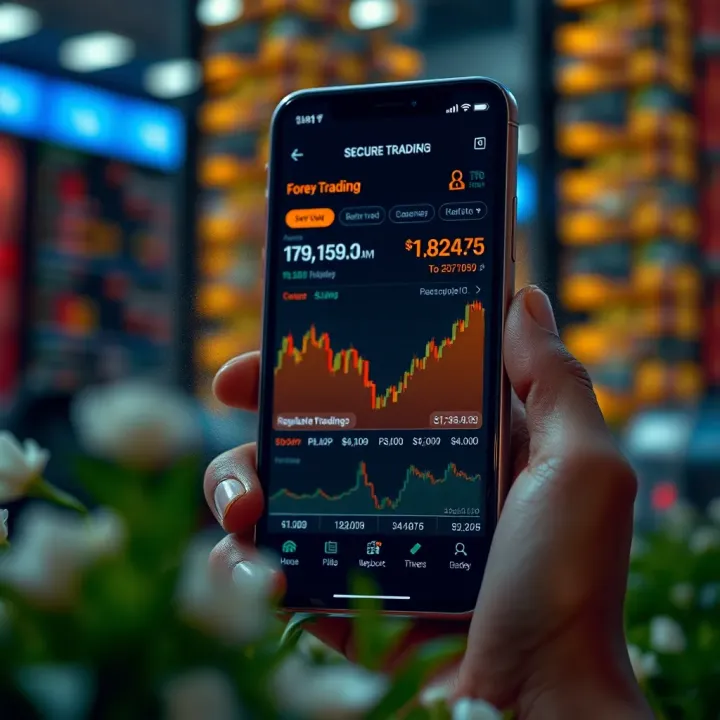
Explore the best forex trading apps in Kenya 📱, learn how to pick secure platforms, understand local rules, and trade confidently on your mobile device.
Based on 6 reviews